

Ahmed Kamel – Egypt Daily News
A new cargo corridor linking Egypt and Italy is rapidly transforming from a niche logistics experiment into a serious contender in global trade flows. As uncertainty continues to affect traditional maritime routes, companies are not just reacting, they are restructuring how goods move, and Egypt is increasingly at the center of that shift.
At the heart of this change is a hybrid transport model that blends sea and land efficiency. Goods arriving from Europe through Port of Trieste are funneled into Egypt via Port of Damietta, then transported across the country to Safaga Port, where they continue toward Gulf destinations. This multi-stage route is proving to be more than just a detour, it is becoming a calculated alternative for companies prioritizing reliability over tradition.
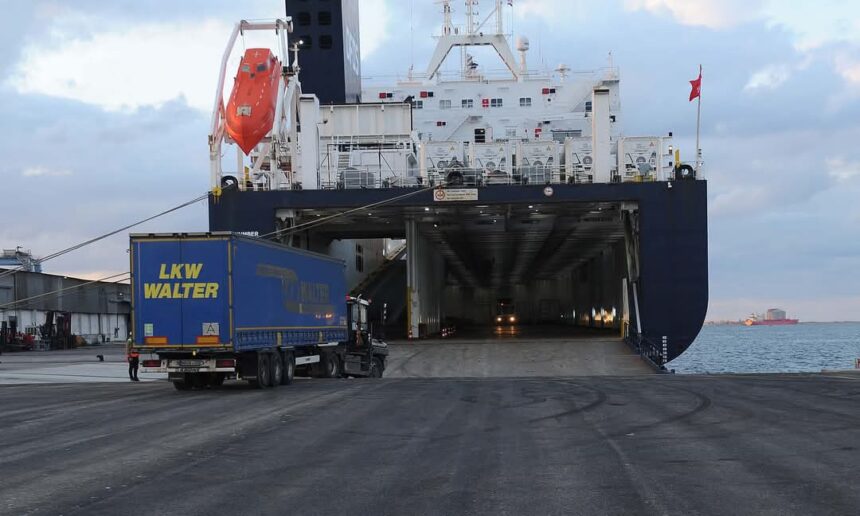
What makes this corridor stand out is not only geography, but adaptability. The use of roll-on/roll-off transport allows entire trucks to transition seamlessly between ships and highways, cutting down delays and minimizing handling risks. For industries dealing with time-sensitive or perishable goods, this operational speed is becoming a decisive advantage.
More importantly, the route is benefiting from a policy environment designed to attract volume. Faster customs processing, reduced bureaucratic friction, and targeted incentives are quietly reshaping Egypt’s logistics landscape. These improvements are sending a clear message to global operators: Egypt is not just open for transit it is optimizing for it.
The timing is also critical. With strategic chokepoints like the Strait of Hormuz under periodic strain, businesses are no longer comfortable relying on a single pathway. Diversification has become a necessity, and Egypt’s corridor offers a practical, scalable solution without requiring a complete overhaul of supply chains.
What is emerging is a broader repositioning. Egypt is leveraging its geography not as a passive advantage, but as an active economic strategy, linking continents, shortening routes, and reducing uncertainty for global trade partners. If current momentum continues, this corridor could evolve from an alternative route into a standard one, anchoring Egypt more firmly in the future of international logistics.
