


Ahmed Kamel – Egypt Daily News
Saudi Aramco has officially offered additional volumes of crude oil for loading from the Egyptian Mediterranean port of Sidi Kerir to protect its global supply chains. Five prominent commodity trading sources confirmed on Sunday that the state-owned energy giant launched the spot-sale allocations after transferring the crude via the Sumed pipeline from Ain Sokhna on the Red Sea.
The sudden logistical realignment aims to significantly enhance Saudi Arabia’s export flexibility toward Europe and North America as continuous cross-border hostilities compromise baseline navigation security.
The strategic pivot to Egyptian transit corridors materializes immediately after Yemeni Houthi rebels launched coordinated missile and drone strikes against two Saudi Arabian oil tankers. Official Saudi media verified that one of the attacked mega-vessels suffered a massive structural fire, triggering immediate navigation warnings that forced multiple commercial lines to alter their routes away from the Red Sea.
While Riyadh previously attempted to sustain its alternative trade flows by ramping up shipments from its western port of Yanbu, the escalating threat of a total Houthi blockade over the Bab el-Mandeb Strait has forced energy planners to rely on overland transport infrastructure inside Egypt.
The newly introduced spot-market volumes will supplement the baseline petroleum supplies already allocated to international corporate buyers under long-term structural supply contracts. Commodity tracking data compiled by market analytics firm Kpler revealed that overall crude oil loadings through Sidi Kerir had previously declined to 427,000 barrels per day this year, dropping sharply from the seven-hundred and thirty-five thousand barrels recorded during the prior twelve months.
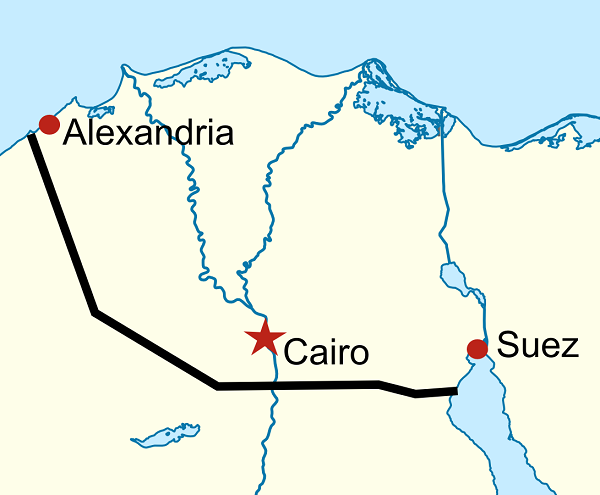
By utilizing the massive carrying capacity of the Sumed pipeline system, Saudi Aramco aims to rapidly restore its market presence in Northwest Europe and the Mediterranean without exposing its commercial fleet to asymmetric maritime warfare.
