

Ahmed Kamel – Egypt Daily News
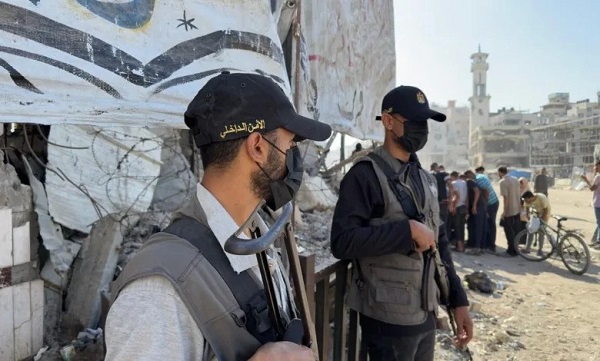
In the wake of the newly implemented ceasefire in Gaza, security forces affiliated with Hamas have begun a widespread deployment across various parts of the Strip, aiming to reassert control and restore order after months of war and internal disruption.
The ceasefire, which came into effect at midday Friday, marked a temporary pause in the intense Israeli military campaign that had severely weakened Hamas’s grip on security within the enclave. Within hours of the truce, a visible but limited deployment of security personnel appeared in the streets of Gaza City. By Saturday morning, this presence had significantly expanded, particularly in central and southern areas of the Strip that had seen recent Israeli withdrawals.
In Gaza City, especially in the eastern neighborhoods near remaining Israeli positions, Hamas-affiliated forces began erecting checkpoints and inspecting vehicles. Security personnel, many in civilian clothing or unmarked vehicles, were also observed patrolling key intersections and conducting operations in neighborhoods like Shejaiya and Zeitoun.
Targeting Armed Groups
According to local sources, the re-emergence of Hamas’s internal security apparatus includes elements from multiple branches, including internal security forces and intelligence operatives from the Qassam Brigades, Hamas’s military wing. Their operations have focused on dismantling newly formed armed groups that surfaced during the war, some of which openly challenged Hamas’s authority.
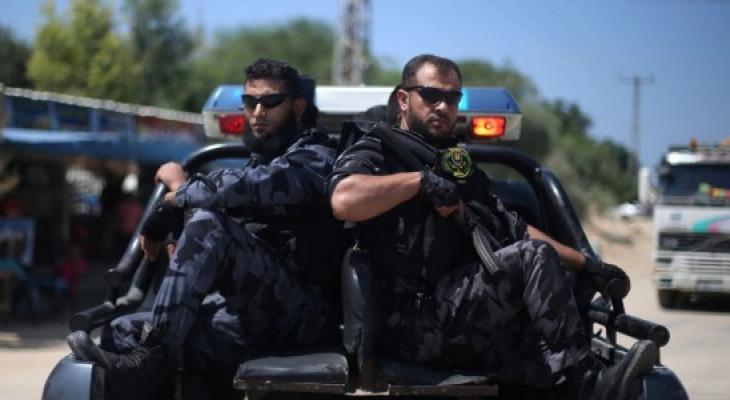
One such group, known as the Yasser Abu Shabab Brigades also referred to locally as “the Popular Forces” has reportedly suffered significant losses. Security forces have engaged in direct confrontations with these groups in northern Gaza, particularly in Jabalia and its refugee camp, as well as in areas bordering Beit Lahia. Several members of these groups were reportedly killed or arrested in coordinated raids.
Clashes have also erupted in the south. In Gaza City’s southern district of Zeitoun, Hamas fighters reportedly exchanged fire with a rival armed group. In Khan Younis, to the far south, another armed cell came under attack, allegedly by Hamas security personnel.
Tensions escalated further on Friday evening when a confrontation broke out between Hamas operatives and members of a prominent clan in southern Gaza. The clash reportedly stemmed from the extrajudicial killing of a senior Qassam Brigades commander’s son, who had been abducted and executed near his home. The retaliatory raid by Hamas forces left several clan members dead or wounded.
Suppressing Dissent and Restoring Control
Throughout the conflict, Hamas has faced challenges not only from Israeli forces but also from within. Several clan-based militias and criminal elements reportedly attempted to exploit the chaos of war to assert their own influence. Some were accused of cooperating with Israeli forces or attempting to establish local governance structures outside Hamas’s control.
Despite these attempts, local analysts and field sources say that no substantial or sustained opposition network was able to emerge. While certain groups did carry out attacks or attempt to incite rebellion, Hamas retained enough operational capacity to neutralize them through targeted raids, ambushes, and intelligence-led operations.
The group has repeatedly warned that any attempts to undermine its authority either through armed resistance or collaboration with Israel will be met with force. It has already signaled a broader crackdown in the post-war period, targeting both rogue armed factions and individuals or families suspected of defection or subversion.
Ceasefire Breaches and Ongoing Israeli Strikes
Despite the ceasefire agreement, violations have continued, particularly by Israeli forces. On Friday, an elderly Palestinian man was shot dead by an Israeli quadcopter drone while attempting to return to his home in the town of Al-Qarara, north of Khan Younis.
In northern Gaza, four Palestinians were wounded after an Israeli artillery shell landed near Al-Ajjarmeh Street, east of the Jabalia refugee camp. In another incident, a drone dropped an explosive device on a school in Jabalia town while residents were inspecting war damage, causing further injuries.
These incidents highlight the fragility of the ceasefire and the risks that persist for civilians attempting to return to their homes amid the devastation.
A Fragile Calm with an Uncertain Future
The return of Hamas’s security forces to the streets of Gaza is a calculated effort to reassert authority and signal stability after months of disruption. However, with tensions still high, and Israeli drones and forces maintaining a presence in several areas, the ceasefire remains tenuous.
As reconstruction efforts begin to take shape and civilians cautiously emerge from the ruins of war, the ability of Hamas to control both external threats and internal dissent will play a crucial role in determining whether Gaza moves toward a sustainable calm or slides back into further chaos.
