

Ahmed Kamel – Egypt Daily News
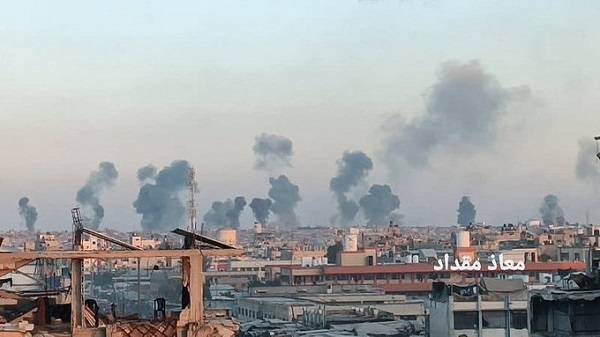
Gaza is approaching a critical moment in which continued Israeli military operations could undermine the ceasefire process and make reconstruction increasingly impossible, a senior envoy to the Board of Peace told the United Nations Security Council on Wednesday.
Nickolay Mladenov said ongoing Israeli attacks were preventing Palestinians from believing that the war had truly ended, despite the reduced intensity of the strikes compared with the height of the conflict. According to Gaza health officials, more than 1,280 Palestinians have been killed by Israeli fire since the ceasefire began in October 2025.
Addressing the council, Mladenov warned that the continued violence was placing US President Donald Trump’s ceasefire framework under growing pressure. He said the plan could still succeed, but only if the parties demonstrated the political will needed to resolve outstanding disagreements.
“Gaza is moving toward a point of no return,” Mladenov said, warning that a collapse of the truce could leave the territory without a viable path back to negotiations or reconstruction.
He questioned whether repeated Israeli strikes against alleged weapons storage sites would achieve their stated objectives. After years of conflict and military operations, he argued, further attacks would not prevent Hamas from reorganizing or strengthening its influence in Gaza. Instead, he said, the strikes risked delaying the demilitarization process and obstructing the creation of a civilian administration.
Mladenov said the proposed transition required a security arrangement in which Gaza would no longer be controlled by armed groups. He argued that the transfer of authority to a civilian body, combined with disarmament, would offer a better chance of preventing future rearmament than continued military action.
The envoy also criticized restrictions on construction and shelter materials entering Gaza. Most of the territory’s population remains displaced, with large numbers of people living in tents or makeshift shelters. Mladenov urged Israel to permit the delivery of stronger materials before winter, saying that existing restrictions were unacceptable given the humanitarian conditions.
Without improved shelter, he said, Palestinians would remain exposed to worsening weather and unsafe living conditions. He warned that a return to full-scale fighting would further destroy homes, infrastructure and public services, leaving little that could be restored.
“If the ceasefire fails, there will be no roadmap to return to,” Mladenov said. “There may be nothing left to rebuild.”
Despite the widening difference between the ceasefire framework and the situation on the ground, Mladenov insisted that Trump’s 20-point proposal was still moving forward. The process, he said, had shifted from political negotiations to practical planning, involving the technical arrangements required to implement the agreement.
According to Mladenov, Hamas had accepted a central condition of the plan: the group would disarm and surrender control of Gaza to a civilian administration. The proposal was presented as a possible route toward ending the conflict, rebuilding the territory and creating conditions for a broader political settlement.
The war has devastated Gaza. More than 73,400 Palestinians have reportedly been killed and over 174,300 injured, while nearly the entire population of approximately 2.1 million people has been displaced, in many cases more than once. Large parts of the territory have been reduced to rubble, and basic services remain severely damaged.
The territorial situation has also become a major obstacle to the ceasefire. Israeli forces have expanded their control beyond the area held after the October agreement. Israeli officials say the military now occupies between 60% and 70% of Gaza, compared with approximately 53% under the original ceasefire arrangement.
Israeli Prime Minister Benjamin Netanyahu has rejected the proposed sequence linking Hamas’ gradual disarmament with a phased Israeli withdrawal. He has instead said Israeli forces should not leave occupied areas until Hamas gives up all of its weapons.
Netanyahu publicly rejected the roadmap on August 9, shortly before meeting Mladenov and US adviser Jared Kushner. Mladenov said the meeting focused on Israel’s objections, which were reviewed individually. He said the discussions helped narrow the issues requiring further technical negotiations, although significant disagreements remained.
Israel’s deputy ambassador to the United Nations, Noa Furman, said Israel continued to support Trump’s broader plan. She maintained that the government was cooperating with Washington to secure Hamas’ disarmament, despite the continuation of Israeli attacks and the presence of Israeli forces beyond the agreed ceasefire line.
US Ambassador to the UN Mike Waltz said concerns surrounding the proposal were being addressed. He added that Hamas’ commitment to disarmament would ultimately be measured by its conduct rather than its statements.
Mladenov presented the situation as a choice between two possible futures. One would involve a disarmed Gaza that could be rebuilt and reconnected to the international community. The other would leave the territory divided and devastated, with a generation growing up amid violence and another conflict becoming increasingly likely.
He said the roadmap could provide Palestinians with a credible political future and revive prospects for a two-state solution. However, that objective remains disputed within Israel, where Netanyahu opposes Palestinian statehood and several members of his governing coalition have called for removing Palestinians from Gaza, settling Israelis in the territory and annexing parts of the occupied West Bank.
