


Ahmed Kamel – Egypt Daily News
A new set of proposed demands attributed to Israel’s supporters in Washington has reignited debate over the future of U.S. military and strategic commitments to Israel, including long-term financial assistance, a permanent American military presence and the creation of a broader regional security framework.
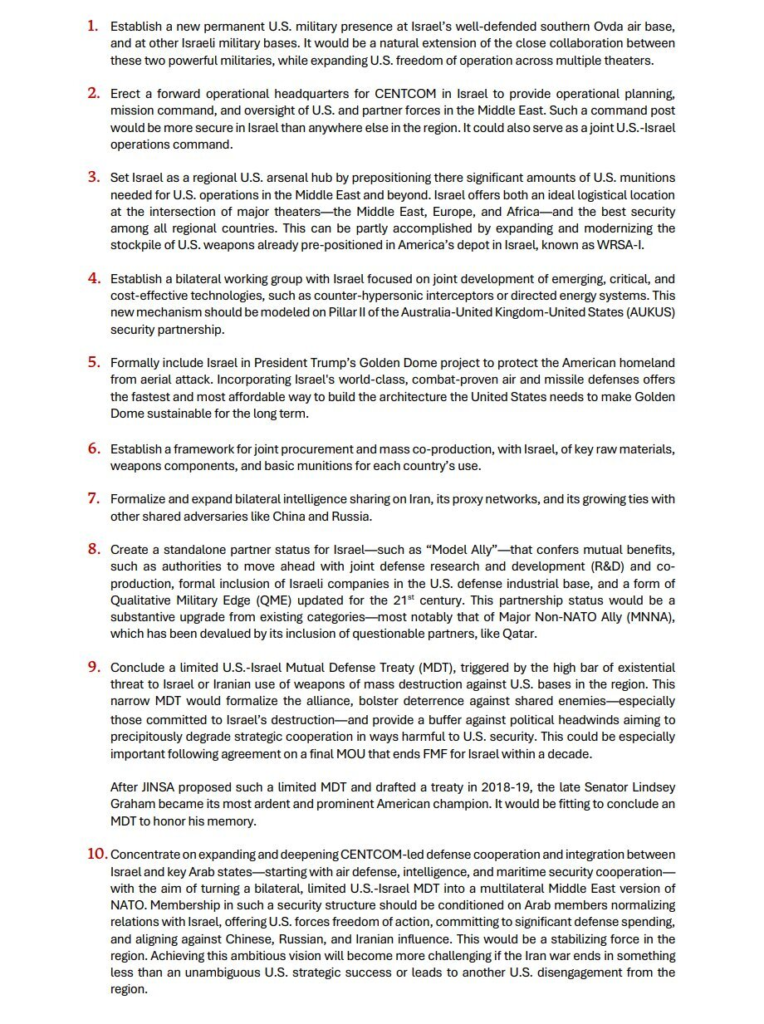
The proposals reportedly include a baseline of $40 billion in U.S. taxpayer-funded assistance over the next decade. They also call for establishing a permanent U.S. military presence in Israel, potentially including an operational headquarters linked to the U.S. Central Command.
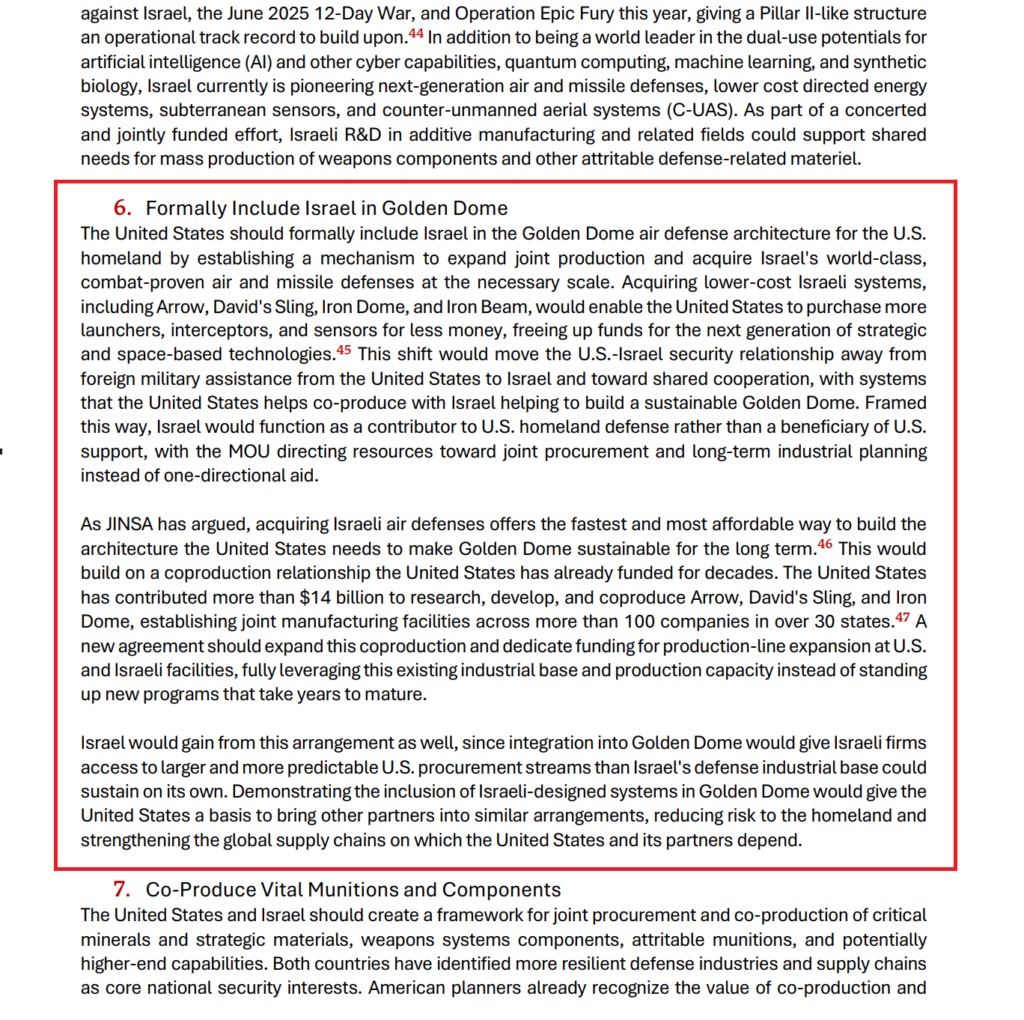
Other elements reportedly under discussion include Israel’s formal integration into the proposed Golden Dome missile-defense architecture, closer integration between the American and Israeli defense industries, and a limited mutual-defense treaty between Washington and Tel Aviv.
The reported demands further envision a new regional security arrangement in which the United States would organize and arm Arab countries to help defend Israel. Membership for Arab states, according to the proposal, would be tied to the normalization of diplomatic relations with Israel.
The emerging debate comes as Washington reviews the scale and structure of its long-standing security relationship with Israel. The current U.S.-Israel memorandum of understanding provides Israel with $3.8 billion annually in military assistance and is scheduled for renegotiation in 2028. Israeli Prime Minister Benjamin Netanyahu has previously said he wants Israel to gradually reduce its dependence on American military aid over the next decade, although the details of any future arrangement remain unclear.
The reported package would represent a significant expansion of the relationship rather than a simple continuation of existing aid. A permanent American military presence could strengthen deterrence against regional threats, but it could also expose U.S. forces to greater risks and draw Washington more deeply into conflicts involving Israel and its neighbors.
A mutual-defense treaty would raise similar questions. Unlike current security cooperation arrangements, a formal treaty could create expectations that the United States would respond directly to an attack on Israel. Even if described as “limited,” such a commitment would likely require congressional scrutiny and could become a major issue in debates over presidential war powers and America’s military role in the Middle East.
The proposed defense-industrial merger could provide practical benefits for both countries by expanding joint weapons production, improving supply chains and accelerating the development of missile-defense systems. Supporters would likely argue that shared production could strengthen American and Israeli military capabilities while creating jobs and investment in both countries.
Critics, however, are expected to question the cost and strategic consequences. They could argue that the proposals would place additional demands on the U.S. budget while limiting Washington’s ability to maintain an even-handed role in the region. The suggested regional alliance could also face resistance from Arab governments and populations, particularly if normalization with Israel becomes a condition for military cooperation.
The proposal comes amid growing political debate in the United States over military assistance to Israel and the broader direction of American foreign policy. Public and congressional divisions have widened over the Gaza war, civilian casualties and the use of U.S.-supplied weapons. At the same time, Israel remains a central security partner for Washington and an important participant in American missile-defense and intelligence cooperation.
The future of the proposed framework will depend on whether it has formal backing from the Israeli government, the White House or Congress. For now, the reported list appears to reflect an agenda being promoted by Israel’s allies rather than an adopted U.S. policy.
What Washington would receive in return is likely to become the central question. Advocates would point to stronger deterrence, closer defense cooperation and a more integrated regional security structure. Opponents would focus on the financial burden, the risks to U.S. personnel and the possibility that the agreement could bind America more closely to Israel’s military decisions.
