

Ahmed Kamel – Egypt Daily News
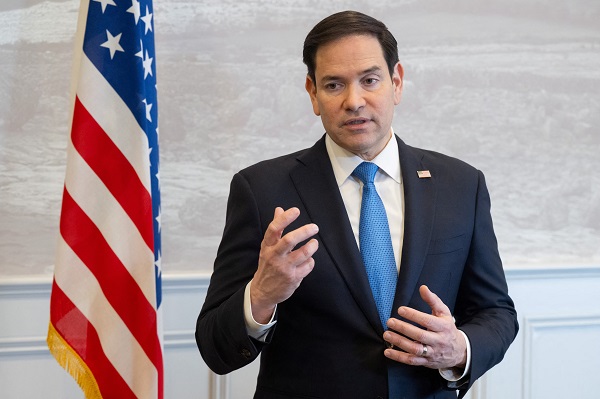
U.S. Secretary of State Marco Rubio said the United States currently has around 40,000 troops deployed across nine military sites in the Middle East, noting that all of them are within range of Iranian drones and missile capabilities. His remarks, underscored both the extent of U.S. exposure in the region and the seriousness with which Washington views potential Iranian threats.
“What you are seeing now is our ability to mobilize and deploy military assets in the Middle East for defensive purposes, in anticipation of what could be an Iranian threat,” Rubio said. The comments align with recent U.S. moves to reinforce its naval and air presence, which American officials describe as deterrence rather than preparation for imminent offensive action.
At the same time, Rubio acknowledged the deep uncertainty surrounding Iran’s internal dynamics. He said there is no simple answer to what might happen if Iran’s Supreme Leader or the current political system were to fall, a rare public admission of the risks and unpredictability associated with regime change in Tehran. His remarks reflect broader concerns in Washington and allied capitals that any sudden collapse of Iran’s leadership could trigger chaos with far-reaching regional consequences.
Rubio’s statements come amid repeated warnings from President Donald Trump that “time is running out” for Iran to agree to negotiations, alongside visible U.S. military deployments, including a carrier strike group and announced air force exercises. While Trump has said he prefers a negotiated settlement, he has also warned that any future escalation would be more severe than previous confrontations.
Iranian officials have rejected what they describe as diplomacy under threat. Tehran insists that any talks must be based on equality and mutual respect, while denying recent direct contact with U.S. envoys. Iranian leaders have also pointed to regional mediation efforts, particularly by Gulf states, as evidence that diplomacy remains possible despite the rising rhetoric.
Beyond the Middle East, concern is spreading among major global powers. China’s Foreign Ministry issued a warning against what it described as any military “adventure” targeting Iran, signaling Beijing’s opposition to the use of force and its preference for political solutions. China has repeatedly argued that escalation would destabilize energy markets and undermine regional and global security.
Regional governments have echoed similar concerns. Several Gulf states, as well as Turkey and the United Arab Emirates, have publicly or privately urged restraint, warning that war with Iran would carry heavy security and economic costs for the entire region. Some have also made clear that they do not want their territory or airspace used as launch pads for attacks.
As the United States highlights both its military reach and its vulnerabilities, and as Iran pushes back against pressure-based diplomacy, the standoff appears to be entering a more delicate phase. With tens of thousands of U.S. troops within missile range, allies urging de-escalation, and global powers cautioning against military action, the coming period may prove decisive in determining whether the crisis moves toward negotiations or spirals into a broader confrontation.
