

Ahmed Kamel – Egypt Daily News
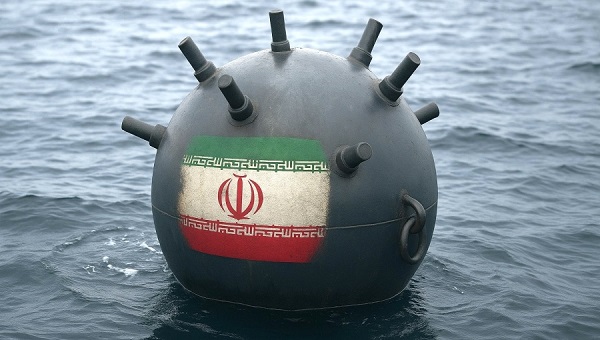
Iran has reportedly begun laying mines in the Strait of Hormuz, the world’s most critical energy chokepoint, according to sources familiar with U.S. intelligence reports. The waterway, which carries roughly one-fifth of global crude oil exports, has already been described as effectively closed since the outbreak of the US-Israel conflict with Iran.
Sources said that only a few dozen mines have been deployed so far, but the Islamic Revolutionary Guard Corps (IRGC) retains 80 to 90 percent of its small boats and mine-laying vessels, giving Tehran the potential to lay hundreds more. The IRGC, now effectively controlling the strait alongside Iran’s traditional navy, has the capability to deploy a “gauntlet” of dispersed mines, explosive-laden boats, and shore-based missile batteries.
U.S. officials warned that the strait has become highly dangerous for shipping, with the passage described by some sources as a “death valley” due to the risk of attack. President Donald Trump posted on Truth Social on Tuesday that any mines placed in the strait must be removed immediately. He added that failure to do so would trigger “military consequences to Iran at a level never seen before,” while compliance would be considered a “giant step in the right direction.”
In a related move, Secretary of Defense Pete Hegseth said on X (formerly Twitter) that U.S. Central Command has been targeting inactive mine-laying vessels with “ruthless precision,” warning Iran that it will not be allowed to hold the strait hostage. Trump also reassured that the U.S. Navy is actively monitoring for mines to keep the passage safe.
The disruption is already having major global economic implications. Nearly 15 million barrels per day of crude oil, along with 4.5 million barrels per day of refined fuels, are effectively stranded in the Gulf. Countries such as Iraq and Kuwait have no alternative route for their oil exports, and G7 members have hinted at measures to release additional oil to mitigate shortages.
The uncertainty has caused severe volatility in oil markets, with prices fluctuating sharply between more than $90 and below $80 per barrel. Analysts warn that further escalation in the Strait of Hormuz could have immediate and significant effects on global energy markets.
The developments mark an intensification of the ongoing conflict in the region, as U.S. and allied forces prepare for potential further military escalation to secure one of the world’s most strategically important shipping corridors.
