

Ahmed Kamel – Egypt Daily News
The United States has issued its clearest warning yet to Iran: reach a deal or face a renewed wave of military action, as Pentagon officials confirmed forces in the Middle East are actively rearming and preparing for possible escalation.
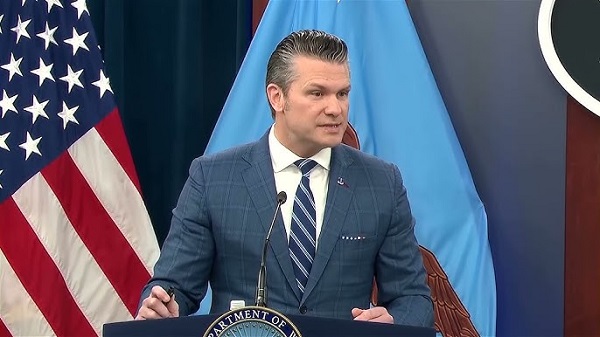
Defense Secretary Pete Hegseth said the US will maintain a sweeping naval blockade on Iranian ports “for as long as it takes,” while warning that critical infrastructure and energy facilities could become targets if Tehran rejects diplomatic efforts.
The warning comes during a fragile pause in fighting, which US commanders say is being used to reposition forces and refine operational plans rather than de-escalate.
US Forces ‘Rearming’ as Ceasefire Holds
Senior military officials said American troops across the region are rebuilding combat readiness, signaling that the current lull may be temporary.
Brad Cooper, who oversees US forces in the Middle East, said units are “rearming, retooling and adjusting tactics,” indicating preparations for a potential return to active combat if negotiations collapse.
The message from Washington is increasingly direct: diplomacy remains on the table, but military options are fully intact.
Naval Blockade Expands With Threat of Force
The US blockade of Iranian ports is emerging as a central pressure tool, with military leaders warning it could intensify further.
Dan Caine said US forces are prepared to intercept and potentially board vessels attempting to bypass restrictions. He added that ships linked to any country providing material support to Iran could also be targeted.
So far, 13 vessels have reportedly turned away without direct confrontation, but officials made clear that restraint may not last if challenges to the blockade increase.
Direct Threats to Iran’s Energy Infrastructure
Hegseth escalated rhetoric by warning that US strikes could expand beyond military targets.
He said Iran is attempting to recover missile systems from damaged underground facilities but lacks the capacity to quickly rebuild its arsenal, an assessment aimed at reinforcing US leverage during negotiations.
“If Iran chooses poorly,” he said, the US is prepared to hit infrastructure and energy assets, a move that could significantly widen the conflict’s economic impact.
Diplomatic Track Still Open — For Now
Despite the military buildup, diplomatic efforts continue behind the scenes.
Iranian officials are expected to meet regional counterparts in Tehran to discuss messages exchanged with Washington, while the White House has signaled cautious optimism that a second round of talks could take place soon.
At the same time, US officials said they have received assurances that China will not supply weapons to Iran, amid concerns about external involvement.
Regional Tensions Spill Beyond Iran
The crisis is also rippling across neighboring fronts.
In Lebanon, political tensions rose after the country’s president held talks with Donald Trump while declining contact with Israeli Prime Minister Benjamin Netanyahu, according to local officials.
Meanwhile, Israeli forces destroyed a key bridge in southern Lebanon, severing a critical route for thousands of civilians and underscoring the widening regional fallout.
A Narrow Window Before Escalation
US officials are framing the current moment as a decisive window.
The combination of military buildup, economic pressure, and diplomatic outreach suggests a coordinated strategy: force Iran to negotiate under pressure, or prepare for a broader confrontation.
With troops rearming, a naval blockade tightening, and explicit threats against energy infrastructure, the next phase of the crisis may depend on how quickly diplomacy can deliver results.
