

Ahmed Kamel – Egypt Daily News
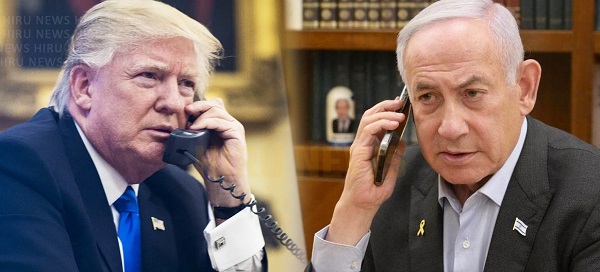
US President Donald Trump publicly criticized Israeli Prime Minister Benjamin Netanyahu on Thursday for authorizing strikes on Iranian energy infrastructure, warning that the move risked further destabilizing global markets and escalating an already volatile conflict.
Speaking at the White House, Trump confirmed he had directly urged Netanyahu to halt attacks on Iran’s oil fields following a dramatic Israeli strike on the South Pars gas field, one of the world’s largest natural gas reserves. The strike reportedly triggered retaliatory actions by Iran, including attacks targeting Gulf energy infrastructure such as a liquefied natural gas facility in Qatar.
“I told him, ‘don’t do that,’ and he won’t do that,” Trump said, describing what he characterized as generally strong coordination between Washington and Tel Aviv, while acknowledging occasional disagreements. “On occasion he’ll do something and if I don’t like it… we’re not doing that anymore.”
The exchange highlights rare public friction between the two leaders amid a war that has rapidly expanded beyond direct US-Iran hostilities to impact energy markets and regional stability.
Fuel prices in the United States have risen sharply since the conflict began on February 28, with national averages climbing to around $3.90 per gallon, compared to approximately $2.90 before the outbreak of hostilities. The surge reflects growing fears of supply disruptions as attacks target critical oil and gas infrastructure across the region.
In a post on Truth Social, Trump said the United States had no prior knowledge of Israel’s plans to strike South Pars, but also issued a stark warning to Tehran. He threatened overwhelming retaliation if Iran were to carry out further attacks on Gulf energy facilities, particularly in Qatar.
“I do not want to authorize this level of violence and destruction,” Trump wrote, citing concerns about long-term consequences, “but if Qatar’s LNG is again attacked, I will not hesitate.”
The escalation has drawn criticism from international leaders. Emmanuel Macron described the strike on Iran’s energy infrastructure as “reckless,” reflecting broader unease among European allies about the widening scope of the conflict.
At the same time, a coalition of major economies—including the United Kingdom, France, Germany, Italy, the Netherlands, Japan, and Canada issued a joint statement condemning Iranian attacks on commercial shipping in the Strait of Hormuz, a critical artery for global energy supplies. The group expressed readiness to support efforts to ensure safe maritime passage through the strategic waterway.
Trump, however, criticized members of NATO for what he described as insufficient commitment to protecting shipping lanes, arguing that countries reliant on the route should take greater responsibility. “They don’t want to help us defend the Strait, and they’re the ones that need it,” he said, while noting that some allies were beginning to shift their positions.
During a meeting with Sanae Takaichi, Trump praised Japan’s willingness to contribute to maritime security efforts in the Strait of Hormuz, describing Tokyo as “stepping up to the plate.”
The president also defended his administration’s initial decision to launch strikes on Iran without prior notice to allies, citing the need for operational surprise. In a controversial remark, he referenced the Attack on Pearl Harbor, saying, “You don’t want to signal too much… we wanted surprise.”
As the conflict approaches its third week, divisions among allies and the widening scope of military and economic consequences continue to raise concerns about the risk of further escalation and long-term instability in the region.
