

Ahmed Kamel – Egypt Daily News
Israeli authorities prevented Catholic leaders from entering the Church of the Holy Sepulchre on Palm Sunday, breaking a centuries-long tradition and sparking condemnation from international leaders, including the United States, France, and Italy.
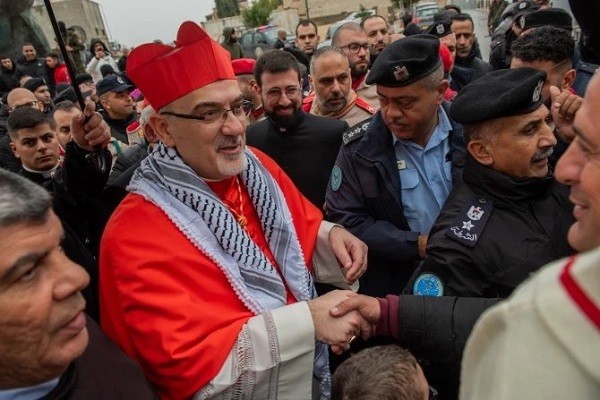
The Latin Patriarchate in Jerusalem called the police action “manifestly unreasonable and grossly disproportionate,” noting that two of the church’s senior figures including the Latin Patriarch, Cardinal Pierbattista Pizzaballa, and the Custos of the Holy Land were barred from celebrating the Palm Sunday Mass, which commemorates Jesus’ triumphant entry into Jerusalem and marks the start of Holy Week.
Israeli police cited security concerns due to the ongoing conflict with Iran, including frequent missile fire on the city, restricted access for emergency vehicles in the Old City’s narrow streets, and the lack of adequate shelters. However, church officials emphasized that private Masses with limited attendance had been permitted since the start of the conflict on February 28, raising questions as to why Sunday’s ceremony was blocked.
“It is a very sacred day for Christians, and in our view there was no justification for such a decision,” said Farid Jubran, spokesperson for the Latin Patriarchate. He added that the incident impedes freedom of worship and undermines the established status quo in Jerusalem.
In response, Pizzaballa celebrated Mass at the nearby St. Savior’s Monastery, a marble church adjacent to an underground facility designated by the Israeli military as a safe shelter. Later, he led a prayer for peace at the Dominus Flevit Shrine on the Mount of Olives, focusing on the religious significance of the day without referencing the earlier obstruction.
The Vatican has not formally commented on the incident, though Pope Leo XIV prayed during Palm Sunday Mass at St. Peter’s Square for Christians in the Middle East affected by “atrocious” conflict, noting that many could not fully participate in the holy rites.
The decision prompted widespread international criticism. U.S. Ambassador Mike Huckabee described the action as “an unfortunate overreach,” noting that the private Mass was well below the 50-person limit for gatherings. French President Emmanuel Macron condemned the move as part of a troubling pattern of “violations of the status of the Holy Sites in Jerusalem” and stressed that freedom of worship must be guaranteed for all religions.
Italy also protested the decision, summoning Israel’s ambassador to Rome for clarification. Italian Prime Minister Giorgia Meloni stated that the police action “constitutes an offense not only against believers but against every community that recognizes religious freedom,” while reaffirming Italy’s balanced stance in the regional conflict supporting Israel’s right to defend itself, condemning civilian harm, and opposing Iran’s potential nuclear capabilities.
The disruption of Palm Sunday services highlights the growing challenges for religious communities in Jerusalem amid the broader Middle East conflict, raising concerns about access to holy sites and the protection of centuries-old traditions during periods of heightened security tension.
