

Ahmed Kamel – Egypt Daily News
Egypt has unveiled a rare surviving artifact linked to the tomb of Pharaoh Tutankhamun while reopening two newly restored New Kingdom tombs in Luxor in a major cultural event highlighting the country’s ongoing efforts to preserve and showcase its ancient heritage.
The Egyptian Ministry of Tourism and Antiquities on Thursday presented to the public for the first time a reconstructed plaster blocking wall from Tutankhamun’s tomb, an object officials described as one of the rarest surviving relics connected to the famous 1922 discovery by British archaeologist Howard Carter.
Displayed at the Luxor Museum, the wall once sealed the entrances of the young king’s burial chamber and carried official funerary seals associated with the royal necropolis.
Abdelghaffar Wagdy, director-general of Luxor Antiquities, described the exhibit as a historic milestone more than a century after the discovery of the tomb.
“Almost all Pharaonic tombs were looted,” Wagdy said during the exhibition opening. “Therefore, it is a one-of-a-kind artifact the only surviving artifact of Tutankhamun that the world had never seen before. Recently, an Egyptian team reconstructed it.”
According to the ministry, the wall bears the seals of Tutankhamun himself along with those of necropolis guards tasked with protecting the royal tombs from theft. Officials said the reconstruction offers a rare glimpse into the burial procedures and administrative systems surrounding ancient Egyptian royal funerals.
The unveiling comes as Egypt continues to promote its archaeological treasures to attract international tourism and strengthen global interest in the country’s ancient civilization.
At the same time, authorities inaugurated two restored tombs on the West Bank of Luxor, an area overlooking the River Nile and home to the legendary Valley of the Kings where many New Kingdom pharaohs and nobles were buried.
The tombs belong to Rabuya and his son Samut, officials said. Both men served as doorkeepers of the deity Amun during Egypt’s 18th Dynasty, the first dynasty of the New Kingdom period.
Hisham El-Leithy, secretary-general of Egypt’s Supreme Council of Antiquities, said the tombs were discovered accidentally in 2015 before undergoing years of restoration work.
“Today we are inaugurating two very important tombs that were discovered by chance in 2015,” El-Leithy said.
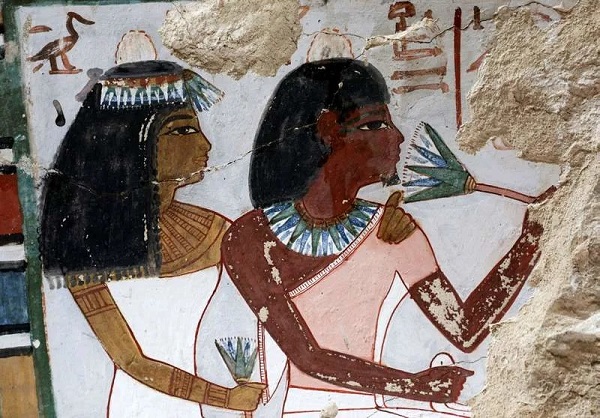
The restored chambers contain vivid scenes depicting everyday ancient Egyptian life, including agriculture, harvesting, pottery making, bread baking, wine production and various crafts, alongside funerary rituals believed to accompany the deceased into the afterlife.
The reopening of the tombs adds another attraction to Luxor, often described as the world’s greatest open-air museum, and reinforces Egypt’s broader campaign to preserve and display archaeological discoveries that continue to emerge from the sands of the ancient Nile civilization.
