

Ahmed Kamel – Egypt Daily News
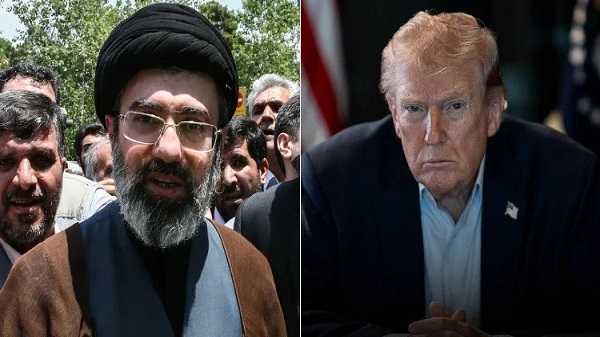
U.S. President Donald Trump has issued a stark warning to Iran, declaring that time is running out for Tehran to reach an agreement with Washington as already fragile diplomatic efforts continue to stall. In a forceful message posted on his Truth Social platform, Trump suggested severe consequences if negotiations fail to move forward.
“For Iran, the Clock is Ticking… they better move fast or there won’t be much left,” he wrote, signing off with “Time is of the essence.”
The remarks mark one of his most direct public threats in the current standoff and come amid growing uncertainty over whether diplomacy can prevent further escalation between Iran, Israel, and the United States.
The statement followed reports that Trump is expected to speak with Israeli Prime Minister Benjamin Netanyahu as part of urgent consultations on the deteriorating security situation. According to U.S. media reports, senior national security officials are also preparing to meet to reassess next steps in the crisis.
At the same time, Iranian sources claimed Washington has not offered significant concessions in response to recent proposals from Tehran, fueling doubts over whether the current round of negotiations can survive.
The rhetoric builds on earlier comments in which Trump described the ceasefire framework as being under severe strain and dismissed Iran’s negotiating position as unacceptable, signaling a tougher U.S. posture as talks falter.
Tensions were further heightened after a drone strike caused a fire near the perimeter of the Barakah Nuclear Power Plant in the United Arab Emirates, raising alarm across the region despite confirmation from Emirati authorities that no radiation leak occurred and the facility remained fully operational.
The UAE described the incident as a hostile act but did not publicly attribute responsibility, while defense officials said three drones had entered its airspace from the west, two of which were intercepted before impact.
Although no group has claimed the attack, regional governments have increasingly pointed to Iranian-linked networks as drone and missile activity expands across multiple fronts.
Economically, the conflict is also beginning to weigh heavily on the United States, where rising fuel prices have added political pressure on the administration ahead of key elections. Energy costs have reportedly surged past $4 per gallon nationally.
Testifying before Congress, U.S. Defense Secretary Pete Hegseth declined to provide detailed breakdowns of the war’s financial impact, while Pentagon officials later estimated total costs had risen to roughly $29 billion, driven by operational spending and equipment replacement.
Meanwhile, clashes continue in Lebanon between Israel and the Iran-aligned group Hezbollah, even as a nominal ceasefire remains in place, underscoring how fragmented and unstable the wider regional landscape has become.
Across the Middle East, fears are growing that the conflict already involving drones, missile strikes, and proxy forces, could widen further if diplomatic channels fail to regain traction in the coming days.
