

Ahmed Kamel – Egypt Daily News
A major international study has issued a stark warning that some of the world’s largest coastal cities — including parts of Egypt are sinking toward sea level at alarming speeds, dramatically increasing the risk of catastrophic flooding for millions of residents.
Researchers from the Technical University of Munich found that land subsidence, combined with climate-driven sea level rise, is accelerating the threat facing heavily populated coastal regions across the globe.
The study revealed that in many urban coastal zones, the combined effect of sinking land and rising oceans is causing relative sea levels to rise at an average rate of around six millimetres per year, nearly three times the global average.
Scientists warned that countries including Egypt, Thailand, Bangladesh, Nigeria, China and Indonesia are among the worst affected, with relative sea levels climbing between seven and 10 millimetres annually in some areas.
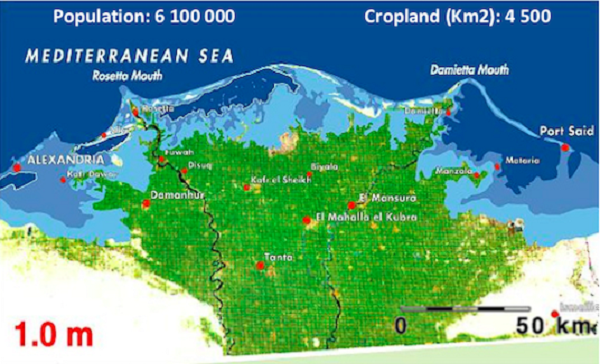
The research paints a troubling picture for Egypt’s Mediterranean coastline, particularly the historic city of Alexandria, which the study identified as one of the major urban centres already experiencing significant land subsidence.
According to the findings, Alexandria is sinking by approximately four millimetres per year, compounding the danger posed by rising Mediterranean waters and increasingly severe weather patterns linked to climate change.
Lead researcher Dr. Julius Oelsmann explained that focusing solely on ocean levels overlooks a critical part of the crisis. “If we want to understand sea-level rise along coastlines and respond effectively, we must not only observe the ocean but also the land itself,” he said.
The researchers found that excessive groundwater extraction, oil drilling, rapid urban expansion, and the immense weight of densely packed buildings are all contributing to the gradual collapse of land beneath many coastal megacities.
As cities become larger and more crowded, the pressure exerted by skyscrapers and infrastructure compresses the ground beneath them, slowly pushing urban areas downward relative to the surrounding sea.
The world’s most endangered city identified in the study was Jakarta, where the metropolitan region home to more than 40 million people, is sinking at nearly 14 millimetres per year on average, with some districts collapsing by as much as 42 millimetres annually.
Roughly 40 percent of Jakarta already lies below sea level, and previous studies estimate that nearly half the Indonesian capital could become submerged or uninhabitable by 2050 if current trends continue. Other major danger zones highlighted by the study included Bangkok, Lagos and Tianjin, all of which are experiencing rapid subsidence combined with rising sea levels.
The study warned that even small increases in relative sea level significantly heighten the risk of devastating floods during storms and extreme weather events, particularly in low-lying coastal cities with aging infrastructure and dense populations.
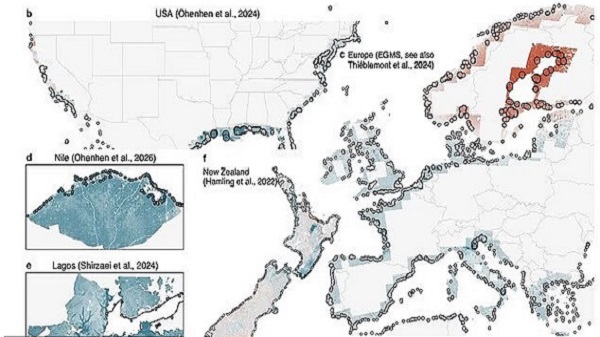
While some northern European regions such as Finland and Sweden are naturally rising due to geological rebound following the last Ice Age, scientists stressed that most coastal megacities have no comparable natural process to reverse subsidence.
Despite the grim outlook, researchers said government intervention can slow or even halt some forms of land sinking.
Co-author Professor Florian Seitz noted that better groundwater management, stricter regulation of underground extraction, and targeted replenishment of aquifers could dramatically reduce subsidence rates.
The study pointed to Tokyo as a rare success story. Decades ago, parts of Tokyo were sinking by more than 10 centimetres annually due to excessive groundwater extraction. However, strict government controls and alternative water systems sharply reduced the problem over time.
Scientists now warn that cities failing to act quickly could face escalating economic losses, infrastructure damage, and mass displacement as climate change and land subsidence converge into what experts describe as a growing global urban crisis.
