

Ahmed Kamel – Egypt Daily News
US president voices rare public criticism of Israeli campaign as world leaders discuss Iran ceasefire and regional stability
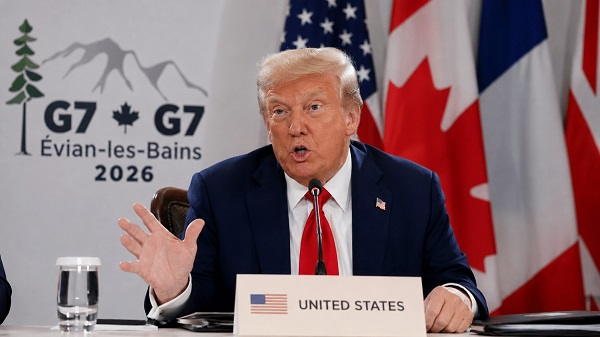
US President Donald Trump publicly criticized Israel’s military campaign in Lebanon on Tuesday, delivering one of his sharpest rebukes yet of Prime Minister Benjamin Netanyahu as world leaders gathered for the Group of Seven summit in France.
Trump accused Israel of prolonging its war against Hezbollah and causing excessive civilian casualties, while also revealing frustration over Israeli military actions that he said complicated American diplomatic efforts in the Middle East.
His remarks came during the second day of the G7 summit in the French resort town of Evian-les-Bains, where leaders were grappling with multiple international crises, including the war in Ukraine, instability in the Middle East and efforts to secure a lasting agreement between the United States and Iran. Ukrainian President Volodymyr Zelensky joined leaders for discussions focused on increasing pressure on Russia, while the conflicts involving Iran, Israel and Lebanon dominated many conversations on the summit’s sidelines.
Speaking during a meeting with Qatar’s Emir Sheikh Tamim bin Hamad Al Thani, Trump expressed unusual public dissatisfaction with Israel’s conduct in Lebanon.
“Israel is fighting Hezbollah too long, and too many people are being killed,” Trump told reporters. “They should have been able to do the job faster.” The president went further, questioning Israeli military tactics in populated residential areas.
“You don’t have to knock down an apartment house every time you’re looking for somebody,” he said. “There are a lot of people in those apartment houses, and they’re not all Hezbollah.”
According to Lebanon’s Health Ministry, Israeli operations between March and mid-June killed at least 3,783 people and wounded nearly 11,700 others across the country. The ministry does not distinguish between civilians and combatants in its casualty reports.
Trump reveals anger over Beirut strike
Trump also disclosed his irritation with Netanyahu over an Israeli strike on Beirut that reportedly occurred just hours before the United States and Iran signed a memorandum of understanding on Sunday aimed at launching negotiations to end the war between Washington and Tehran.
The president suggested the timing of the attack risked undermining a diplomatic breakthrough that his administration had been working to secure.
“Bibi has to be more responsible with respect to Lebanon,” Trump said, referring to Netanyahu by his nickname. “I’m not happy with the way Israel has handled themselves with Lebanon, and with Hezbollah.” The comments exposed rare public friction between the two leaders, whose relationship has generally been characterized by strong political and strategic cooperation.
Trump also renewed his claim that Israel’s survival during the recent confrontation with Iran depended heavily on American support.
“Without the US, there would be no Israel,” he said. “Without me, there would be no Israel because no other President was willing to do what I did.”
Syria floated as alternative to continued war
In another striking statement, Trump said he had encouraged Israeli officials to allow Syria to confront Hezbollah rather than continue a military campaign that he believes has caused excessive destruction.
“I suggested to Israel to let Syria take care of Hezbollah,” Trump said. “If Israel can’t do the job without killing everyone else, Syria will do the job.”
The remarks reflected Trump’s increasingly close relationship with Syrian President Ahmed al-Sharaa, who has emerged as a key regional figure since taking power last year. Trump has repeatedly praised the Syrian leader and maintained direct contacts with him throughout his second term.
Iran deal takes center stage
While Ukraine remained an important item on the official G7 agenda, much of the attention surrounding Trump focused on the emerging agreement between the United States and Iran.
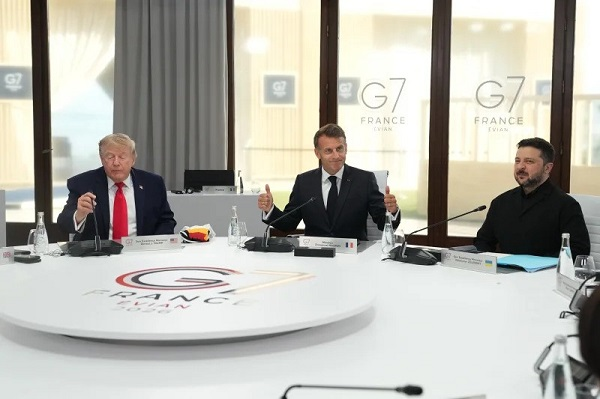
According to senior administration officials, Trump, Vice President JD Vance and Iranian representatives signed a memorandum of understanding on Sunday establishing a 60-day negotiation period designed to produce a broader agreement aimed at ending hostilities.
Speaking at the summit, Trump insisted the agreement would guarantee freedom of navigation through the Strait of Hormuz and ensure that Iran never acquires a nuclear weapon.
The strategic waterway has become a major concern for world leaders because roughly one-fifth of global oil supplies previously passed through the narrow shipping corridor. French officials said G7 leaders discussed possible alternatives and future infrastructure projects that could reduce international dependence on the strait.
“Part of the discussions were, ‘How can we depend less on the Strait of Hormuz?’” French Foreign Ministry spokesman Pascal Confavreux said, describing talks among leaders at the summit.
Trump expressed confidence that the agreement would reopen the route for global energy shipments without disruption, declaring that the strait would operate “toll-free” under the deal.
Lebanon remains obstacle to broader settlement
Despite progress toward a US-Iran agreement, Lebanon remains a major point of contention.
Iranian parliamentary speaker Mohammad Ghalibaf said during a phone call with Lebanese officials that any regional settlement must include an Israeli withdrawal from southern Lebanon. Tehran has also insisted that Lebanon is an inseparable part of any comprehensive agreement designed to end hostilities across the Middle East.
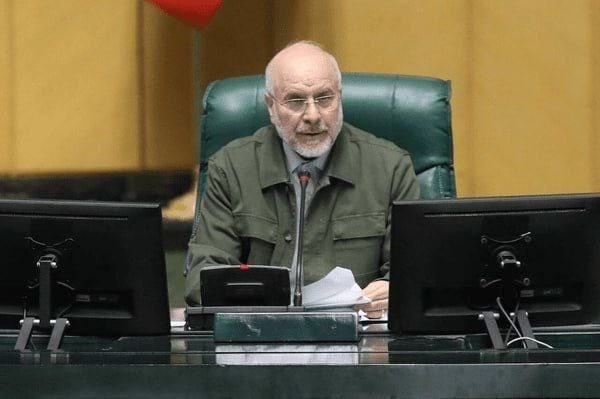
Iranian officials argue that the war cannot truly end while fighting continues in Lebanon, a position that contrasts with Trump’s suggestion that the emerging agreement could survive even if clashes between Israel and Hezbollah persist.
As negotiations move forward, Trump’s unusually direct criticism of Israel highlighted the growing pressure surrounding the Lebanon conflict and underscored the challenges facing diplomats attempting to transform a fragile ceasefire framework into a broader regional peace agreement.
