

Ahmed Kamel – Egypt Daily News
The Federal Reserve officially left its benchmark interest rate unchanged on Wednesday despite persistent inflationary pressures and a volatile surge in energy prices. The central bank’s rate-setting committee reached a contentious nine-to-three decision after two days of intensive deliberations in Washington. The vote marks the fifth consecutive policy meeting at which the benchmark borrowing rate has been maintained at approximately 3.6 percent.
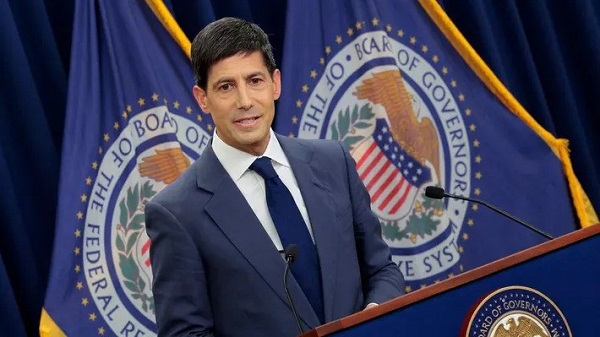
The high-stakes policy freeze materializes as the ongoing conflict with Iran continues to generate immense uncertainty over the global economic outlook. The central bank has struggled to return inflation to its baseline two percent target, a metric that has remained stubbornly elevated for more than five consecutive years. Fed Chair Kevin Warsh acknowledged the internal friction over the interest rate path, describing the heated monetary debate to reporters as a good family fight.
Three Regional Presidents Register Rare Public Dissents to Demand Immediate Rate Hikes
The policy decision was marked by a rare wave of public dissents from three influential regional Federal Reserve bank presidents who pushed for an aggressive quarter-point rate increase. Cleveland Fed President Beth Hammack, Minneapolis Fed President Neel Kashkari, and Dallas Fed President Lorie Logan all voted against the hold. The dissenting bloc argued that immediate borrowing adjustments are vital to combat high consumer prices and anchor long-term economic stability.
Warsh, presiding over his second policy meeting since being appointed by President Donald Trump, reiterated that he maintains no tolerance for elevated inflation. The new chairman has consciously reduced the central bank’s traditional forward guidance mechanisms, stating that financial markets must learn to react to real economic data rather than trying to anticipate the referee. This shift has altered Wall Street dynamics, which had grown highly dependent on explicit central bank signals regarding upcoming policy movements.
Geopolitical Volatility and AI Infrastructure Expenditures Intensify National Inflationary Pressure
The central bank’s policy calculus has been severely complicated by the sudden unravelling of Middle Eastern ceasefire agreements and fresh missile interceptions over Jordan. The maritime blockade of the Strait of Hormuz has triggered the greatest disruption to global oil supplies in history, forcing the cost of a standard crude barrel to average fifteen dollars more than last year. Beyond the energy shock, domestic inflation remains fueled by new federal tariffs on foreign goods and massive corporate investments into power-heavy artificial intelligence data centers.
While core inflation metrics cooled slightly in June due to a temporary dip in retail gasoline prices and slowing apartment rents, several policymakers warn that passive monitoring will not suffice. Federal Reserve Governor Christopher Waller publicly declared this month that sternly staring at inflation until it melts is not a viable regulatory option. Financial traders have rapidly adjusted their projections following the meeting, with seventy-six percent now forecasting a mandatory interest rate hike during the upcoming September assembly.
