

Ahmed Kamel – Egypt Daily News
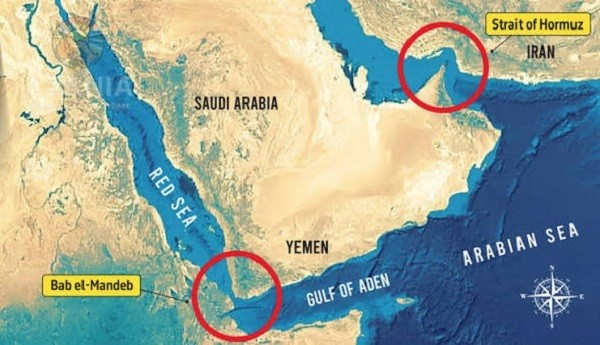
A Yemeni government minister warned that the Houthi movement plans to seize coastal areas near the Bab al-Mandab Strait, warning that such a move could threaten a vital maritime route and expand the group’s grip on one of the world’s busiest shipping chokepoints.
Speaking to Agence France-Presse, the minister of media in the Saudi-backed government, Muammar al-Iryani, said the authorities have “confirmed information” indicating that the Houthi militia—under the guidance and support of Iran’s Islamic Revolutionary Guard Corps is working to set the conditions for controlling Bab al-Mandab. He said this would be pursued by expanding along the western coastline and attempting to take control of strategic Yemeni islands in the Red Sea.
Al-Iryani added that the alleged preparations are accompanied by military mobilization and repeated attacks targeting ports, docks, civilian infrastructure, ships, and government maritime capabilities operating near the Red Sea and the strait.
According to three military sources associated with the Houthis and a spokesperson for government forces deployed near Bab al-Mandab, the rebels intend to advance toward those coastal areas. The reported plan, if successful, would strengthen the Houthis’ control over a key international waterway one they have repeatedly threatened since 2023 and near which they have attacked multiple vessels since the outbreak of the Gaza war.
The warning comes amid wider regional pressure on shipping lanes. Iran has effectively kept the Strait of Hormuz closed since the start of the war in February, shifting attention toward alternative corridors. Bab al-Mandab, which connects Asia and Europe via the Red Sea and the Suez Canal, has therefore gained increasing importance for the transport of Saudi oil.
In that context, the Yemeni minister framed the issue as a direct challenge to regional maritime security. He suggested that the Houthis are seeking to improve their ability to influence navigation through a combination of territorial moves and attacks on maritime infrastructure, potentially increasing risks for commercial shipping and energy supplies.
At the same time, the story unfolds against a backdrop of heightened concern among international players about escalation across multiple theaters. The Houthis’ alleged efforts near Bab al-Mandab have raised fresh alarm not only for Yemen but also for regional and extra-regional interests tied to the stability of the Red Sea and adjacent straits.
NATO official says it is ready to respond to any Iranian threat
Separately, NATO said it is prepared to deal with any threat. A NATO official told reporters that the alliance would “always do what is necessary” to defend all member countries, responding to questions linked to a Financial Times report suggesting Iran could consider attacking U.S. military targets in Europe if President Donald Trump’s policies lead to escalation of the war.
The official also pointed to what he described as successful deterrence and defense this year, when NATO air defenses intercepted ballistic missiles heading toward Turkey in four separate incidents, according to the account.
Meanwhile, Iran’s state news agency reported remarks by Iran’s chief of general staff, Major General Ali Abdollahi, who said any assistance or facilitation for what Iran described as an “aggressive” U.S. Army would amount to participation alongside U.S. forces in their operations against Iran.
Abdollahi also directed threats toward Gulf states, saying the presence of large numbers of military aircraft especially tanker planes in regional bases without the knowledge of host countries is “unlikely.”
Oil and shipping at stake as Bab al-Mandab becomes a focal point
Taken together, the Yemeni warning about Bab al-Mandab and the broader discussion of military readiness highlight how the control of narrow sea lanes remains a central strategic concern for many actors. With the Houthis repeatedly threatening navigation and now allegedly preparing for a push toward key coastal positions and islands, analysts say the region could face further pressure on trade routes, maritime insurance costs, and day-to-day shipping decisions.
For now, the key question is whether the warning from Yemen’s government will trigger meaningful diplomatic engagement to prevent further escalation, or whether developments around the Red Sea will continue to harden into a new phase of regional competition over maritime control.
