

Ahmed Kamel – Egypt daily News
President Donald Trump says Russia will send large volumes of diesel fuel to international markets, presenting the move as a way to ease a sharp rise in prices. The announcement came alongside a U.S. Treasury authorization allowing certain transactions involving Russian-origin diesel, but it remains unclear how quickly the fuel could be delivered or how much would reach buyers.
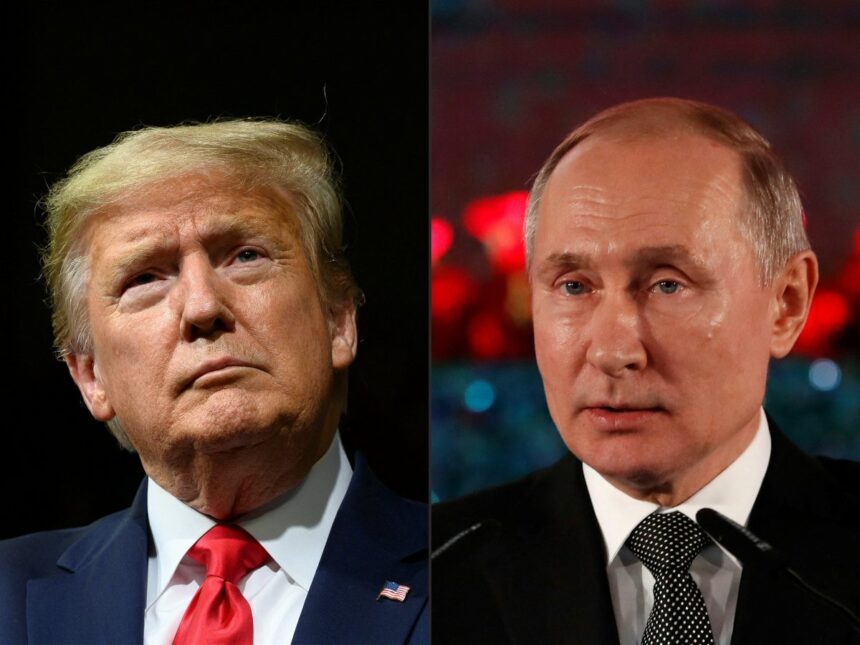
Trump announced the plan Friday on Truth Social after what he described as a successful conversation with Russian President Vladimir Putin. He said more than 300,000 tonnes would be supplied immediately, followed by additional shipments, including 500,000 tonnes in November and 1 million tonnes afterward. Trump also said Russia would deliver 3 million tonnes within a short period, subject to the condition of its refineries. The quantities and schedule were presented by Trump; independent confirmation of the Russian commitment was not immediately available.
The Treasury Department’s Office of Foreign Assets Control issued a general license authorizing specified transactions involving the sale, delivery, offloading or importation of Russian-origin diesel through April 7, 2027, according to the notice described in the report. The authorization includes imports into the United States. It creates a sanctions-law pathway for covered dealings, but does not itself guarantee that fuel will be produced, exported, shipped or purchased.
That distinction is significant because Russia has its own restrictions on fuel exports. Moscow recently extended a ban on diesel exports by producers through October 31, citing the need to protect domestic supply. The broader export restrictions are scheduled to remain in place until January 31, 2027. Russian officials have said they may consider easing restrictions if production exceeds domestic demand, but that is not the same as confirming the large deliveries Trump described.
The timing is politically and economically sensitive. Diesel prices have climbed amid a combination of disruptions to refining and shipping. Ukrainian strikes have damaged Russian energy infrastructure, while the conflict involving Iran has restricted fuel flows through the Strait of Hormuz. A recent analysis by the Dallas Federal Reserve said refinery outages and transportation problems have pushed refined-fuel prices well above what crude-oil prices alone would suggest. Diesel markets have been especially tight because the product depends on functioning refineries and reliable routes to market.
Russia’s ability to supply substantial additional volumes may be constrained by those same factors. Ukraine said this week that its strikes had disabled more than half of Russia’s oil-refining capacity, a claim that could not be independently verified. The Associated Press reported that the attacks have contributed to fuel shortages inside Russia, while the International Energy Agency has estimated that Russian diesel output has fallen. Moscow has not published a comprehensive account of damage to its energy infrastructure.
The export ban reflects pressure on Russia’s domestic market as well as damage to production. Russian officials have pointed to local supply needs, and Deputy Prime Minister Alexander Novak said the government would monitor output before considering any partial reopening. President Putin had also said Russia would not supply diesel to global markets until sanctions were lifted, according to reporting earlier this month. The new U.S. authorization removes one potential obstacle for transactions subject to U.S. sanctions, but it does not resolve those Russian policy questions.
Nor is it certain that the announced volumes would quickly reduce prices. Fuel markets respond to the amount of product that actually becomes available, when it arrives, where it can be delivered and whether buyers can secure shipping and insurance. Even a large announced supply may have limited immediate effect if exports are delayed, refinery output is inadequate or the cargoes cannot reach regions facing the greatest shortages.
The move also creates a policy tension for Washington. Sanctions have been used to restrict Russia’s access to international finance and commerce following its invasion of Ukraine. Allowing transactions involving Russian diesel could increase available supply at a moment of high prices, but it could also create revenue for Russia. The authorization’s practical reach will depend on its detailed conditions and on which firms are willing and able to use it.
For consumers and businesses, the central question is whether the announcement translates into physical deliveries. Trucking, agriculture, shipping and other industries rely heavily on diesel, so a prolonged shortage can raise transport and production costs, potentially feeding into prices across the economy. For now, Trump’s statement signals a possible source of additional fuel, while Russia’s export restrictions, refinery disruptions and the uncertain delivery schedule leave the actual impact unresolved.
