

Ahmed Kamel – Egypt Daily News
Iran has accused the United States of committing a war crime after a missile strike reportedly killed four people, including two children, during a wedding gathering in southern Iran. Washington has denied targeting civilians.
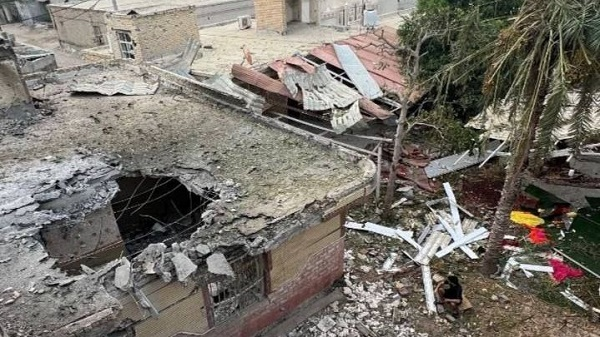
The Iranian Red Crescent Society said missile shrapnel struck a family celebration at a house in Kuhestak, in Sirik County, Hormozgan province. Four people were killed and 67 injured, according to the organization. Iranian media initially reported a death toll of five.
The victims were identified as 50-year-old Zarkhatoon Taheri, 43-year-old Kolsum Mallahi Nazhdnia, 16-year-old Mohammad Mallahi, and four-year-old Amirali Karimi.
Ali Mallahi, the bride’s father and the owner of the house, said in a video broadcast on Iranian state television that the strike hit the building during his daughter’s wedding ceremony.
Iranian Foreign Ministry spokesman Esmaeil Baqaei described the incident as a “war crime.” Parliamentary speaker and senior negotiator Mohammad Bagher Ghalibaf also condemned the attack, accusing the United States of deliberately targeting Iran.
US Central Command said it was aware of reports about the incident but maintained that American forces “never target civilians.” Centcom spokesman Captain Tim Hawkins contrasted US operations with those of Iran’s Islamic Revolutionary Guard Corps.
Evidence reviewed indicated that a telecommunications tower near the wedding site had been destroyed. Videos and photographs showed significant damage to homes roughly 130 metres north of the tower, while forensic analysis placed the wedding house approximately 112 metres from it. A weapons specialist said debris visible in footage appeared consistent with an AGM-84 Standoff Land Attack Missile, a cruise missile used by the US.
Iranian authorities reported additional deaths in other American strikes. State media said seven people were killed in attacks near Ahvaz and Aghajari in Khuzestan province. The IRGC reported that four members of its aerospace force were killed in Kermanshah, while three Basij members died on Lavan Island in the Gulf.
The US said its strikes targeted Iranian air-defence installations, radar systems, and maritime assets. Centcom said the attacks followed attempted operations by the IRGC against US forces and commercial shipping in the Strait of Hormuz, a vital waterway through which roughly one-fifth of the world’s oil and gas shipments normally pass.
Iran retaliated by launching ballistic missiles and drones toward US-linked targets in Bahrain, Iraq, Jordan, Kuwait, and the United Arab Emirates. Iranian officials claimed that the attacks caused damage and casualties, including at Camp Titin, a US Marine facility on Jordan’s Gulf of Aqaba coast. US officials cited by Reuters said there were no American casualties.
Jordan’s armed forces said they intercepted or engaged 13 ballistic missiles, destroying 10. The remaining three landed in remote, uninhabited areas.
In Iraq’s Kurdistan region, Iranian media reported that a military maintenance facility, warehouses, and equipment in Erbil had been destroyed. Local reports also said drones struck a US surveillance balloon, although Iraqi authorities did not immediately comment.
Kuwaiti firefighters extinguished a blaze at a residential complex after it was hit by a drone. No casualties were reported.
The IRGC separately claimed that two tankers caught fire after striking mines while being guided through what it called an “illegal route” in the Strait of Hormuz. Saudi Arabia’s national shipping company said two Filipino crew members had died in a security incident involving its crude-oil tanker SIDR while it was transiting the waterway.
The latest escalation follows the collapse of a US-Iranian memorandum of understanding reached in June. The agreement had called for an end to hostilities, the reopening of the Strait of Hormuz, and negotiations on Iran’s nuclear programme, US sanctions, and a permanent ceasefire.
The United States and Israel launched a joint offensive against Iran on February 28, killing Iran’s supreme leader and several senior officials, according to the report. Iran responded with missile and drone attacks against Israel, US bases, and allied states in the Gulf, while commercial traffic through the Strait of Hormuz was effectively halted.
Although Washington indicated last week that it would prioritize economic sanctions over further military action, renewed attacks have since intensified. Iranian officials have dismissed the sanctions as a continuation of earlier US pressure, while both sides continue to accuse the other of threatening commercial shipping and regional security.
