
Ahmed Kamel – Egypt Daily News
A trail of weapons, cargo flights, port deals and military partnerships has placed the United Arab Emirates at the center of a widening debate over power around the Red Sea. From Sudan’s battlefields to airfields in the Horn of Africa and islands off Yemen, critics see a pattern: Abu Dhabi builds relationships with local forces and secures strategic footholds, while insisting its role is commercial, humanitarian or defensive.
The record is substantial but not every allegation is proven, and evidence of Emirati involvement in one country does not establish responsibility for events in another. The UAE denies arming either side in Sudan and says its aid operations are intended to help civilians. That position is central to the story, as are the reports, government findings and physical evidence that have challenged it.
Sudan: weapons, flights and money
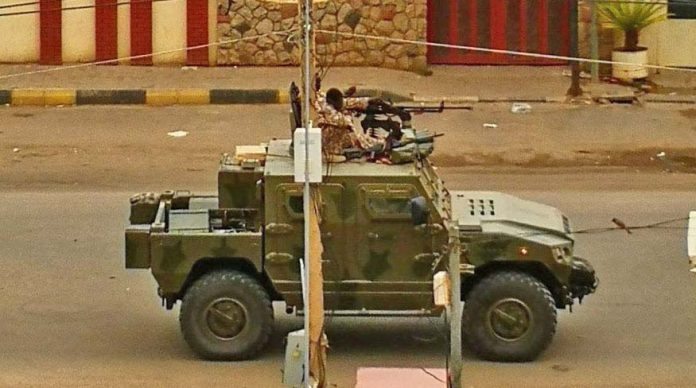
Some of the most concrete evidence concerns weapons found in the hands of Sudan’s Rapid Support Forces, or RSF. Amnesty International identified Chinese-made GB50A guided bombs and AH-4 howitzers in RSF possession. The organization said the weapons were almost certainly re-exported to Sudan by the UAE. Its case regarding the howitzers rested in part on international arms-transfer data showing that the UAE was the only country to have imported the AH-4 from China, in 2019. The UAE called Amnesty’s report misleading.
A separate investigation traced mortar rounds found in an RSF convoy in North Darfur to ammunition Bulgaria had sold to the Emirati military in 2019. The serial numbers reportedly matched. Bulgaria said it had never authorized the ammunition’s onward transfer. A matching serial number can establish the history of a munition more clearly than its route from one owner to another; it does not, by itself, identify who arranged the transfer or when it happened.
The United Nations’ Panel of Experts on Sudan has also examined allegations of a supply route through Chad. In its 2024 report, the panel described claims that the UAE had provided military support to the RSF through Amdjarass as credible. The UAE has said flights to Chad carried humanitarian assistance, including supplies for a field hospital. Other reporting, drawing on flight records and satellite imagery, has described cargo flights from Abu Dhabi and Ras Al Khaimah to Amdjarass, as well as drone hangars and a control station near the hospital. The flights are documented; what every aircraft carried remains a separate question.
The allegations extend from military equipment to finance. On January 7, 2025, Washington determined that the RSF had committed genocide in Darfur and announced sanctions against seven UAE-based companies it said were connected to the group. The U.S. Treasury Department said Capital Tap Holding had provided the RSF with money and military equipment. It also accused a gold company of buying Sudanese gold and flying it to Dubai. Those are U.S. government findings and allegations, not a court judgment against the UAE.
Human Rights Watch and other investigators have separately traced hundreds of retired Colombian soldiers recruited through a security company in Abu Dhabi and sent to fight alongside the RSF. The United States sanctioned the Colombian recruiter. Human Rights Watch said it found evidence of Colombian personnel in El Fasher in October 2025, when the RSF seized the city. Survivors later described executions and rape to Amnesty International. Amnesty’s secretary-general, Agnès Callamard, said the atrocities were facilitated by UAE support for the RSF. The UAE rejects the broader charge that it supports the paramilitary force.
Abu Dhabi has emphasized its humanitarian contribution. In a November 2025 statement, the UAE said it had provided $784 million in assistance to Sudan since the conflict began, citing United Nations data, and called for a ceasefire and unrestricted access for aid. It also condemned abuses by both the RSF and the Sudanese Armed Forces. Its account of the cargo flights is that they served humanitarian operations.
The dispute has spilled into diplomacy and commerce. Abu Dhabi Ports signed a $6 billion agreement in 2022 to develop a port at Abu Amama on Sudan’s Red Sea coast. Sudan’s government cancelled the deal in 2024, citing alleged Emirati support for the RSF, and cut diplomatic ties with the UAE in May 2025. At the European Parliament, a resolution condemning atrocities in Sudan passed in November 2025 without naming the UAE. Reporting said Emirati officials lobbied lawmakers ahead of the vote; the UAE welcomed the resolution and said it supported international efforts to end the war.
Yemen: islands, runways and detention allegations
Yemen offers another, distinct chapter in the regional story. The UAE joined the Saudi-led coalition against the Houthi movement in 2015 and supported local forces in the south. In 2018, Yemen’s government protested after Emirati soldiers and tanks arrived on Socotra and took control of the airport. The Associated Press later linked a runway on Mayun island, in the Bab el-Mandeb strait, to Emirati activity.
A separate Associated Press investigation identified at least 18 detention facilities in southern Yemen operated by the UAE or forces it had created. The UAE denied that secret detention centers existed. Human Rights Watch has also reported allegations of abuse by UAE-backed forces, including the transfer of some detainees to the Emirati base at Assab, Eritrea. These accounts are allegations and investigations concerning Yemen; they do not prove what happened in Sudan.
Tensions with Saudi Arabia became unusually public in late 2025. UAE-backed separatists made rapid territorial gains in southern Yemen. Saudi Arabia called the advance a threat to its security, and its coalition struck a shipment it said contained weapons and vehicles for separatist forces. The UAE denied that the shipment contained weapons or was intended for a Yemeni faction. Yemen’s internationally recognized leadership demanded that Emirati forces leave, and Abu Dhabi later announced the withdrawal of its remaining forces. The episode exposed a widening rift between Gulf partners whose interests in Yemen had diverged.
Ports and power around the Horn
The contest extends across the Gulf of Aden and the Horn of Africa, where ports and airfields can serve commercial, logistical and military purposes. Somaliland granted the UAE a military base at Berbera in 2017, over objections from Somalia’s federal government. In January 2026, Mogadishu cancelled all agreements with the UAE, including arrangements involving the ports of Berbera, Bosaso and Kismayo and security and defense cooperation. Somalia said the decision was necessary to protect its sovereignty and territorial integrity.
In Eritrea, the UAE established a base at Assab in 2015 to support its Yemen campaign. The Associated Press reported that most of its equipment had been shipped out by 2021. Eritrean officials have also described a UAE request for access to the Dahlak Islands, which Eritrea says it refused. Eritrea’s foreign minister has criticized what he called Emirati “port imperialism.”
In Ethiopia, Al Jazeera tracked more than 90 flights over two months in 2021 from an Emirati military base to Harar Meda, the country’s main air base. The available record of those flights does not, by itself, establish their cargo or purpose. The video’s accompanying notes also cite a September 2026 report that the UAE publicly backed Ethiopia’s government in a new war; that claim should be assessed separately from the earlier flight data.
Influence beyond the battlefield
The broader allegations include political influence in Europe. French authorities opened an investigation after reports that an €8 million loan to Marine Le Pen’s party in 2017 had been routed through Noor Capital in Abu Dhabi. The investigation concerned the money’s origin; the reported route does not by itself establish that the UAE government financed the loan. In the United Kingdom, Nigel Farage’s parliamentary register listed about £10,000 in travel and hospitality paid for by the Abu Dhabi government for a December 2025 visit.
A separate investigation into leaked files reported that the Swiss firm Alp Services worked for the UAE from 2017 to 2020, profiling more than 1,000 people and 400 organizations in 18 European countries. Such claims describe alleged influence operations, not military activity, and require their own evidence and context.
Several governments have pushed back against Emirati influence or agreements. Djibouti took back its main container terminal from DP World in 2018. Sudan severed ties with the UAE in 2025; Somalia cancelled its agreements in 2026; and Algeria announced in September 2026 that it was severing diplomatic relations, citing “provocative and hostile” acts. Algeria did not specify the actions behind its decision, while the UAE said it hoped the rupture would be temporary.
The pattern is striking, but it should not be reduced to a single, proven bargain in which the UAE arms a proxy in exchange for a port. The record spans different countries, time periods and types of evidence: documented commercial agreements, government allegations, weapons identified by investigators, flight tracking, interviews and denials. Each claim has to be judged on its own merits.
What links them is geography. Ports, islands, airfields and shipping lanes around the Red Sea and Gulf of Aden carry immense strategic value. The central question is not simply whether the UAE has expanded its presence it plainly has through investment and security partnerships but what particular relationships have enabled, and whether those ties have helped fuel conflicts whose heaviest costs are paid by civilians.
