
Ahmed Kamel – Egypt Daily News
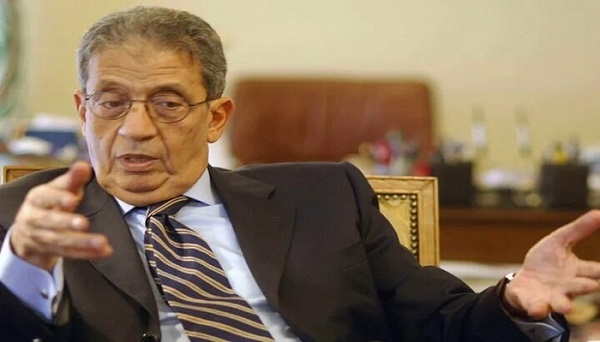
Former Arab League chief Amr Moussa has welcomed President Abdel-Fattah El-Sisi’s statement that Egypt’s constitution would not be altered, describing it as a consequential political message that should lead to stronger political practice and renewed work on legislation.
Moussa said he was pleased by President Sisi’s firm declaration at an Armed Forces cultural symposium marking the 53rd anniversary of the October War. The president had said that Egypt’s constitution was approved by its people and that “no one will touch it.” Moussa called the statement a defining position and a significant step in rebuilding the country.
His response went beyond praising the pledge. Moussa argued that the president’s words should be treated as a signal for a new phase in Egyptian political life, one requiring political groups to take their responsibilities more seriously and public institutions to uphold the constitutional framework.
“The constitution is the contract that regulates the relationship between the state and its citizens,” Moussa said in comments posted to his official social-media accounts. It sets out how power is exercised and transferred, he added, and protects rights and freedoms. Respect for the constitution and its stability, he said, are foundations of legitimate government and a stable society.
Moussa’s emphasis on the document as a contract places the debate on more than whether constitutional amendments are planned. His statement focused on how the existing constitution should guide relations between citizens and the state, and how its provisions should be reflected in law and political practice.
He called on Egypt’s parliament to complete legislation required by the constitution. Moussa said lawmakers should draft the supplementary laws envisaged in its provisions, presenting that work as a practical next step following President Sisi’s declaration. He did not identify specific laws or provide a timetable for parliament to act.
The former diplomat also urged political actors to respond to the president’s statement with what he described as a higher standard of political engagement. Respect for the constitution and the rule of law, he said, should become an established political culture not simply a formal obligation.
Moussa said the “new republic” required active political life and strong institutions. He expressed hope that the president’s words would be translated into constitutional and political practice, strengthening public confidence in the future. He described respect for the constitution as both a legal duty and a national responsibility, calling the pledge a historic achievement for those who contribute to making it real.
President Sisi made his statement amid renewed discussion about the constitution and Egypt’s political future. The 2019 amendments extended presidential terms from four years to six and allowed President Sisi’s current term to run until 2030. More recently, some of his supporters have publicly called for him to remain in office beyond that date. President Sisi’s remarks affirmed that the constitution would not be touched, although reporting on the speech also noted his statement that Egyptians alone would decide the outcome of any future initiative.
That wider context makes the distinction between a pledge and its implementation central to Moussa’s response. He welcomed the president’s words, but argued that they should be followed by concrete steps: parliament completing constitutionally required laws, political actors observing the rule of law, and institutions embedding constitutional principles in their work.
Moussa’s comments also place responsibility on the political community, not only on the president or parliament. His call for more serious political practice suggests that constitutional stability depends on how political institutions and participants operate within the existing framework. A declaration, in that view, gains lasting significance when it shapes laws, decisions and public life.
For now, Moussa has offered an endorsement of President Sisi’s assurance alongside a call to turn it into action. His message is that protecting the constitution means more than refraining from changing its text: it also requires completing its legislative foundations and respecting the rules it establishes. Whether parliament and political institutions take up that challenge will determine how far the pledge reshapes Egypt’s political landscape.
