

Ahmed Kamel – Egypt Daily News
A village-led program in Minya governorate combining monthly assistance for vulnerable families, support for orphaned children, school improvements and a large Quran memorization contest, has won praise from President Abdel-Fattah El-Sisi, who urged local leaders across Egypt to consider the example.
The initiative is led by Wafai Mekady, mayor of El-Sararia village. Its approach relies on residents, local charities and people able to contribute money or time, directing those resources toward community needs. Mekady has described the work as a practical response to rumors and public discouragement: instead of allowing pessimism to take hold, he said, residents could demonstrate what collective effort can accomplish.
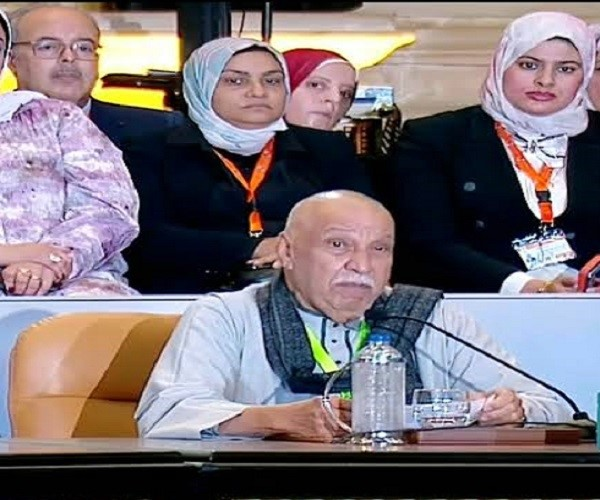
President El-Sisi praised the project during a session at Egypt Forum 2026, the second time the president had heard Mekady present the village’s experience. Their first meeting took place in late September at a gathering of ministers, governors, officials, local leaders and experts. The forum session renewed the president’s call for such initiatives to spread to other villages, both to improve residents’ lives and to ease pressure on the state.
“If every village mayor worked in his village as Mayor Wafai has, he would transform it into something completely different and relieve the state of a great deal,” President El-Sisi said.
The best-known initiative in El-Sararia is a Quran memorization contest that attracted around 1,300 participants. The event brought together community members from different religious backgrounds: priests and Muslim clerics joined in distributing prizes, according to Mekady’s account. Organizers said the participation and response encouraged residents to plan a larger contest next year.
The contest is one part of a broader set of activities. A village program supporting orphans provides regular monthly assistance to about 150 families, comprising roughly 500 people. Residents and local charities also help around 600 additional families considered among those most in need. The assistance is funded through contributions from people with the means to give and by community organizations.
The work extends beyond direct financial support. Residents have helped clean and prepare schools, while local leaders hear complaints and try to resolve everyday problems. The model, as described by Mekady, treats community participation as a complement to government services: people who know local needs can help identify priorities, organize contributions and follow up on practical issues.
The effort began, Mekady previously told local media, as a way to counter rumors that he said were spreading among residents and feeding frustration. He sought to replace discouraging talk with visible projects that could show how cooperation might improve conditions. The strategy puts emphasis on concrete, locally organized work rather than waiting for outside intervention to address every problem.
President El-Sisi’s endorsement came during a national forum designed to bring together government officials, citizens, experts and representatives from different sectors to discuss Egypt’s development priorities. The gathering’s stated purpose includes reviewing past initiatives, examining current challenges and hearing proposals from society. The Sararia example offered a localized case study in the role that civic participation can play alongside national programs.
The president’s call to extend the approach raises a practical question: how easily can a model built on personal initiative and local giving be replicated in villages with different resources and needs? El-Sararia’s program depends on active organizers, contributions from residents able to help and cooperation among local institutions. Its success in one community does not by itself establish that the same results can be achieved everywhere, but the model’s focus on specific needs school readiness, family support and community events provides a framework other local leaders could adapt.
The Quran contest also illustrates how community events can serve purposes beyond their central activity. Organizers described the participation of priests and clerics in handing out awards as a public expression of solidarity among residents. Meanwhile, monthly assistance and support for schools address recurring needs that are less visible but have direct effects on families.
Mekady’s initiatives reflect an approach in which local residents are not only recipients of services but contributors to community development. Their efforts do not replace the responsibilities of public institutions, particularly in providing essential services and social protection. Rather, they can identify gaps, mobilize local support and help residents respond to immediate concerns.
By praising El-Sararia, President El-Sisi made the village’s experience a prominent example of community action at the forum. Whether the initiatives can be expanded will depend on the capacity of other villages to organize volunteers, sustain funding and build trust among residents. In Sararia, the stated aim is straightforward: turn shared effort into practical improvements, support households facing hardship and give residents a visible reason to believe that local problems can be addressed.
