

Ahmed Kamel – Egypt Daily News
President Abdel-Fattah El-Sisi has called for the construction of 200,000 homes for rent, with the government and Tahya Misr Fund each covering half the project’s cost. He also urged officials to complete Egypt’s Decent Life rural development initiative by 2030, presenting both plans as part of a wider effort to reshape the country’s urban landscape.
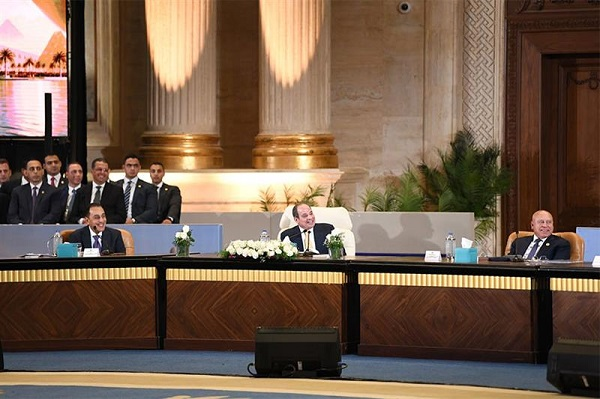
Speaking at a session on urban development during the second day of Egypt Forum 2026 on Tuesday, President El-Sisi said rental housing should become a more accessible alternative to homeownership. The session, attended by Prime Minister Mostafa Madbouly, reviewed infrastructure and development projects undertaken since 2014, including roads, bridges, railways, metro networks, ports, new cities, housing and water and sanitation systems.
The forum, scheduled to run from October 19 to 24, was established as a venue for discussing government policies, national challenges and future priorities. Its organizers have described it as a platform for dialogue among officials, specialists, businesses and members of the public, with discussions intended to inform a three-year implementation plan.
President El-Sisi argued that Egypt’s development challenges could not be solved all at once, or through proposals that did not take account of the country’s circumstances and limited resources. He said only about 7 percent of Egypt’s territory was inhabited, a concentration he linked to mounting pressures on housing, transport, security, investment and public services.
The growth of Cairo’s informal settlements, he said, reflected decades of population expansion without sufficient comprehensive urban planning. He also cited deteriorating transport services and other problems associated with crowded urban areas as consequences of that imbalance.
The president cautioned against expecting the country to complete a sweeping transformation in a decade. Development, he said, could take 50 to 100 years in other countries, and Egypt would need more time than the 10 or 12 years often cited in public debate. Achieving major progress over 20 to 30 years, he argued, would itself represent a significant accomplishment. The government, he added, remained committed to completing its current development plans by 2030.
The housing proposal comes amid renewed debate about the role of rental accommodation and the effects of Egypt’s housing policies. President El-Sisi said the old rent law was intended to help revive the rental market, which he described as one way to expand access to housing beyond ownership. He argued that the housing model pursued over previous decades had contributed to unplanned development, while the state had been unable to replace private businesses and civil society in meeting demand.
The president also urged closer cooperation between the government and private investors, while calling on businesses to contribute to community development. The proposed 200,000 rental homes would be developed in cooperation with Talaat Moustafa Group, with public funding shared equally between the government and Tahya Misr Fund, according to his remarks.
The housing announcement followed a separate agreement between the state and Talaat Moustafa Group covering four major mixed-use developments, with a stated investment value of 11 trillion Egyptian pounds. The planned projects include North Madinaty; a development spanning 11.3 million square metres in Alexandria; an integrated industrial, logistics and real estate project in the Abu Qir area; and a North Coast destination modelled on the SouthMED development.
President El-Sisi congratulated the parties on the agreement, saying the state encouraged investment across sectors while expecting investors to support broader social development. The scale of the announced figure and the projects’ long-term nature make their eventual delivery, financing and economic impact important questions for the coming years.
Rural development was another central part of the president’s agenda. He said projects under the Decent Life initiative, known in Arabic as Haya Karima, should be completed by 2030 at the latest. The program aims to improve conditions in rural communities, where infrastructure needs can include roads, sanitation, drinking water and public services. El-Sisi stressed that cooperation with the private sector would be essential to meeting national development goals.
He pointed to the experience of Wafai Mekady, mayor of El-Sararia village in Minya Governorate, as an example of how local leadership could address village-level problems and reduce pressure on central government. He also called on media organizations and public institutions to explain government policies and projects, arguing that greater public awareness should be based on clear information.
The president defended difficult infrastructure decisions as well. On road tolls, he said current revenues did not cover the costs of road investment or even maintenance, illustrating the financial pressures involved in expanding and operating public infrastructure. He also referred to efforts to resolve electricity shortages, describing reliable power as necessary to support development and strengthen the state.
Addressing the removal of some cemeteries, President El-Sisi said groundwater had affected a significant share of burial sites, creating what he described as a religious and humanitarian problem. While leaving the cemeteries untouched might seem preferable, he said, the government had a responsibility to respond with respect for citizens. The state had built, or was building, around 70,000 replacement graves in three phases near Helwan and 10th of Ramadan City, with the government covering the associated costs.
The proposals presented at the forum connect large-scale investment with public responsibilities: housing access, rural services, infrastructure and the management of limited resources. Their success will depend not only on the stated 2030 deadlines but also on funding, coordination and whether the projects meet the needs of the communities they are intended to serve.
