

Ahmed Kamel – Egypt Daily News
Egypt’s energy transition is not simply a question of building more power stations. It depends on financing an interconnected system of generation, transmission and distribution and explaining those costs to consumers, President Abdel-Fattah El-Sisi said at Egypt Forum 2026.
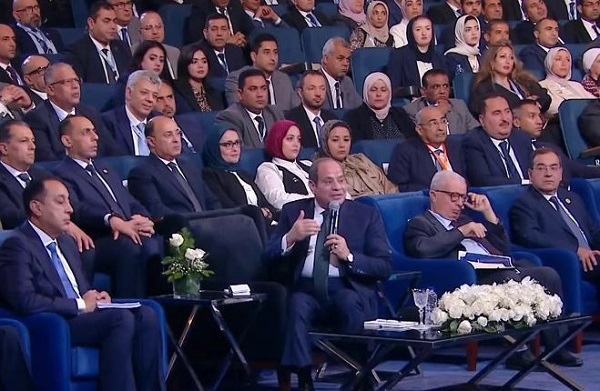
Speaking Thursday at a session on the country’s energy sector, President Sisi described the forum as a way to make complicated policy issues more accessible to the public. “I am holding the forum for you,” he said, addressing citizens, and argued that discussions about energy should not be confined to technical specialists.
The emphasis on public understanding comes as governments face competing pressures: keeping electricity reliable and affordable, maintaining existing infrastructure and investing in lower-carbon sources. For Egypt, Sisi said, any credible proposal must make clear how much it would cost, how long it would take and where the money would come from.
That calculation involves more than the construction of a new generating plant. Electricity must be produced, carried through transmission lines, distributed to homes and businesses, and managed by control systems that keep supply in balance with demand. A plan that focuses only on adding generation capacity, the president suggested, risks overlooking the investments needed to deliver power reliably.
The same principle applies to renewable energy. Solar and wind projects can add new sources of electricity, but bringing their output into the wider system also requires adequate grid capacity and operational flexibility. The International Energy Agency has identified grid expansion, storage and more flexible electricity systems as important to integrating higher levels of variable renewable power. The costs and timelines for those supporting investments are therefore part of the transition, not an afterthought.
President Sisi said plans must also take account of international developments that can change costs during implementation. Geopolitical tensions and shifts in energy markets can affect prices and project calculations, he said, making it necessary to reassess assumptions rather than treat budgets as fixed.
The president’s remarks underscored a difficult public-policy balance. Consumers may regard energy prices as burdensome, while the state must weigh those concerns against the cost of meeting national demand and maintaining the system. Sisi said officials should explain the resources available to the government and acknowledge when the needs of a proposed project exceed what public finances can cover alone.
Funding, in that sense, is not a separate issue from energy security. It shapes which projects can move forward, how quickly they can be completed and whether the infrastructure can be maintained over time. Sisi also highlighted the need to pay energy-sector partners on schedule, linking timely payments to the system’s continued operation and long-term sustainability.
His call for clearer public explanations reflects a wider challenge for energy planners: the benefits of new infrastructure may be visible only after years, while financing decisions and price pressures are felt much sooner. Officials must explain not only what a project promises, but also the investments it requires and the constraints that could delay it.
The session, “The Egyptian Energy Journey: National Achievements and Future Prospects,” took place on the fourth day of the forum’s economic programme. Other topics included investment, manufacturing, employment, foreign-currency resources, debt management and Egypt’s economic direction through 2030.
Egypt Forum 2026 opened on October 19 and is scheduled to continue through October 24. Organizers describe it as a venue for discussion among citizens, government officials and specialists, with an online platform for public submissions.
President Sisi’s message at the energy session was that public debate should begin with a realistic account of the system’s needs. Reliable electricity and a growing renewable-energy sector require connected infrastructure, sustained financing and decisions made amid changing conditions. For citizens to assess those choices, he said, they need an explanation of both the ambitions and the bill.
