

Ahmed Kamel – Egypt Daily News
Egypt marked Navy Day on October 21, commemorating the 1967 sinking of the Israeli destroyer Eilat by Egyptian missile boats. The anniversary honors the operation as a defining moment in the history of the Egyptian Navy and a turning point in the use of ship-launched missiles in modern naval warfare.
The Egyptian Navy is one of the main branches of the country’s armed forces. Its responsibilities include protecting Egypt’s Mediterranean and Red Sea coastlines, securing maritime borders and safeguarding ports and the approaches to the Suez Canal. The strategic importance of those duties is considerable: Egypt’s coastline links two major seas, while the canal is a vital route for international shipping.
The navy traces its institutional origins to 1946, when it was established by royal decree as the Royal Naval Service. Mahmoud Hamza Pasha was appointed its commander while also serving as director general of the administration responsible for ports and lighthouses. Naval officers and sailors who had worked in the Coast Guard service formed part of its early personnel. In 1959, it was renamed the Egyptian Navy and designated one of the armed forces’ principal branches.
Its annual celebration is held on October 21 because of the events of that date in 1967, when Egyptian missile boats struck the Israeli destroyer Eilat in the Mediterranean off Port Said. The ship, originally built for Britain’s Royal Navy as HMS Zealous, had been sold to Israel and was operating as INS Eilat.
The sinking took place four months after the Six-Day War, during a period of heightened military tension. Egyptian accounts say Eilat had continued to patrol near Egypt’s coast, and that the Egyptian command ordered its destruction after it entered Egyptian waters. Historical accounts differ on the location: several describe the attack as occurring in international waters off Port Said. The incident became one of the early, consequential engagements of the War of Attrition.
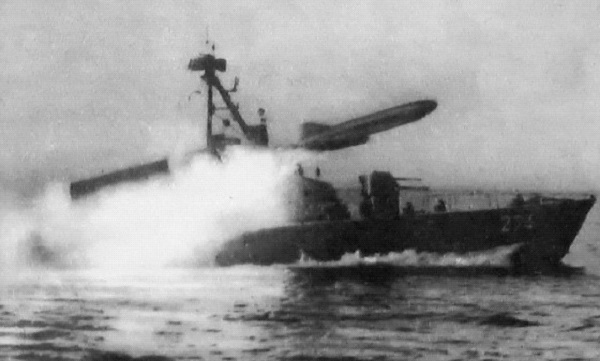
Egyptian forces used Soviet-built Komar-class missile boats, each armed with Styx surface-to-surface missiles. In the attack, missiles struck the destroyer in two waves. The first hits caused severe damage and fires; a later strike came as the crew was dealing with the emergency and rescue efforts were being organized. Eilat sank after being hit by three missiles. A fourth missed.
The destroyer had a crew of about 199. Forty-seven sailors were killed, and approximately 90 to 100 were wounded. The attack demonstrated that relatively small missile boats could inflict catastrophic damage on a much larger warship. It is widely regarded as the first time a ship was sunk in combat by a surface-to-surface missile launched from a missile boat, an event that drew international attention to the changing risks facing traditional surface fleets.
The operation also carries a distinct place in Egyptian military memory because it followed the country’s defeat in the Six-Day War. The successful attack was celebrated in Egypt as a demonstration of naval capability and resolve at a difficult moment. Yet the sinking was not the same as the separate Egyptian operations against the Israeli port of Eilat, which targeted ships and port facilities. The similar names can cause confusion: one refers to the Israeli destroyer sunk off Port Said; the other to attacks on the southern Israeli port.
The aftermath included an Egyptian decision not to interfere with Israeli efforts to rescue survivors. According to the account provided by Egyptian authorities, Israel asked international monitors to ensure that its aircraft could conduct the rescue, and Egypt agreed not to obstruct the operation. The decision meant that the sailors in the water could be recovered without Egyptian forces attacking the rescue effort.
That episode is often recalled alongside the military action as part of the story of the sinking: a forceful attack on a warship followed by restraint during the rescue of its crew. The distinction matters in a commemoration that can otherwise be reduced to the weaponry and the result.
For the Egyptian Navy, October 21 is therefore both an anniversary of a successful operation and a reminder of how naval warfare changed. The sinking of Eilat showed that missile technology could reshape the balance between large ships and smaller, faster vessels. More than five decades later, the date remains a central part of the navy’s history and a symbol of its role in protecting Egypt’s maritime approaches.
