
Ahmed Kamel – Egypt Daily News
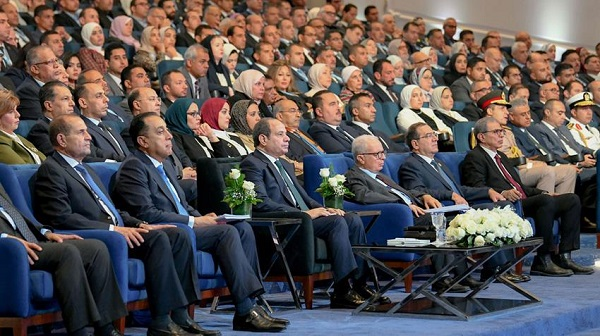
Egypt has storage capacity for petroleum products, but filling reserves requires money the government says it has had to direct elsewhere. President Abdel-Fattah El-Sisi said at Egypt Forum 2026 that the country had not fully stocked strategic oil depots with a combined capacity of 33 million barrels, citing a financing need of about $2.5 billion.
The remarks highlighted a distinction at the heart of Egypt’s energy-security challenge: storage infrastructure is not the same as a reserve of fuel ready for use. Tanks and depots provide the ability to hold supplies, but acquiring the oil, transporting it and maintaining the stockpile all require funding.
President Sisi said the facilities were built while Tarek El-Molla was petroleum minister and could, when filled, cover the country’s needs for between six and eight months. He did not specify how much oil is currently held in them, what level of reserves the government is targeting or when the depots might be fully stocked.
He said the government’s immediate financial priority had been settling overdue payments to foreign oil and gas companies. Egypt cleared about $6.1 billion in arrears by June 2026, according to the Petroleum Ministry. The government said the settlement was intended to restore confidence among international partners and encourage investment in exploration and production. Delayed payments had previously constrained companies’ investment programmes, while domestic output fell short of demand.
The investment drive has brought new commitments, but increased production takes time. Exploration, drilling and field development can take years before they deliver supplies. Meanwhile, Egypt has relied more heavily on imports to meet domestic energy needs, including natural gas for power generation.
New balance-of-payments figures underline the pressure. Egypt’s petroleum trade deficit rose 31.5% in fiscal year 2025–26 to $18.3 billion, from $13.9 billion a year earlier. Petroleum imports increased to $24.9 billion, while exports reached $6.6 billion. The central bank attributed the increase in imports chiefly to higher purchases of natural gas and crude oil, alongside greater imported quantities.
The figures point to a growing cost not only from international fuel prices but also from the volume of energy Egypt must buy abroad. The weakening pound can compound the pressure by making dollar-priced imports more expensive in local currency. That affects the state budget and can feed into the cost of electricity and fuel, particularly when retail prices do not fully reflect the cost of supply.
Prime Minister Mostafa Madbouly said the national budget had been prepared on the assumption that oil would cost $75 a barrel, while prices had climbed to about $110. The gap, he said, creates additional expenses for securing fuel and natural gas. Sisi likewise said the burden of rising international oil prices exceeded what Egypt could comfortably absorb, and described current fuel and electricity prices as below their full economic cost.
The president has previously cited a financing shortfall in the electricity sector. In March, he said the annual gap was close to EGP 500 billion, and that petroleum products used to run power stations cost about EGP 600 billion a year, compared with roughly EGP 100 billion paid by the Electricity Ministry. He said the state was carrying much of the difference.
Storage plans must therefore compete with other urgent calls on public finances: fuel imports, power generation, payments to energy partners and wider economic obligations. President Sisi said that settling the arrears was necessary to preserve the state’s credibility with international companies and encourage them to develop fields and wells that could eventually lift local production.
Other public figures provide a measure of the country’s investment in storage infrastructure, though they do not establish how much fuel is in reserve. In October, Egypt’s Cabinet said the country had built 84 petroleum-storage facilities over 12 years, with a combined capacity of 5.2 million tonnes, at a cost of EGP 42.7 billion. It also said additional storage projects worth EGP 54 billion were under way. Those facilities cover different petroleum products and should not be confused with a confirmed stock of crude oil ready for consumption.
Separate reports in September described a plan to assemble a 16-million-barrel crude stockpile, including supplies contracted from Libya and Iraq, with the aim of completing it before the end of 2026. That reported target is not the same as the 33-million-barrel capacity Sisi cited: one concerns a stockpile plan, the other the capacity of strategic depots.
The challenge for Egypt is turning infrastructure and investment commitments into reliable supplies while managing the immediate cost of imports. Clearing payments to foreign producers may support future output, but it does not immediately remove the need to buy fuel. And unused storage capacity offers limited protection from price or supply shocks until it is filled.
President Sisi did not give a timetable for doing so. His comments instead exposed the financial choice facing the government: how to balance the cost of building a buffer against the competing demands of maintaining power supplies, importing fuel and restoring domestic production.
