
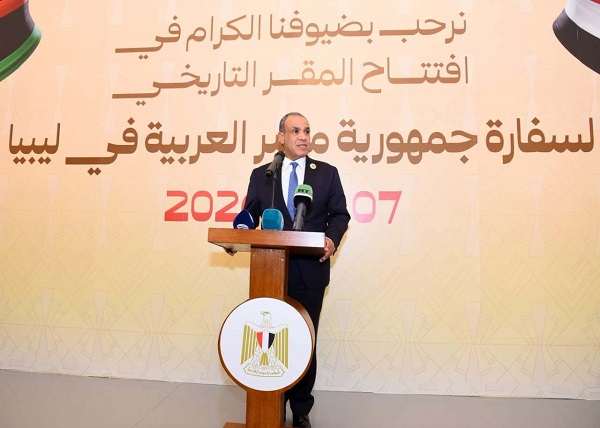
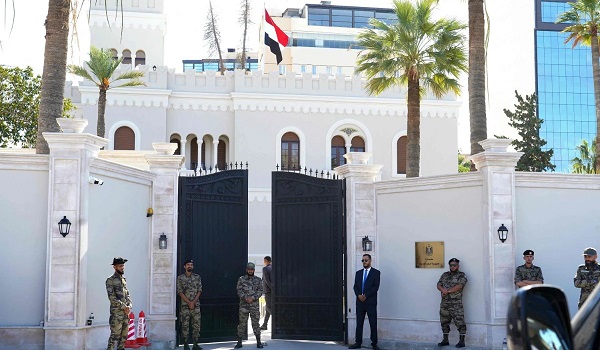
Egypt has reopened its embassy in Libya’s capital, Tripoli, restoring a direct diplomatic presence in the city after a 12-year closure. Foreign Minister Badr Abdelatty inaugurated the mission’s historic headquarters on Saturday, November 7, in a move that signals renewed engagement with Libya’s western-based authorities.
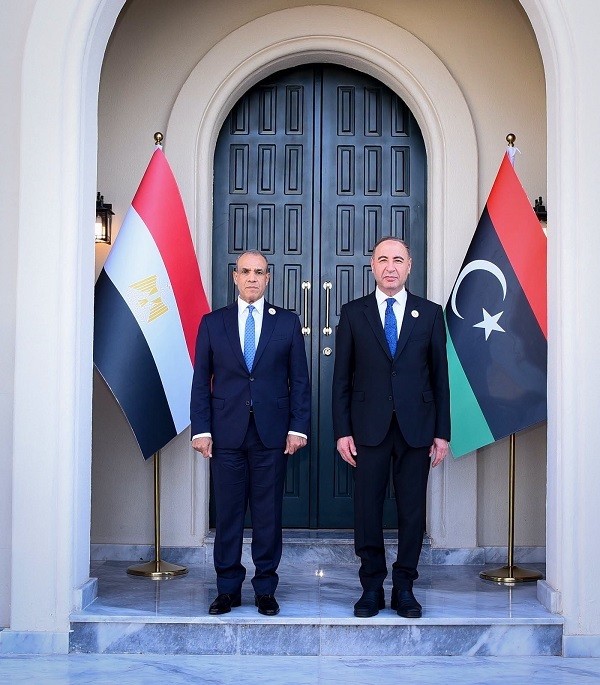
The reopening comes as Libya remains divided between rival political and military centres. In Tripoli, the internationally recognised Government of National Unity is led by Prime Minister Abdulhamid Dbeibeh. In the east, a rival administration led by Osama Hammad operates alongside the House of Representatives and forces commanded by Khalifa Haftar. Cairo has long been a prominent supporter of Haftar, making the renewed diplomatic presence in Tripoli a notable development in Egypt’s relations with both sides.
At the reopening ceremony, Abdelatty highlighted the historical importance of the embassy building and the longstanding human and cultural ties between Egypt and Libya. He described the site as part of Tripoli’s historical memory, and said its continued use as a diplomatic mission would connect its heritage with present-day needs and future ambitions.
The minister’s visit also included talks with Dbeibeh on bilateral relations and ways to expand cooperation across different sectors. The two sides signed a memorandum of understanding on health cooperation in the presence of Libyan Health Minister Mohamed Al-Ghouj. The agreement is intended to support exchanges of medical expertise and increase cooperation between healthcare institutions.
Egypt’s embassy was closed in 2014 after a series of security incidents and a sharp deterioration in conditions in Libya. In January of that year, Cairo evacuated its diplomatic mission after five Egyptian diplomatic personnel were kidnapped in two separate incidents. The diplomats were released later that month, but Egypt kept the embassy closed as fighting and instability continued.
The building was subsequently targeted. Armed men stormed and looted the unoccupied embassy in October 2014, and a car bomb exploded outside it the following month, causing material damage. The violence was part of a broader period of turmoil that led many foreign missions to leave Tripoli and coincided with the emergence of rival administrations in western and eastern Libya.
Egypt had considered restoring its diplomatic presence in Tripoli before the embassy’s reopening. In February 2021, a high-level Egyptian delegation visited the Libyan capital to discuss arrangements for reopening the embassy and consulate after the formation of a new United Nations-backed interim government. However, the historic embassy building remained closed until Saturday’s ceremony.
The reopening takes place against the backdrop of continuing disputes over Libya’s political future and its external relationships. Most recently, Libya’s eastern-based parliament ratified a long-disputed maritime agreement with Turkey. Egypt objected, saying the deal infringed upon its maritime zone. The agreement has added another point of friction to a region where questions of political legitimacy, borders, security and energy interests overlap.
For Cairo, reopening the embassy provides a channel for direct contact with officials in Tripoli, while Egypt continues to have substantial ties with actors in eastern Libya. The move does not, by itself, resolve the country’s political division or indicate that Egypt has abandoned its relationships in the east. It does, however, restore a formal diplomatic foothold in the capital and create a setting for routine exchanges with the western administration.
The health cooperation agreement offers one practical area in which the renewed engagement may develop. Its stated aims—sharing medical expertise and strengthening links between healthcare institutions—give the visit a concrete component beyond the symbolism of reopening the embassy. The discussions with Dbeibeh also covered broader bilateral cooperation and consultation on matters of mutual interest.
Libya has struggled with instability since the 2011 uprising that toppled longtime leader Muammar Gaddafi. More than a decade later, competing institutions and armed forces continue to shape political life, and efforts to establish unified governance have faced repeated obstacles. Egypt’s return to Tripoli therefore unfolds within a complex landscape in which diplomatic access to both western and eastern authorities can carry strategic significance.
The embassy’s reopening ends a prolonged absence from Tripoli and marks a new phase in Egypt’s direct engagement with Libya’s western-based leadership. Its longer-term significance will depend on whether the renewed contact produces sustained cooperation amid Libya’s political divisions and unresolved disputes.
