

Ahmed Kamel – Egypt Daily News
Egypt has collected approximately EGP 26 billion from companies and entities seeking to regularize their land positions in the country’s rapidly expanding northwestern coastal region, according to a government official familiar with the process.
The amount, equivalent to roughly $500 million, was collected between June 2025 and August 2026. The plots covered by completed regularization procedures are located between kilometer 120 and kilometer 222 along the Alexandria–Matrouh coastal highway.
The payments form part of a wider government campaign to reorganize land ownership, accelerate stalled developments and impose tighter controls on construction activity along the Mediterranean coast. Authorities have been reviewing the legal status of landholdings, development obligations and outstanding financial dues owed by companies operating in the region.
Regularization allows companies that previously faced unresolved legal, administrative or financial issues relating to their plots to obtain formal recognition of their land positions, provided they meet the government’s requirements. These conditions generally include settling financial obligations, confirming approved land uses, completing documentation and adhering to construction and development schedules.
The process is being overseen by government bodies affiliated with the Ministry of Housing, including the New Urban Communities Authority and the agency responsible for development in the second sector of the northwestern coast.
The government has also established specialized committees to inspect projects and monitor whether developers are complying with approved building standards. Their work includes reviewing construction progress, checking the validity of licenses and ensuring that projects are being developed according to authorized plans.
Officials are expected to continue issuing construction permits for eligible developments. The permits will be linked to each project’s construction rate and approved timetable, meaning companies that fail to demonstrate progress may face additional scrutiny or enforcement measures.
The policy reflects a shift in the government’s approach to the North Coast. For decades, much of the area was developed as a seasonal destination dominated by private vacation compounds and summer resorts. More recently, the state has sought to transform the region into a year-round economic and urban zone with permanent residential communities, hotels, industrial facilities, commercial districts and public services.
In 2020, a presidential decree reassigned approximately 707,000 feddans of land in the northwestern coast to the New Urban Communities Authority. The move gave the authority a central role in planning and managing development across a large section of the coastline. The government began reorganizing the area in 2021, creating committees to survey existing projects, negotiate with landholders and determine the financial obligations associated with each development.
The land review has also been accompanied by tougher enforcement against inactive or non-compliant projects. In 2025, the Housing Ministry reclaimed several plots after their owners failed to meet contractual requirements, including construction deadlines and installment payments. Authorities also assessed additional plots for possible withdrawal, while negotiations continued with dozens of developers seeking to resolve irregularities.
The new rules are intended to discourage land speculation, in which companies acquire or retain plots without advancing construction. Government officials have argued that undeveloped land prevents infrastructure from being used efficiently and limits the region’s ability to generate jobs, tourism revenues and permanent economic activity.
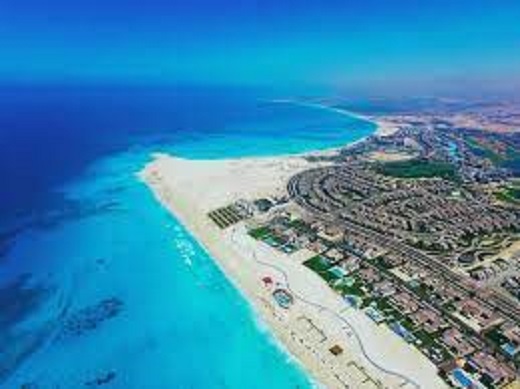
The North Coast has become one of Egypt’s most important real estate markets. Major projects include developments around New Alamein, Sidi Abdel Rahman, Ghazala Bay, Ras El Hekma, Dabaa and Sidi Heneish. The region stretches for roughly 500 kilometers along the Mediterranean between Alexandria and the Libyan border.
Ras El Hekma has become the most prominent project in the area following a major investment agreement between Egypt and the United Arab Emirates. The development is planned to include residential districts, hotels, entertainment venues, commercial areas, logistics facilities and an international airport. Egyptian officials have presented the project as a major catalyst for tourism, foreign investment and infrastructure development.
Government officials said in 2026 that construction at Ras El Hekma was advancing according to schedule, with work under way on infrastructure, hospitality, commercial and service components. The project is expected to encourage additional investment in surrounding areas and strengthen the coast’s position as a year-round destination.
New Alamein is also central to the government’s coastal development strategy. The city is being built as an integrated urban center with housing, hotels, universities, entertainment facilities, public services and a long waterfront promenade. Unlike traditional resort communities, it is intended to accommodate permanent residents and operate throughout the year.
The government’s efforts to formalize landholdings come as developers face rising construction costs, financing pressures and challenges related to infrastructure connections. Some companies have argued that delays can result from factors outside their control, including utility works, electricity lines, gas infrastructure and other obstacles affecting construction schedules.
In response, the New Urban Communities Authority has offered certain forms of relief to developers and property buyers in several new cities. These measures have included reductions in assignment fees, waivers on some late-payment penalties and additional time for projects affected by documented infrastructure problems. However, many of the concessions exclude plots on the western North Coast, where the government has maintained stricter controls over land transfers and development obligations.
The authorities are also conducting a nationwide survey of stalled real estate projects. The results are expected to identify developments that have stopped, fallen significantly behind schedule or failed to deliver units to buyers. The government plans to use the findings to determine whether projects should be restructured, transferred to other developers or subjected to additional enforcement.
Industry representatives have said that resolving stalled projects is important for protecting buyers and restoring confidence in the real estate market. Thousands of purchasers have paid for units in developments that have been delayed by years, while developers face disputes over permits, financing, land contracts and rising input costs.
For Egypt, the EGP 26 billion raised through North Coast regularization provides immediate revenue while also bringing landholdings into a more controlled legal and planning framework. The longer-term objective, however, is to ensure that the payments translate into completed projects, functioning communities and sustained economic activity.
The success of the policy will depend on whether authorities can balance enforcement with flexibility. Developers that comply with construction schedules and settle their obligations are likely to benefit from clearer legal status and improved access to permits. Companies that continue to delay construction or violate land-use conditions may face penalties, withdrawal of plots or renegotiation of their agreements.
As major projects move forward in Ras El Hekma and New Alamein, Egypt is attempting to reshape the North Coast from a seasonal vacation market into one of the country’s largest urban and investment corridors.
