

Ahmed Kamel – Egypt Daily News
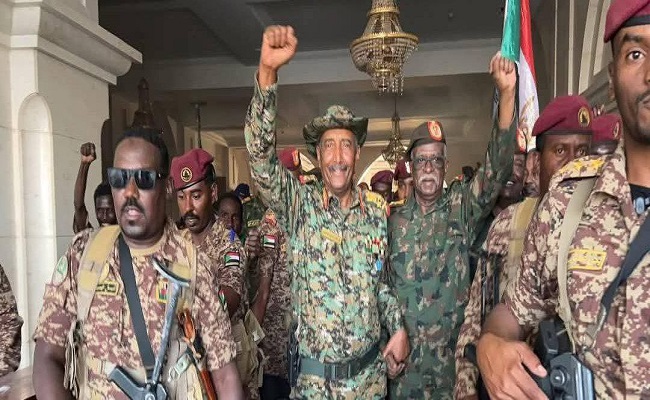
Sudan’s army chief and head of the Transitional Sovereignty Council, Abdel Fattah al-Burhan, has rejected pressure from the United States to accept a proposed ceasefire with the Rapid Support Forces, insisting that Khartoum will not surrender to conditions imposed by foreign governments.
Burhan’s remarks came after Washington withheld a visa that would have allowed him to travel to New York and address the United Nations General Assembly. The dispute has added a new diplomatic dimension to Sudan’s war, which has continued for more than three years and created one of the world’s largest humanitarian crises.
Speaking at an event in Khartoum, Burhan said Sudan did not need permission from another country and would not change its position under external pressure. He also reaffirmed that the army’s objective remained the defeat of the Rapid Support Forces, the paramilitary organization led by Mohamed Hamdan Dagalo, widely known as Hemedti.
“We will not accept conditions imposed by anyone,” Burhan said, according to statements reported by regional media. He pledged to continue military operations until the RSF was pushed out of areas under its control, including territory in Darfur and other parts of the country.
The comments followed a U.S. proposal for an unconditional 90-day humanitarian truce. The plan was presented by Massad Boulos, a senior adviser to President Donald Trump for Arab and African affairs, as part of a broader effort to stop the fighting, open routes for humanitarian assistance and create conditions for political negotiations.
The proposal reportedly included an immediate suspension of hostilities, protection for civilians and improved access for aid agencies. Washington has argued that a temporary ceasefire could provide an opportunity to negotiate a longer-term settlement and eventually establish a civilian-led political process.
Sudan’s military leadership has expressed reservations about the plan. Army officials fear that a pause without prior security arrangements would allow the RSF to strengthen its positions, move supplies and recruit additional fighters. They have also demanded that the paramilitary force withdraw from cities and civilian areas before any lasting ceasefire is implemented.
U.S. officials have not publicly confirmed that Burhan’s visa was formally conditioned on his acceptance of the truce. However, Sudanese diplomatic sources and Western officials cited in reports said Washington had linked the visa issue to the ceasefire proposal. The United States has said it does not comment on individual visa cases.
Burhan had been expected to lead Sudan’s delegation to the 81st session of the General Assembly and deliver the country’s address during the high-level debate. After the visa dispute, Sudan’s Foreign Minister Mohieldin Salem led the delegation and represented Khartoum at the meetings instead.
Sudan’s ambassador to the United Nations, Al-Harith Idriss, appealed to Secretary-General António Guterres, asking him to intervene with U.S. authorities. The ambassador argued that the Sudanese delegation had fulfilled the requirements for participation and that preventing Burhan from attending in person could conflict with obligations under the agreement governing the United Nations headquarters in New York.
Guterres expressed concern over the failure to issue the visa. The United Nations subsequently raised the matter with Washington, although the organization has limited ability to compel the host country to approve an entry request.
The visa dispute has also exposed the widening gap between Washington and Sudan’s military authorities. U.S. officials have criticized both the Sudanese Armed Forces and the RSF, saying neither side represents a legitimate constitutional government. Washington has called for a civilian-led political transition and has warned that continued military operations will deepen the country’s destruction.
The United States is working with Egypt, Saudi Arabia and the United Arab Emirates as part of a diplomatic effort to bring the warring parties toward a ceasefire. The initiative seeks to combine humanitarian access with negotiations on a political transition. However, repeated mediation efforts have failed to produce a durable agreement because both sides continue to believe that battlefield gains could improve their negotiating position.
The war began in April 2023 after months of tension between the army and the RSF over the future of Sudan’s political transition and the proposed integration of the paramilitary force into the regular military. Fighting quickly spread from Khartoum to Darfur, Kordofan, Gezira and other regions.
The conflict has killed tens of thousands of people and displaced millions inside Sudan and across neighboring countries. The United Nations estimates that more than 14 million people have been forced from their homes since the fighting began. Many communities face severe shortages of food, medicine, clean water and shelter, while humanitarian organizations continue to warn of famine and disease outbreaks.
The United States has also supported efforts to expand an international arms embargo beyond Darfur to cover the rest of Sudan. Washington argues that foreign weapons, military technology and logistical support have prolonged the conflict and enabled both sides to carry out attacks over greater distances. Sudan’s military authorities oppose the proposal, saying it could restrict their ability to confront the RSF while leaving external support for the paramilitary group unresolved.
Burhan’s refusal to accept the proposed truce signals that the army leadership remains committed to seeking a military solution. His position is likely to make diplomatic negotiations more difficult, particularly if Washington continues to use sanctions, travel restrictions and arms-control measures to influence the parties.
For civilians, the deadlock carries immediate consequences. Without a sustained ceasefire, aid deliveries will remain vulnerable, displaced populations will struggle to return home and the destruction of hospitals, schools and basic infrastructure will continue. The confrontation over Burhan’s visa may fade, but the larger disagreement over how to end the war remains unresolved.
