

Ahmed Kamel – Egypt Daily News
Iran has formally responded to a U.S.-backed proposal aimed at launching peace talks to end the escalating regional war, signaling a possible diplomatic opening even as military tensions continue to shake the Gulf and threaten global energy markets.
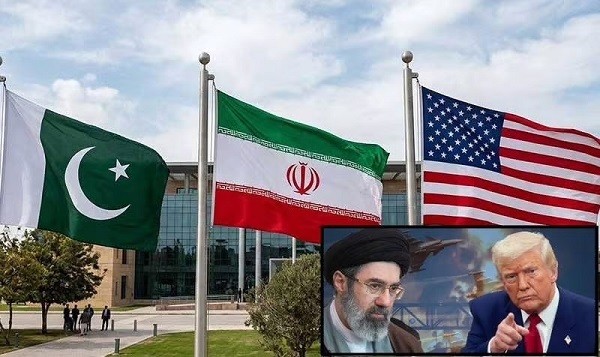
According to Iran’s state news agency IRNA, Tehran delivered its response Sunday through Pakistan, which has emerged as a key mediator between the opposing sides. Iranian state television said the response focuses on ending the war “across all fronts,” particularly in Lebanon, while also ensuring the safety of shipping routes through the strategically critical Strait of Hormuz.
The American proposal reportedly called for a cessation of hostilities before negotiations could begin on a series of contentious issues, including Iran’s nuclear program and regional military influence. The initiative comes as Washington faces mounting international pressure to prevent the conflict from spiraling into a full-scale regional catastrophe capable of triggering a prolonged global energy crisis.
The diplomatic development coincided with a rare breakthrough in maritime traffic through the heavily militarized Strait of Hormuz. Data from shipping analytics firm Kpler showed that the LNG tanker Al Kharratiyat, operated by QatarEnergy, successfully crossed the strait and sailed toward Pakistan’s Port Qasim without incident. The vessel became the first Qatari liquefied natural gas shipment to pass through the corridor since the outbreak of war on February 28.
Sources familiar with the matter said Iran approved the tanker’s passage as a confidence-building gesture toward both Qatar and Pakistan, two countries actively involved in mediation efforts. The move could help ease severe electricity shortages in Pakistan caused by disruptions to vital gas imports.
In another sign of cautious de-escalation, Iran’s semi-official Tasnim News Agency reported that a Panama-flagged bulk cargo ship heading to Brazil was also allowed to transit Hormuz under a route designated by Iranian armed forces. The vessel had reportedly failed to cross the strait earlier this month.
Despite these limited breakthroughs, security concerns across the Gulf remain dangerously high. After nearly 48 hours of relative calm, hostile drones were reportedly detected over several Gulf states on Sunday, underscoring the fragile nature of the month-long ceasefire.
The UAE announced that it intercepted two drones launched from Iran, while Qatar condemned a drone attack targeting a cargo vessel departing from Abu Dhabi in Qatari waters. Kuwait also confirmed that its air defenses responded to hostile drones that violated its airspace.
Iran has effectively imposed near-total restrictions on maritime traffic through Hormuz except for vessels linked to allied or approved nations. Before the conflict erupted, nearly one-fifth of the world’s oil supplies passed through the narrow waterway, making it one of the most strategically sensitive choke points on the planet.
As fears grow over the economic consequences of prolonged instability, diplomatic activity has intensified ahead of U.S. President Donald Trump’s expected visit to China later this week. International powers are racing to contain a conflict that has already rattled oil markets, disrupted shipping lanes, and threatened global economic stability.
Qatari Prime Minister Sheikh Mohammed bin Abdulrahman Al Thani reportedly warned Iranian Foreign Minister Abbas Araghchi that using the Strait of Hormuz as leverage would only deepen the crisis. He also discussed Pakistan-led mediation efforts with U.S. Secretary of State Marco Rubio during talks in Miami on Saturday.
Meanwhile, Iran appears to be preparing for a longer-term strategic confrontation over the waterway. Iranian lawmakers revealed they are drafting legislation that would formalize Tehran’s control over maritime access in Hormuz, including provisions that could ban vessels belonging to what Iran describes as “hostile nations.”
The latest developments suggest that while diplomacy may finally be gaining momentum, the Gulf remains on the edge of a dangerous escalation where a single miscalculation could ignite a wider regional war and send shockwaves across the global economy.
