

Ahmed Kamel – Egypt Daily News
Yemen is edging toward a renewed civil war as Iran-backed Houthi forces expand their control along the country’s western coastline, raising the risk of further attacks on one of the world’s most important maritime routes.
The capture of the port city of Mokha has given the Houthis a significant strategic advantage near the Bab el-Mandeb Strait, the narrow passage linking the Red Sea with the Gulf of Aden and the Indian Ocean. The waterway is a critical gateway for ships traveling between Asia and Europe, including oil tankers using the Suez Canal route.
The latest escalation threatens to undo a fragile truce that had brought relative calm to Yemen after years of devastating conflict. The country’s civil war killed tens of thousands of people, displaced millions and pushed much of the population toward hunger. A ceasefire involving the internationally recognized government and a Saudi-backed coalition began in 2022, but the agreement has never developed into a lasting political settlement.
Now, fighting is intensifying along the Red Sea coast.
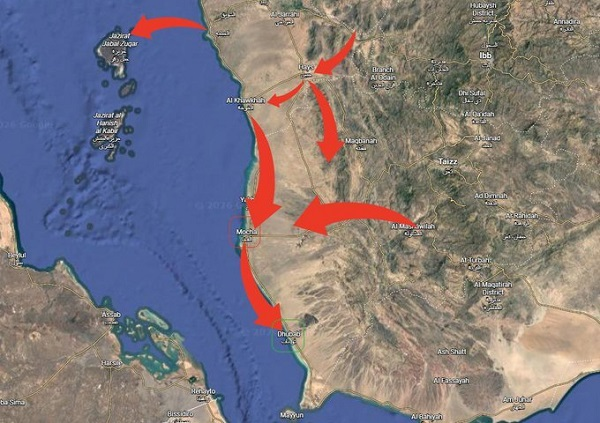
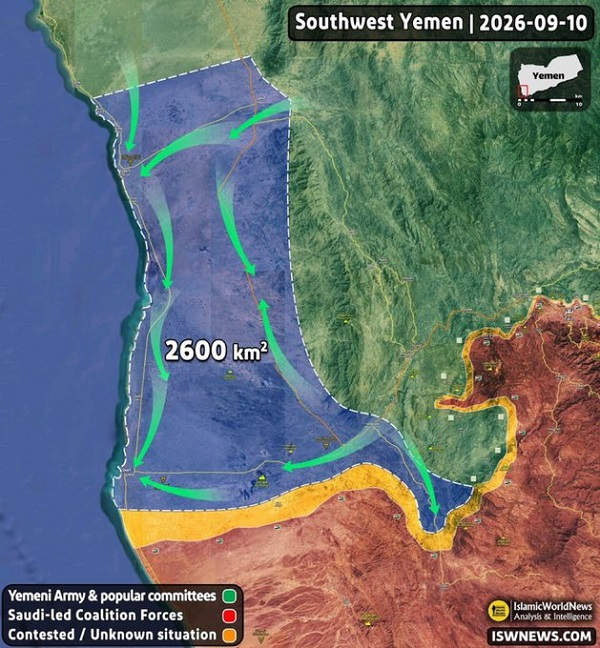
Houthi officials and Yemeni sources say the group has seized Mokha, which had served as the political, military and logistical headquarters of one of the most powerful forces aligned with Yemen’s recognized government. The city was previously captured by the Houthis during their 2015 advance, but government-backed forces retook it in 2017.
The fall of Mokha represents the Houthis’ most important territorial gain since the ceasefire. It places their forces roughly 80 kilometers from Bab el-Mandeb and opens a possible route toward Dhubab and Perim Island, two positions that are considered essential to defending the Yemeni side of the strait.
Government-aligned forces have reportedly withdrawn south from Mokha in what their commanders describe as a strategic regrouping. Major General Tareq Saleh, who leads the National Resistance Forces, said his troops had paid a heavy price while resisting an offensive supported by Iran.
The government’s remaining defensive line is now centered on Dhubab and Perim Island. Control of those locations would not automatically give the Houthis complete control over Bab el-Mandeb, but it could significantly improve their ability to monitor and threaten maritime traffic.
Reports that Houthi forces had also moved toward the Hanish Islands have added to concerns. The islands sit near important shipping routes in the southern Red Sea, although the reported advance has not been independently verified. If confirmed, the development could provide the Houthis with additional positions from which to observe or harass commercial vessels.
The group’s growing presence comes as shipping through the nearby Strait of Hormuz faces disruption during the conflict involving Iran, the United States and Israel. Bab el-Mandeb has therefore become even more important to global energy markets. Around 12 percent of the world’s seaborne-traded petroleum passed through the strait in 2023, according to estimates cited in the supplied material.
A direct closure of the waterway may not be necessary for the Houthis to cause economic damage. Attacks on individual ships, threats against vessels connected to Saudi Arabia or its allies, and uncertainty over the safety of the route could be enough to raise insurance costs and persuade shipping companies to avoid the Red Sea.
Many carriers have already demonstrated that they are willing to take the longer route around the Cape of Good Hope when security conditions deteriorate. Such diversions add thousands of kilometers to journeys between Asia and Europe, increasing fuel consumption, delivery times and transportation costs.
Oil markets have responded quickly to the growing risks. Brent crude reportedly climbed above $100 a barrel as traders assessed the possibility of simultaneous disruption around both Bab el-Mandeb and the Strait of Hormuz. A prolonged crisis in Yemen could add pressure to an already strained global energy system and intensify inflation in countries dependent on imported fuel.
The Houthis’ confrontation with Saudi Arabia is central to the latest escalation. The rebels oppose Riyadh’s support for Yemen’s internationally recognized government and have accused Saudi forces of attacking their territory. Saudi Arabia, in turn, has faced attacks against oil facilities and critical infrastructure, with reports of casualties and damage.
The conflict has also been affected by wider regional tensions. While Hezbollah in Lebanon and Hamas in Gaza have received much of the international attention during the broader confrontation with Israel and its allies, the Houthis have retained their ability to strike shipping and neighboring states from Yemen’s coastline.
Saudi Foreign Minister Prince Faisal bin Farhan has said diplomacy remains possible but warned that his country would defend itself. For Yemen, however, the danger is not limited to another round of regional confrontation. A sustained offensive could fracture the country’s already divided political and military landscape and return millions of civilians to the conditions that prevailed during the worst years of the civil war.
The next stage of the conflict will depend on whether Houthi forces can consolidate their hold over Mokha and maintain pressure toward Dhubab and Perim Island. If they succeed, the group would gain greater leverage over maritime traffic and negotiations with its domestic and foreign opponents.
Even without fully controlling Bab el-Mandeb, the Houthis could make the waterway too risky for many commercial operators. That prospect has turned Yemen’s latest battlefield into a global economic concern, with consequences that could extend from the Red Sea to oil markets and households around the world.
