

Ahmed Kamel – Egypt Daily News
Egypt has delivered a firm warning to European governments, rejecting reports that some countries may be considering the establishment of refugee reception camps in southern Mediterranean states, including Egypt.
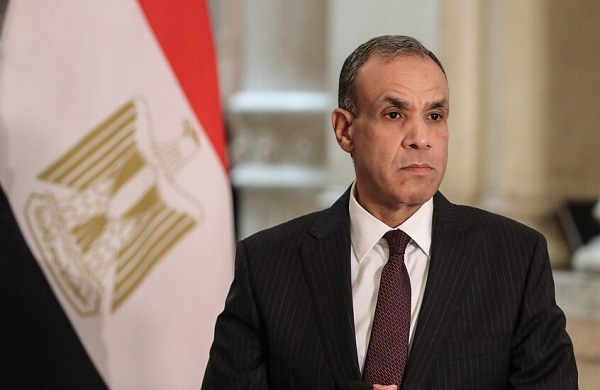
Foreign Minister Badr Abdelatty expressed Cairo’s opposition during a meeting with ambassadors from European Union member states in Egypt. According to a statement from the Egyptian Foreign Ministry, he said the country categorically rejected recent reports in European media suggesting that facilities could be created outside Europe to receive refugees arriving from European countries.
Abdelatty described the reported proposals as unacceptable under any circumstances. He said ideas involving the creation of refugee camps in Egypt or other countries in North Africa should not even be considered for discussion.
The minister’s remarks reflect Egypt’s growing concern over the possibility that European governments could seek to transfer some of their responsibilities for managing asylum seekers to countries outside the European Union. Egypt has repeatedly argued that it already carries a substantial burden by hosting millions of refugees, migrants and asylum seekers from across the region.
The country has received large numbers of people fleeing conflicts and political instability in neighbouring states, including Sudan, Syria, Libya and other areas affected by war and economic crisis. Egyptian officials have frequently called on international partners to provide greater financial and political support for countries that host displaced populations.
During the meeting, Abdelatty said Egypt’s approach to migration should focus on addressing the root causes that force people to leave their homes. He stressed the importance of development, employment and vocational training, arguing that long-term solutions require more than border controls or temporary accommodation centres.
He also called for a fairer international distribution of responsibility. Countries hosting refugees, particularly those near conflict zones, should not be left to manage the consequences alone, he said. Greater assistance should be directed toward strengthening national institutions, improving border management and expanding services for both refugees and host communities.
Egypt has sought to portray itself as a responsible regional partner in efforts to combat irregular migration. Authorities have worked with European governments to prevent boats carrying migrants from departing Egyptian shores, while also insisting that Cairo will not accept arrangements that effectively turn the country into a holding area for people seeking entry into Europe.
The issue has become increasingly sensitive as European governments face political pressure over asylum applications, irregular arrivals and the cost of supporting refugees. Some European politicians have advocated sending asylum seekers to so-called safe third countries while their claims are processed. Critics argue that such arrangements risk shifting responsibility away from Europe and could expose displaced people to inadequate protection or uncertain legal status.
The Egyptian minister’s comments came during a broader discussion of regional affairs, including the Israeli-Palestinian conflict. Abdelatty welcomed a joint statement issued by several European countries that supported the two-state solution and backed restrictions on imports from Israeli settlements.
The statement was reportedly supported by countries including France, Denmark, Ireland, Poland, Portugal, Spain and Sweden. European governments have increasingly debated whether economic measures should be imposed on settlement-related goods and services in response to continued construction and violence in the occupied West Bank.
Abdelatty reaffirmed Egypt’s rejection of Israeli settlement expansion, plans to annex Palestinian territory and violence committed by Israeli settlers. He said such policies threatened regional stability and undermined the possibility of establishing an independent Palestinian state.
He also stressed the importance of preserving the existing historical and legal arrangements governing Muslim and Christian holy sites in Jerusalem. Egypt has long regarded the status of the city and its religious sites as a central issue in any eventual peace agreement.
The minister further called for the full and immediate implementation of what he described as a comprehensive peace plan proposed by US President Donald Trump. He said the plan should address humanitarian conditions, support reconstruction and recovery, and create the foundations for lasting peace and security.
The meeting highlighted the connection between migration policy, regional conflict and international responsibility. Egypt’s position is that the refugee crisis cannot be managed through isolated security measures or by transferring displaced people from one country to another. Instead, Cairo wants European governments to focus on reducing the political, economic and security pressures that drive migration in the first place.
Egyptian officials have also warned that any attempt to establish permanent or semi-permanent refugee facilities on Egyptian territory could create serious political, economic and social consequences. Such facilities could increase pressure on local communities, require significant public resources and risk leaving refugees in prolonged uncertainty.
By addressing European ambassadors directly, Abdelatty sought to remove any ambiguity about Egypt’s position. Cairo will cooperate on migration management, border security and humanitarian assistance, but it will not accept proposals that turn the country into an external refugee camp for Europe.
The message also underlined Egypt’s broader demand for international burden-sharing. While the country remains willing to participate in diplomatic efforts and regional humanitarian initiatives, its government insists that responsibility for refugees must be shared fairly and that any future migration policy must respect national sovereignty, human rights and the long-term interests of host communities.
