

Ahmed Kamel – Egypt Daily News
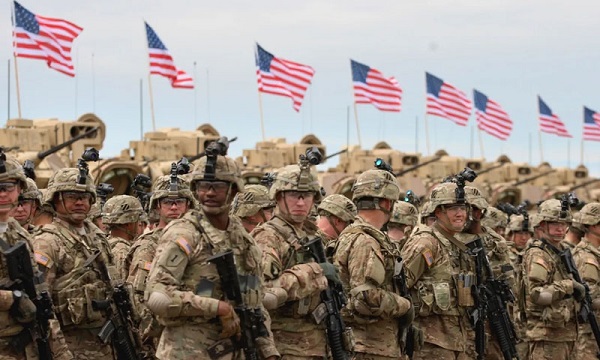
European allies are increasingly concerned that Donald Trump could move forward with a broader withdrawal of American forces from Europe, after announcing plans to remove 5,000 US troops from Germany in a move already sending shockwaves through NATO capitals.
According to officials familiar with internal discussions, senior NATO diplomats now expect additional troop reductions that could extend beyond Germany to include countries such as Italy, while the Trump administration is also reportedly considering scrapping a Biden-era plan to deploy long-range missiles on German soil.
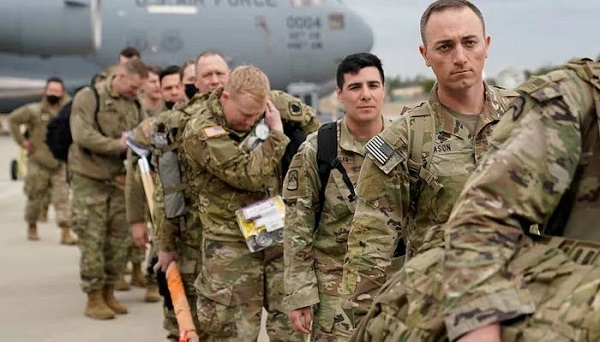
The growing uncertainty has triggered alarm across Europe, where governments fear Washington may fundamentally reshape the American military footprint on the continent during Trump’s second term.
Officials speaking on condition of anonymity said discussions inside NATO increasingly revolve around several possible scenarios, including scaling back US participation in military exercises and relocating American forces away from countries viewed as less supportive of Trump toward nations considered politically closer to Washington.
The idea mirrors policies explored during Trump’s first presidency, when his administration examined shifting more American troops toward Poland amid tensions with traditional Western European allies.
Diplomats said expectations of further withdrawals are based not only on Trump’s public remarks but also on recent conversations between NATO officials and their American counterparts regarding the alliance’s future military structure.
Although NATO has not yet received formal notification regarding which units may leave Germany, officials believe the Pentagon is evaluating multiple rapid-withdrawal options.
Attention has also turned toward Spain, which reportedly drew particular frustration from Trump after becoming the only NATO member exempted from the alliance’s new defense spending target of 5% of GDP. That development has fueled speculation that the US could reduce its military presence at key Spanish facilities, including bases in Rota and Morón.
The tensions reflect a deeper and long-running rift between Trump and several European governments — a divide that many diplomats believe has intensified significantly during his second term.
Despite repeatedly suggesting that the United States could eventually leave NATO, Trump has so far stopped short of taking concrete steps toward a full withdrawal from the alliance.
Analysts say that restraint likely stems from growing recognition within the administration that a dramatic military pullback from Europe could ultimately damage US strategic interests more than it would punish governments perceived as politically unfriendly.
Gordon Davis, a former senior NATO official and current fellow at the Center for European Policy Analysis, warned that Washington itself could suffer serious consequences from any major reduction in troop deployments across Europe.
“We would hurt ourselves as much as or more than the European countries we might target for punishment if we significantly reduce our forces or military presence,” Davis said.
Around 85,000 American troops are currently stationed across Europe, though the number fluctuates depending on deployments and military exercises. The continent’s US bases remain strategically critical for rapid operations extending into the Middle East, Africa, and Central Asia, while Eastern European deployments continue serving as a deterrent against Russia.
Even amid mounting fears, NATO diplomats and alliance officials still believe congressional safeguards and America’s long-term strategic dependence on Europe could limit Trump’s ability to enact sweeping changes.
Last week’s announcement regarding the withdrawal of 5,000 troops from Germany immediately sparked questions among US lawmakers over whether the move could violate legislation passed by Congress requiring approval before troop levels in Europe fall below 76,000 personnel.
Meanwhile, officials familiar with recent talks revealed that a “productive” meeting was recently held between US Under Secretary of Defense Elbridge Colby and ambassadors from roughly 12 NATO member states. Discussions reportedly focused on advancing what American officials describe as “NATO 3.0”, a strategy aimed at pushing European nations to assume primary responsibility for their own defense.
Some Eastern European allies are expected to welcome any shift of US military resources eastward, especially as Germany’s traditional Cold War-era role as the alliance’s central frontline hub continues to diminish.
Poland currently NATO’s highest defense spender relative to economic output, has been actively lobbying for an expanded American military presence on its territory. At the same time, Washington has been increasing work at military installations in both Greece and Poland, further fueling speculation that US troops withdrawn from Western Europe could eventually be redeployed closer to NATO’s eastern flank.
