

Ahmed Kamel – Egypt Daily News
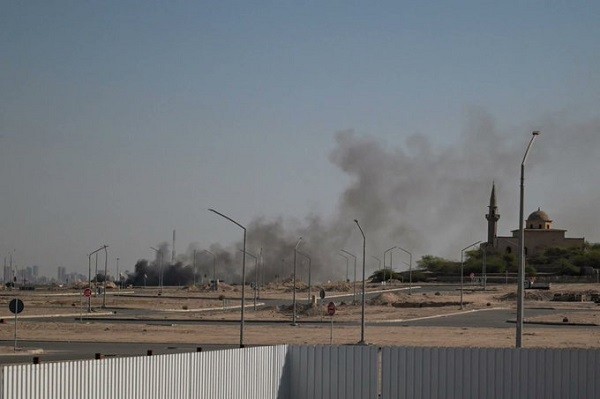
The fragile calm that followed the recent ceasefire between Washington and Tehran came under fresh strain on Monday after the United States and Iran traded military blows in the Gulf, while neighboring Kuwait reported intercepting incoming missiles and drones over its territory.
The latest escalation began with U.S. strikes targeting Iranian military infrastructure that American officials said was linked to air-defense and drone operations. The attacks, carried out over the weekend, hit sites in southern Iran that U.S. commanders accused of threatening regional security and international shipping routes.
According to the U.S. Central Command, the operation was launched after Iranian forces allegedly shot down an American surveillance drone flying over international waters. American officials said the strikes destroyed radar systems, drone-control facilities and aerial assets considered a direct threat to navigation in the Gulf.
The exchange marked one of the most serious military incidents since the announcement of a ceasefire intended to halt direct confrontations between the two rivals. Although neither side reported significant casualties, the rapid sequence of attacks highlighted the risk that local incidents could quickly spiral into a broader regional crisis.
Tehran responded hours later. Iran’s Revolutionary Guards announced that they had struck the air base used by American forces to launch attacks against Iranian territory. In a sharply worded statement, the Guards warned that any renewed U.S. military action would trigger a response beyond the scale of the latest retaliation.
As the confrontation unfolded, Kuwait found itself drawn into the security fallout. Air raid sirens sounded in several areas as the Kuwaiti military moved to confront what it described as hostile missiles and unmanned aircraft entering the country’s airspace. Authorities said air-defense units successfully intercepted the threats, preventing damage on the ground.
The developments sent another reminder of the Gulf’s vulnerability to regional conflict, with military bases, shipping lanes and energy infrastructure remaining within range of rival forces operating across the region.
Despite the military exchanges, diplomatic efforts have not entirely collapsed. Iranian Foreign Minister Abbas Araghchi insisted that the ceasefire agreement with the United States remains in force and applies to all active fronts, including Lebanon, signaling that both sides may still be seeking to avoid a wider war.
For now, however, the latest strikes have exposed the increasingly fragile nature of the truce, leaving regional governments on alert and raising new questions about whether the current ceasefire can survive another round of confrontation.
