

Ahmed Kamel – Egypt Daily News
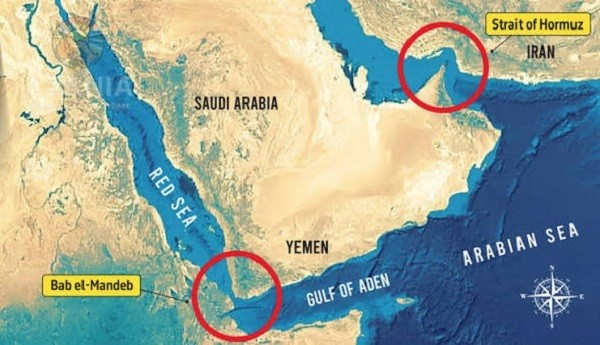
The Islamic Republic of Iran has officially instructed Yemen’s Houthi movement to stand ready to completely close the strategic Bab el-Mandeb Strait. Three senior diplomatic and regional sources confirmed on Thursday that Tehran has tied the potential blockade of the Red Sea gateway directly to U.S. military actions. The specialized order dictates that the Houthi forces will immediately disable maritime transit if the United States follows through on threats to bombard Iranian domestic electrical grids and power infrastructure.
The highly volatile development poses a potent new threat to global energy stability, as the nearby Strait of Hormuz remains entirely blocked by Iranian naval forces. Technical reports from within the Houthi command structure reveal that advanced anti-ship missiles and explosive drone squadrons have already been deployed across the highlands overlooking Hodeidah and the Gulf of Aden. Representatives from Iran’s Islamic Revolutionary Guard Corps currently stationed in Yemen will reportedly hold direct operational control over the final activation sequence to initiate the commercial shipping blockade.
Sovereign Trade Corridors Face Simultaneous Bottlenecks as Risk Underwriters Elevate Premiums
Global energy markets braced for immediate turbulence following news of the coordinated tactical directive, which threatens the primary alternative export route for Middle Eastern oil. Saudi Arabia remains particularly vulnerable to a potential Red Sea blockade after recently diverting seventy percent of its energy exports through its western port of Yanbu. Risk intelligence analysts warn that a simultaneous closure of both the Hormuz and Bab el-Mandeb bottlenecks could easily drive global crude oil prices to unprecedented heights.
International marine insurance providers have maintained an exceptionally cautious stance, quickly raising transit risk premiums across the entire Arabian Peninsula. Marine traffic intelligence confirms that merchant vessel configurations are already shifting rapidly as corporate operators prepare to bypass the region via long detours around Africa. The sudden collapse of regional navigation confidence follows a separate outbreak of hostilities on Monday, when the Houthis launched ballistic missiles at Saudi territory following an unprovoked airport runway bombardment in Sanaa.
United Nations Security Officials Warn Against Dangerous Expansion of Maritime Warfare
The United Nations Security Council convened an emergency session in New York to address the imminent threat to the world’s most critical maritime transit arteries. Assistant Secretary General Khaled Khiari expressed profound institutional concern regarding the escalation, declaring that global trade networks cannot withstand a synchronized dual-strait shutdown. Western diplomatic envoys strongly condemned the reckless coordination between Tehran and its regional proxy forces as a flagrant violation of international navigation laws.
The United States defense establishment continues to monitor the staging of Houthi weaponry along the Yemeni coastlines while reinforcing its naval task force positions in the Gulf of Aden. White House officials reiterated that any attempts to compromise freedom of navigation through international waterways will be met with immediate defensive countermeasures. As both sides maintain a maximalist combat readiness posture, neighboring Arab states have intensified internal security measures to safeguard local logistical and energy infrastructure.
