

Ahmed Kamel – Egypt Daily News
The United States military and the Islamic Revolutionary Guard Corps escalated their direct warfare on Wednesday morning by launching major synchronized missile and drone campaigns. United States Central Command announced that American forces initiated a massive fresh wave of daytime precision strikes at six in the morning to systematically dismantle Iran’s active coastal defense frameworks.
The severe military escalation materializes despite ongoing high-level diplomatic negotiations in June aimed at finalizing a permanent, war-ending treaty based on a previously signed memorandum of understanding. The strategic Strait of Hormuz remains the primary maritime flashpoint as both global powers rapidly expand the geographic boundaries of their combat operations.
Central Command Finalizes Concentrated Ninety Minute Strike Wave Over Greater Tunb Island
Defense officials confirmed that American naval and air forces successfully completed a highly concentrated ninety-minute wave of heavy bombardments inside sovereign Iranian territory. The specialized technical assault focused intensively on obliterating advanced coastal defense systems alongside high-capacity cruise missile storage facilities and hidden launch nests situated on Greater Tunb Island.
The targeted aerial campaign was intentionally designed to permanently degrade the specialized military capabilities Iranian forces have repeatedly deployed to assault international commercial cargo carriers. Iranian government spokesperson Fatemeh Mohajerani confirmed on social media that the latest wave of coastal attacks killed more than thirty individuals across the southern regions.
Revolutionary Guard Targets American Military Hubs with Large Scale Ballistic Counter Strikes
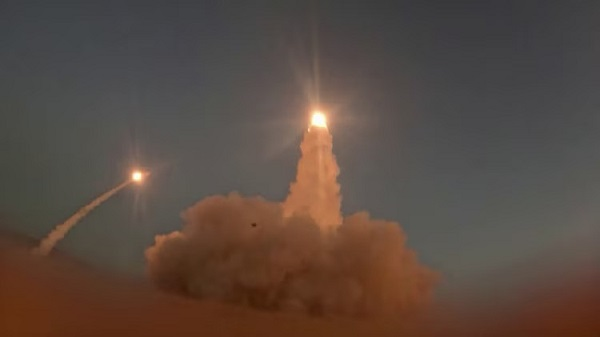
The Islamic Revolutionary Guard Corps responded to the American offensive by launching an expansive wave of ballistic missiles and explosive drone squadrons during the early hours of Wednesday. Iranian military commanders claimed direct responsibility for targeting active United States military installations and logistical assets operating inside Bahrain, Kuwait, and Jordan.
The multi-directional counter-offensive forced regional governments to immediately activate their automated air defense sirens and place national security arrays on maximum emergency alert. The Iranian Health Ministry subsequently reported that the ongoing cross-border exchanges have left more than two hundred and sixty citizens wounded across the country.
Allied Arab Air Defense Systems Successfully Intercept Inbound Iranian Projectiles
The Bahrain Defence Force announced that its domestic defense batteries successfully intercepted several hostile Iranian aerial attacks deployed systematically against civilian and military zones. Simultaneously, Kuwaiti military officials confirmed that their national air defense network engaged and neutralized six ballistic missiles and thirty-three incoming drones over their territorial airspace.
The Jordan News Agency also verified that Jordanian armed forces intercepted and shot down three ballistic missiles that entered national airspace from Iranian territory. The general command in Amman reported zero casualties or structural damage from the falling debris, while strongly condemning the flagrant violation of sovereign borders.
