

Ahmed Kamel – Egypt Daily News
The United States military officially announced its first troop fatalities from direct Iranian fire since the opening days of the war, confirming two soldiers were killed and another remains missing after a devastating strike on a base in Jordan. The pre-dawn drone and missile assault also sent four other American service members to regional hospitals for emergency medical treatment. The high-profile casualties bring the total number of American military fatalities to sixteen since the outbreak of hostilities, with over four hundred and thirty personnel wounded across various Middle Eastern deployment hubs.
Minutes before the Pentagon released the casualty figures, Iran’s Supreme Leader Mojtaba Khamenei issued a televised warning promising to deliver unforgettable lessons if Western coalitions continue bombarding the Islamic Republic. The newly appointed leader, who has communicated exclusively through state media decrees since assuming office, explicitly declared President Donald Trump’s signature on the active maritime truce completely worthless and invalid. Concurrently, Iranian diplomatic envoys confirmed they have officially suspended all structural commitments to the interim peace memorandum signed last month.
Retaliatory Missile Volleys Heavily Damage Kuwaiti Desalination and Hydrocarbon Infrastructure
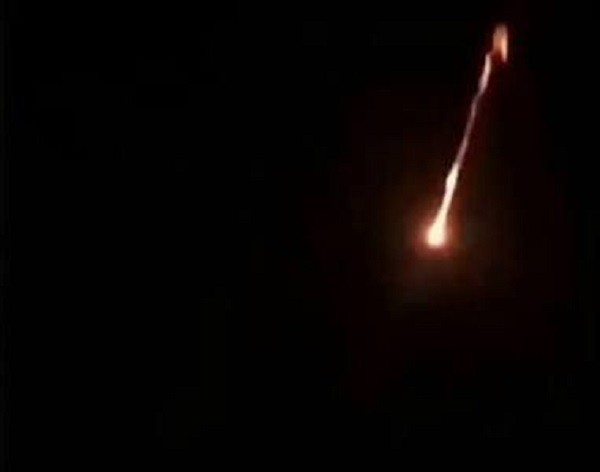
The collapse of the diplomatic framework triggered an immediate wave of Iranian ballistic missile and drone strikes targeting infrastructure networks across multiple Gulf nations. Kuwaiti authorities confirmed that a primary water desalination plant and a major petroleum processing facility suffered severe structural damage, forcing several critical power generation units completely offline. The targeted attack marks the second bombardment of a Kuwaiti water station in forty-eight hours, directly threatening the desert nation’s drinking supply which relies on desalination for ninety percent of its water.
Emergency fire crews inside Kuwait battled multiple large-scale blazes sparked by the incoming warheads, while civil aviation authorities briefly closed national airspace and grounded all commercial flights. Meanwhile, regional air defense networks engaged incoming projectiles across the peninsula, with Jordan intercepting three ballistic missiles over its territory and Iraq destroying attack drones near Irbil. The Secretary General of the Gulf Cooperation Council, Jasem Mohamed al-Budaiwi, publicly accused Iran of committing war crimes by systematically executing deliberate military strikes against vital civilian infrastructure.
Central Command Bombardment Shatters Iranian Power Plants and Coastal Supply Highways
United States Central Command responded by executing its seventh consecutive night of intensive aerial bombardments designed to degrade the Islamic Revolutionary Guard Corps’ offensive capabilities. Heavy precision strikes targeted underground weapons storage depots, maritime drone staging areas, and strategic coastal surveillance grids across southern Iran. State-run news agencies in Tehran reported that American munitions completely destroyed the Bonji desalination plant in the Hormozgan Province, cutting off essential drinking water to roughly ten thousand local residents.
The midnight air campaign also successfully neutralized a primary desalination facility on strategic Qeshm Island and demolished three major bridges connecting to Bandar Abbas. The structural destruction has completely severed traffic along the main coastal highway, paralyzing logistics toward Iran’s primary shipping port near the narrowest point of the Strait of Hormuz. The Iranian Energy Ministry acknowledged the heavy damage to national electricity infrastructure for the first time, ordering citizens across hot southern provinces to drastically reduce domestic power consumption.
Naval Blockades Harden Over Strait of Hormuz as Commercial Shipping Reaches Historic Lows
The escalating battle remains heavily focused on establishing absolute sovereignty over the Strait of Hormuz, an essential maritime bottleneck that previously accommodated twenty percent of global crude oil shipments. The Iranian administration continues to demand exclusive regulatory control and mandatory transit fees from foreign merchant fleets, completely rejecting long-standing international navigation laws. International maritime trackers confirmed that commercial vessel traffic through the corridor plummeted to a three-week low following recent direct firing incidents against civilian tankers.
The White House has faced intensifying domestic political pressure to halt the widening conflict and avoid the exact type of prolonged Middle Eastern warfare that Trump campaigned against. In response to the persistent transit threats, the United States Navy fully reinstated its comprehensive naval embargo on all Iranian ports to block external crude shipments. While regional energy conglomerates have attempted to bypass the blockaded strait by utilizing overland pipelines, transport volumes remain entirely insufficient to offset the global market shortages.
