

Ahmed Kamel – Egypt Daily News
Turkey said Thursday it would not be drawn into what it described as an Israeli attempt to create a confrontation over Syria, rejecting claims that Ankara was preparing to establish a military base at an airfield targeted by Israeli forces earlier this week.
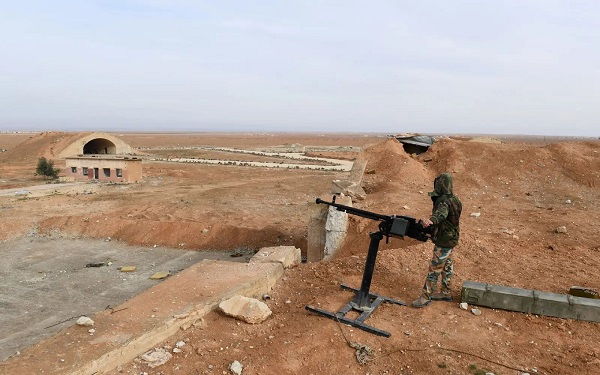
The dispute centers on Abu al-Zuhur air base in northwestern Syria, which Israel struck on Tuesday. Israeli officials said the attack was intended to prevent the site from being used by Turkish forces and argued that a Turkish military presence there would pose a serious threat to Israel’s security.
Turkey’s presidential communications director, Burhanettin Duran, accused Israeli Prime Minister Benjamin Netanyahu of attempting to manipulate regional tensions for political and strategic purposes. “We have enough experience not to fall into the trap set by figures such as Netanyahu, whose goal is to undermine peace and stability in our region,” Duran said.
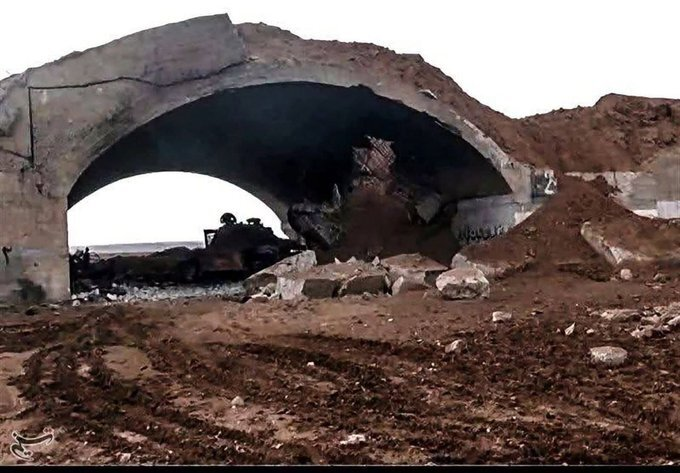
The Turkish Defense Ministry also denied that its forces had been stationed at the Syrian air base. During a weekly briefing, a ministry official said no Turkish military delegation had been present at Abu al-Zuhur either before or during the Israeli airstrike.
The ministry rejected reports of a Turkish deployment and said Ankara would continue supporting Syria’s efforts to rebuild its military capabilities and infrastructure. Turkish officials did not provide details about the nature or scale of that assistance.
Ankara also called on the international community to take stronger action against Israeli military operations, arguing that repeated strikes against Syrian targets risk widening instability across the region.
Israel has defended the attack by saying it acted after warning Syria against allowing Turkish forces to use the facility. Netanyahu said Wednesday that Israel had made its position clear to Damascus but claimed the warning had not been fully understood.
“Our message was very clear: Do not do this,” Netanyahu said. “I think they did not fully absorb the message.”
The Israeli government has become increasingly concerned about Turkey’s expanding relationship with Syria’s new administration. Ankara has emerged as an important partner for Damascus, offering political and military support as Syrian authorities attempt to restore state institutions and rebuild the country’s armed forces after years of conflict.
Israeli officials fear that Turkish military access to facilities in Syria could give Ankara a stronger position near Israel’s northern frontier. Jerusalem has also expressed concern that Turkish air defense systems, drones, weapons, or military personnel could complicate Israeli operations in Syrian airspace.
Syria, however, has denied that it agreed to the establishment of a permanent Turkish base at Abu al-Zuhur. Foreign Minister Asaad al-Shaibani said the airfield was being renovated for use by the Syrian air force, not prepared for Turkish military operations.
“There is no intention to establish a Turkish base there, nor to deploy a permanent Turkish military presence or Turkish forces at the site,” al-Shaibani said in an interview with Axios.
He acknowledged that Turkish military personnel had visited the facility for training and broader cooperation with Syrian forces. However, he denied that Turkey had sent reinforcements or begun building a permanent military installation. According to al-Shaibani, the base was largely empty when Israel attacked and had not yet become operational.
The Syrian foreign minister said he had informed Israel that there were no plans for a Turkish base. He also accused Israel of carrying out the strike without legitimate justification, warning that continued military action could undermine efforts to stabilize Syria.
Despite the latest escalation, al-Shaibani said Damascus remained open to talks with Israel. He claimed that the two countries had made substantial progress toward a security agreement during negotiations mediated by the United States over the past year.
The discussions reportedly focused on reducing tensions and establishing arrangements to prevent military incidents. Al-Shaibani said Israel later backed away from commitments made during the negotiations, leaving the proposed agreement unimplemented.
He said any future arrangement would have to address the security concerns of both Israel and Syria while respecting Syrian sovereignty. A deal that failed to meet either condition, he warned, would be unlikely to produce lasting stability.
The confrontation has placed the United States in a difficult position as Washington seeks to prevent its regional partners from entering a broader conflict. Turkey and Israel are both close U.S. allies, while Syria’s new leadership is attempting to build relationships with international powers after years of isolation.
For now, Turkey insists that it will continue cooperating with Damascus and will not accept Israeli claims about its intentions. Israel, meanwhile, says it will act against any military development in Syria that it considers a threat. The competing positions leave Abu al-Zuhur at the center of a growing dispute over foreign influence, Syrian sovereignty, and the future security balance in the region.
