

Ahmed Kamel – Egypt Daily News
Russia has announced a three-day suspension of airstrikes against Kyiv as American negotiators arrived in Moscow for a renewed effort to end the war in Ukraine.
Kremlin spokesperson Dmitry Peskov said President Vladimir Putin had ordered Russian forces to stop attacking the Ukrainian capital for 72 hours, beginning at midnight on Saturday. The pause coincides with the arrival of U.S. special envoy Steve Witkoff and Jared Kushner, who are expected to hold talks with Putin before traveling to Kyiv on Sunday.
The temporary halt comes at a moment when diplomatic activity and military escalation are unfolding simultaneously. Russia and Ukraine have continued launching long-range drones and missiles against one another, while previous attempts by Washington to broker a settlement have lost momentum.
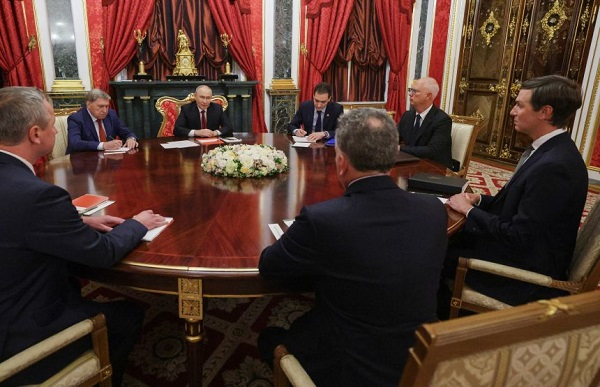
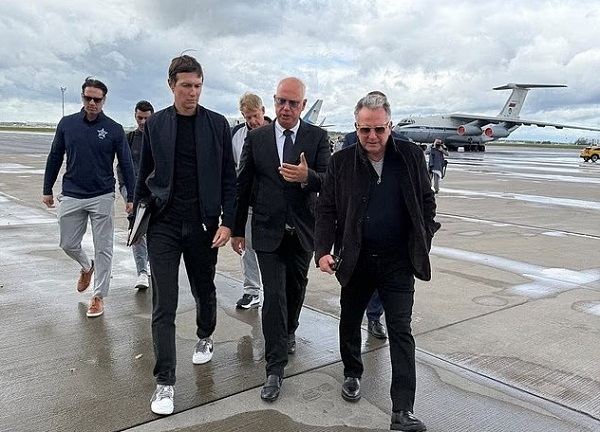
Witkoff and Kushner landed at Moscow’s Vnukovo Airport, where they were met by Kirill Dmitriev, a Russian presidential envoy involved in international investment and diplomatic contacts. The two Americans later met Putin at the Kremlin. Their visit is part of President Donald Trump’s latest attempt to restart negotiations over a conflict now in its fifth year.
Trump has said the delegation is carrying a proposal intended to end the war, although he has not disclosed its details. He also declined to say whether the plan would require Ukraine to surrender territory, an issue that has repeatedly complicated negotiations. Instead, the president said the United States had “an idea for peace” and expressed hope that the discussions could produce an agreement.
The visit marks the first known trip to Kyiv by either Witkoff or Kushner since Trump returned to the White House. Both men have previously traveled to Moscow, including a visit in January during which they met Putin. Their work has included negotiations connected to ceasefires in other conflicts, but they have not yet secured a lasting settlement between Russia and Ukraine.
Ukraine had already offered to suspend air operations during the American delegation’s visit. President Volodymyr Zelenskyy said Kyiv was prepared to halt strikes against Russian targets while the talks were taking place and called on Moscow to reciprocate. He said Ukraine wanted to protect the diplomatic process but would respond to Russian attacks if they continued.
Zelenskyy also accused Russia of carrying out overnight strikes against airports in Kyiv and nearby Boryspil. He suggested that the attacks were linked to preparations for a possible visit by the American envoys and warned that Ukraine would adjust its operations in Russian airspace. Russia’s Defense Ministry said its forces had intercepted or destroyed dozens of Ukrainian drones during the same period.
The diplomatic opening was overshadowed by a Russian drone attack on the headquarters of Ukraine’s domestic security service, known as the SBU. Ukrainian officials described the strike as a major escalation because the agency is closely involved in long-range operations against Russian military and infrastructure targets.
Zelenskyy said the attack had been directed at the office of the agency’s acting head and promised a response. Ukrainian Foreign Minister Andrii Sybiha accused Moscow of using the strike to undermine the latest peace initiative. Russia has not accepted responsibility for the political interpretation placed on the attack, but the incident illustrates how difficult it will be to maintain even a short pause while both sides continue targeting strategic sites.
The air campaign has intensified as ground operations along the front have produced no decisive breakthrough. Russia has expanded its use of faster, jet-powered attack drones, while Ukraine has used long-range weapons against Russian military facilities, oil infrastructure and other sites considered important to Moscow’s war effort.
Civilian casualties have also continued. Ukrainian officials reported deaths and injuries after Russian attacks in the Dnipropetrovsk region, while other strikes damaged residential and commercial areas in several parts of the country. Russia, meanwhile, said Ukrainian attacks had wounded civilians in the Belgorod region. Both governments regularly accuse the other of deliberately targeting nonmilitary locations, claims that are difficult to assess independently during ongoing operations.
The negotiations are taking place against a broader geopolitical backdrop. Washington’s attention has been divided by its military confrontation with Iran, which has made it more difficult to maintain momentum in the Ukraine peace process. Moscow has used the changing international environment to argue that any settlement must reflect what it calls the realities on the ground.
Deputy Foreign Minister Sergei Ryabkov said the central issue was whether the Trump administration was prepared to invest seriously in finding a solution based on the current military and political situation. His comments suggested that Russia expects any agreement to recognize its battlefield gains and security demands.
Ukraine has rejected the idea that peace should be imposed through territorial concessions made under military pressure. Kyiv has instead called for guarantees that would prevent a future Russian offensive and preserve its sovereignty.
The 72-hour pause may create a narrow opportunity for direct discussions, but it is not yet a broader ceasefire. Russian and Ukrainian forces remain active outside Kyiv, and neither side has committed to ending all attacks. Whether the truce becomes the beginning of a larger de-escalation or simply a brief interruption will depend on the talks in Moscow and Kyiv—and on whether both governments are willing to restrain their forces while negotiations continue.
