


Ahmed Kamel – Egypt Daily News
In a move signaling a dramatic escalation of its nearly two-year war with Hamas, Israel’s security cabinet has approved Prime Minister Benjamin Netanyahu’s plan for the Israeli military to occupy Gaza City. The decision, announced early Friday following a marathon cabinet session, intensifies an already catastrophic conflict and raises deep concerns both internationally and within Israel itself.
The approved strategy aims to dismantle Hamas and install a new form of governance in the Gaza Strip one that excludes both Hamas and the Palestinian Authority. According to a statement from the prime minister’s office, the cabinet endorsed five guiding principles to bring the war to a close: the defeat of Hamas, the return of all hostages (including the bodies of the dead), the demilitarization of Gaza, Israeli security control over the territory, and the establishment of an alternative civil administration.
“The IDF will prepare for the takeover of Gaza City while ensuring the provision of humanitarian aid to the civilian population outside the combat zones,” the statement read. Notably, this phase of the plan is expected to coincide with October 7, 2025 the second anniversary of the Hamas-led attacks that sparked the current war highlighting its symbolic weight.

The overall operation, according to Israeli sources, is designed to unfold over approximately five months and stops short of a full military occupation of the entire enclave. Instead, it focuses on Gaza City while avoiding surrounding camps. However, the consequences remain staggering: the plan is expected to force the evacuation of nearly half of Gaza’s remaining population. Israel’s military currently controls around 75% of the territory.
Military Hesitations and Internal Opposition
Despite the cabinet’s support, the plan was not without strong internal objections. IDF Chief of Staff Eyal Zamir reportedly warned that the operation could further inflame the humanitarian crisis, endanger the remaining hostages, and have severe international ramifications. Zamir presented a more limited alternative, which was ultimately rejected by the cabinet.
The Hostage Families Forum a group representing the families of hostages still held by Hamas condemned the cabinet’s decision, calling it a “colossal catastrophe.” In a strongly worded statement, the group accused the government of prioritizing military objectives over the lives of Israeli captives. “By choosing military escalation over negotiation, we are leaving our loved ones at the mercy of Hamas,” the group said, urging a return to ceasefire negotiations.
Two sources said that Netanyahu had been pushing for this expanded military strategy for weeks, motivated by his belief that Hamas had no interest in further talks. Netanyahu, in a Fox News interview, reiterated that Israel does not intend to permanently govern Gaza, stating, “We want to hand it over to Arab forces that will govern it properly without threatening us and giving Gazans a good life.”
International Response and Escalation Risks
International reaction was swift and critical. British Prime Minister Keir Starmer called on Israel to “reconsider immediately,” stating that the move would only result in more bloodshed and do nothing to secure the hostages’ release. “What we need is a ceasefire, a surge in humanitarian aid, the release of all hostages by Hamas, and a negotiated solution,” Starmer said. He added that Hamas should play “no part in the future of Gaza” and emphasized the need for a two-state solution.

The U.S. response has been more cautious. State Department spokesperson Tammy Bruce declined to comment directly on Israel’s plans, instead reiterating Washington’s commitment to freeing the hostages and ensuring Hamas never governs Gaza again.
Meanwhile, militant groups inside Gaza remain defiant. The Popular Resistance Committees, one of several armed factions, warned that any foreign or occupying force would be treated as hostile. “Its fate will be nothing but defeat and retreat,” the group declared, vowing to continue armed resistance until Israel ends its occupation of Palestinian land.
A City Already in Ruins
The prospect of a renewed ground assault on Gaza City already battered by repeated airstrikes and prior incursions has alarmed humanitarian organizations. Though much of the city lies in ruins, it remains one of the few areas not yet converted into an Israeli buffer zone or depopulated through mass evacuations.
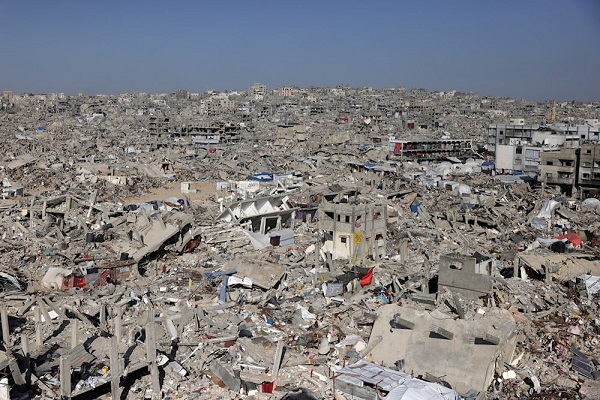
While hundreds of thousands fled Gaza City during earlier stages of the conflict, many have since returned during brief ceasefires, and the population remains significant. A large-scale military operation would not only displace thousands once again but would also further hinder efforts to distribute desperately needed humanitarian aid.
On Thursday alone, at least 42 Palestinians were reported killed in Israeli airstrikes and gunfire, according to local hospitals. Aid agencies warn that Gaza is teetering on the brink of famine, and another ground offensive could push the territory over the edge.
Despite the increasingly dire humanitarian conditions and calls for restraint from both domestic and international voices, the Israeli government appears determined to press ahead. For Netanyahu, the gamble is that military pressure may break Hamas’ will to negotiate. But with each passing day, the war’s toll continues to grow, and the path to peace seems ever more elusive.
