

Ahmed Kamel – Egypt Daily News
U.S. President Donald Trump said Monday that Israel and Hezbollah have agreed to reduce hostilities after a new surge in cross-border fighting raised fears of a broader regional escalation and threatened ongoing efforts to preserve a wider ceasefire linked to the Iran conflict.
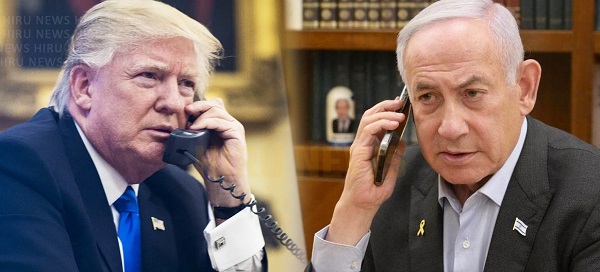
The announcement came after Trump held talks with Israeli Prime Minister Benjamin Netanyahu and communicated with Hezbollah through Lebanese intermediaries, according to statements released by U.S. and Lebanese officials.
In a social media post, Trump said Israel had agreed to halt plans for a deeper military advance into Lebanon and that forces moving toward the Lebanese capital had already been turned back.
“Hezbollah has agreed that all shooting will stop,” Trump said, adding that both sides had committed to refraining from further attacks.
The reported understanding emerged at a particularly volatile moment. Israeli authorities had earlier ordered strikes on Beirut’s southern suburbs following rocket attacks from Lebanon, while Hezbollah launched missiles and rockets toward northern Israel, including areas near Haifa.
Despite Trump’s announcement, tensions remained high. Israeli military authorities reported missile launches from Lebanon shortly afterward and issued alerts to residents in parts of northern Israel, underscoring the fragility of any de-escalation arrangement.
According to a statement from the Lebanese Embassy in Washington, Lebanese officials secured Hezbollah’s approval for a proposal advanced by U.S. Secretary of State Marco Rubio under which Israel would refrain from striking Beirut’s southern suburbs while Hezbollah would halt attacks targeting northern Israel. Lebanese Ambassador Nada Hamadeh Mouawad later spoke with Trump, who reportedly confirmed that Netanyahu had accepted the proposal.
Hezbollah had not publicly commented on the arrangement by Monday evening.
The diplomatic breakthrough comes ahead of talks scheduled in Washington this week between Israeli and Lebanese representatives. Lebanese negotiators are expected to push for a broader agreement that would expand protected areas inside Lebanon and eventually lead to a comprehensive ceasefire.
The latest violence highlighted how quickly months of relative calm can unravel. Although a ceasefire has been in place since April, repeated accusations of violations by both sides have steadily increased tensions along the border.
Israeli airstrikes overnight targeted multiple locations in southern Lebanon, killing at least six people, according to Lebanese media reports. Additional strikes hit areas around Nabatieh and the coastal city of Tyre, where authorities said a hospital sustained significant damage.
The Israeli military said it intercepted projectiles launched from Lebanon and reported no casualties from the latest attacks. Hezbollah, meanwhile, claimed responsibility for several rocket and missile strikes targeting Israeli military positions and troop concentrations in northern Israel and southern Lebanon.
The renewed confrontation has also become intertwined with broader regional diplomacy. Iranian Foreign Minister Abbas Araghchi insisted Monday that any ceasefire arrangement involving Washington and Tehran must apply across all theaters, including Lebanon, warning that violations in one arena would affect the broader truce framework.
Lebanese officials have intensified diplomatic contacts with Washington and other international partners in an effort to contain the escalation and keep negotiations on track. President Joseph Aoun reiterated Beirut’s commitment to pursuing a political solution, describing negotiations as a safer path than continued conflict.
The United Nations Security Council was expected to convene an emergency session on Lebanon as international concern mounted over the possibility that the fighting could expand into another full-scale war.
The current conflict has inflicted a heavy toll on both sides of the border. More than 3,400 people have been killed in Lebanon and over one million displaced since the latest round of hostilities began, while Israeli military and civilian casualties have continued to mount amid ongoing exchanges of fire.
Whether the latest U.S.-brokered understanding can hold remains uncertain, but diplomats hope it can prevent the most serious escalation between Israel and Hezbollah since the outbreak of the wider regional crisis.
