

Ahmed Kamel – Egypt Daily News
U.S. President Donald Trump has said he would be willing to meet Iran’s Supreme Leader Mojtaba Khamenei and expressed confidence that negotiations with Tehran could produce a deal “fairly quickly,” even as he confirmed reports of a heated confrontation with Israeli Prime Minister Benjamin Netanyahu over Israel’s military actions in Lebanon.
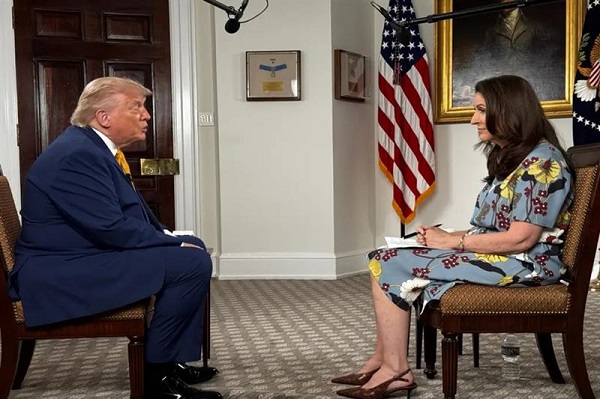
Speaking in an interview with the New York Post’s Pod Force One podcast, Trump suggested that direct engagement with Iran’s top leadership could eventually become part of efforts to end the conflict that has engulfed the region and rattled global energy markets.
“I’d love to meet everybody. I would like to meet him, and we probably will meet at some point, depending on how it all works out,” Trump said when asked about the possibility of meeting Khamenei.
The remarks represent one of Trump’s strongest indications yet that his administration remains focused on pursuing a diplomatic settlement despite weeks of military confrontation involving the United States, Iran and Israel.
Trump said he believes Iran’s supreme leader is directly involved in discussions surrounding the future of the conflict and insisted that negotiations are moving forward despite reports of setbacks and disagreements among the parties involved.
Trump Sees Path to Agreement With Tehran
The president maintained an optimistic tone regarding the prospects for a breakthrough, arguing that a deal could emerge sooner than many observers expect.
Trump reiterated his administration’s central objective of preventing Iran from acquiring a nuclear weapon while defending the economic costs associated with the military campaign and ongoing pressure on Tehran.
“Everyone said it was going to be $300, $400 a barrel. It’s $98 a barrel, but that’s not a big price to pay if you look at the possibility of them having a nuclear weapon,” Trump said. He added that discussions with Iran are evolving rapidly and predicted that the crisis would eventually produce broader positive outcomes.
“It is not going to have a nuclear weapon and lots of other good things are going to happen,” he said.
Despite his confidence, Trump acknowledged uncertainty regarding the duration of U.S. military measures in the Gulf, including the naval blockade that has disrupted shipping through the Strait of Hormuz and contributed to volatility in global energy markets.
Asked whether restrictions could remain in place through Labor Day in September, Trump said it was possible but unlikely, expressing hope that the conflict would be resolved before then.
Trump Confirms Profane Exchange With Netanyahu
The most striking revelation from the interviews concerned Trump’s increasingly strained relationship with Netanyahu, one of Washington’s closest allies during the conflict.
Trump confirmed reports that he called the Israeli prime minister “f–king crazy” during a tense phone conversation on Monday, though he insisted that the two leaders continue to maintain a productive working relationship.
The president said he became frustrated with Israel’s continued military operations in Lebanon, which he believes are complicating efforts to negotiate a broader ceasefire with Iran.
“I was a little bit perturbed at his constantly fighting with Lebanon,” Trump said.
The comments provide rare public confirmation of tensions that have reportedly been building behind the scenes as Washington seeks to secure a diplomatic exit from the conflict while Israel continues pursuing military objectives against Hezbollah.
Lebanon Has Become a Major Obstacle to Ceasefire Talks
The dispute highlights a growing challenge facing negotiators.
While discussions between Washington and Tehran have focused primarily on Iran’s nuclear program and regional military activities, the parallel conflict in Lebanon has increasingly become intertwined with broader ceasefire efforts.
Iran has repeatedly linked progress in negotiations to developments on the Lebanese front, arguing that any comprehensive settlement must address Israeli military operations against Hezbollah. Recent reports from Iranian media suggested Tehran temporarily suspended communications with mediators after concluding that fighting in Lebanon was undermining diplomatic efforts.
Although Trump publicly dismissed claims that talks had collapsed, the latest developments underscore how events in Lebanon have become a major factor influencing the future of negotiations.
Political Pressures Mount on Both Leaders
The friction between Trump and Netanyahu comes at a politically sensitive moment for both leaders.
Trump is seeking to contain the economic consequences of the conflict ahead of November’s congressional elections, where Republicans are fighting to retain control of Congress. Rising fuel prices and prolonged military engagement have generated criticism from some voters and members of his own political coalition.
Within the president’s MAGA movement, concerns have also emerged over the extent of U.S. involvement in a conflict that critics argue primarily serves Israeli security interests.
Netanyahu faces his own domestic challenges. The Israeli leader continues to navigate pressure from hardline members of his governing coalition while confronting criticism from opponents who accuse him of allowing Washington excessive influence over Israeli military decisions.
Reports that Israel abandoned plans for a major strike on Beirut following Trump’s intervention have further fueled debate within Israeli political circles about the balance between military objectives and diplomatic considerations.
Despite the public disagreements, both leaders have sought to emphasize that cooperation between Washington and Jerusalem remains intact. Yet Trump’s extraordinary language and his open frustration with Israel’s military strategy have revealed growing cracks in a partnership that has been central to the campaign against Iran.
With ceasefire negotiations still uncertain and fighting continuing on multiple fronts, those tensions could become increasingly important in shaping the next phase of the conflict.
