

Ahmed Kamel – Egypt Daily News
Donald Trump wanted a show of force in the Strait of Hormuz. Instead, he triggered a Gulf rebellion.
What was unveiled as “Project Freedom” a bold US-led operation designed to force open the world’s most strategically important shipping lane, collapsed almost as quickly as it was announced, after Saudi Arabia and key Gulf allies refused to fall in line behind Washington’s latest confrontation with Iran.
Behind the scenes, the backlash was immediate and brutal.
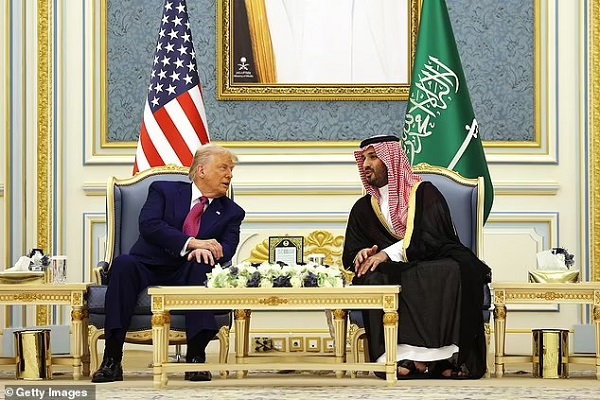
Saudi leaders were reportedly furious that Trump announced the operation without serious coordination, blindsiding Riyadh at a moment when Gulf capitals are desperately trying to prevent the region from sliding into an uncontrollable war. The reaction inside the kingdom was so severe that Saudi Arabia allegedly informed Washington that American warplanes would not be allowed to use Prince Sultan Airbase or even cross Saudi airspace in support of the mission.
That single decision shattered the operation before it could fully begin.
Without Saudi logistical support, “Project Freedom” instantly transformed from a grand display of American naval dominance into a politically isolated gamble with no stable regional foundation. Trump reportedly tried to salvage the situation personally through a direct call with Crown Prince Mohammed bin Salman, but the conversation failed to calm tensions.
Within less than 48 hours, the White House pulled the brakes.
Officially, Trump framed the pause as a diplomatic gesture linked to progress in talks with Iran and requests from Pakistan and other countries. In reality, the sudden retreat exposed something far more significant: America’s Gulf allies are no longer automatically willing to bankroll Washington’s escalations against Tehran.
That shift may prove more consequential than the operation itself.
For decades, US military strategy in the Gulf relied on an unspoken assumption that regional allies would ultimately align with Washington during moments of confrontation with Iran. “Project Freedom” shattered that illusion in spectacular fashion.
Saudi Arabia, the UAE, Qatar, and Oman were reportedly either informed late or caught entirely by surprise as the operation unfolded. Some Gulf officials viewed the move not as a controlled maritime security mission, but as a reckless escalation that could ignite direct retaliation across the region’s energy infrastructure, ports, airspace, and shipping routes.
Those fears materialized almost immediately.
Missiles and drones tore across the Gulf within days of the announcement. The UAE intercepted multiple Iranian projectiles. Fires erupted near Fujairah’s oil facilities. Commercial shipping came under threat inside the very waterway Washington claimed it was securing. Insurance fears exploded. Energy markets panicked.
And Iran moved quickly to frame the American reversal as a humiliating strategic defeat.
Iranian state-linked media celebrated Trump’s decision to freeze the operation as proof that Tehran’s pressure tactics had worked. The message from Tehran was unmistakable: Iran believes it forced the United States into retreat without surrendering control of the Strait of Hormuz.
That perception matters.
Because the Strait of Hormuz is no longer just a shipping corridor. It has become the central pressure point in a much larger geopolitical war involving oil markets, military deterrence, regional influence, and the future balance of power in the Middle East.
Roughly one-fifth of global oil supplies normally passes through the narrow waterway. Even partial disruption has already pushed global markets into crisis mode. The longer instability continues, the greater the pressure on Western economies already battling inflation, energy volatility, and geopolitical fragmentation.
Trump now finds himself trapped between two dangerous realities.
Escalating further risks dragging the United States into a direct regional war that Gulf allies themselves appear unwilling to support. Pulling back, however, risks projecting weakness at the exact moment Iran is openly testing Washington’s willingness to enforce maritime control in the Gulf.
The administration is trying to mask the contradiction by talking simultaneously about military success and diplomatic progress. Secretary of State Marco Rubio declared the initial campaign objectives achieved. Defense Secretary Pete Hegseth insisted America still controls the security equation. Trump himself continues speaking optimistically about negotiations with Tehran.
But the images tell a different story.
An operation announced with the language of dominance ended in hesitation. A mission meant to demonstrate control instead exposed limits. And a White House that expected regional alignment suddenly discovered that even its closest Gulf partners may no longer see Washington’s confrontation with Iran as a fight worth joining.
The deeper shockwave from “Project Freedom” may not be military at all.
It may be the realization that the political architecture of America’s Middle East alliances is changing faster than Washington expected.
