

Ahmed Kamel – Egypt Daily News
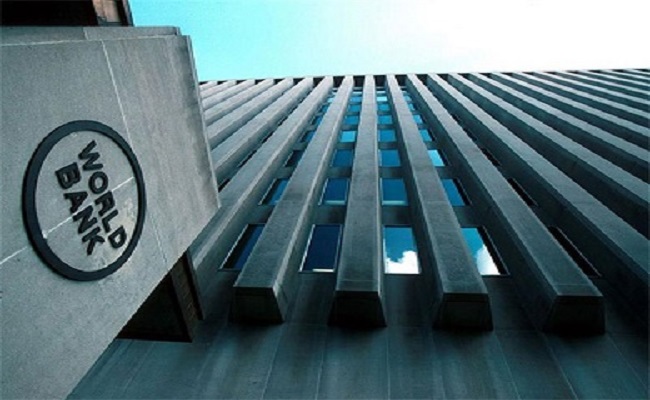
The World Bank has officially published a comprehensive financial ledger revealing that the Arab Republic of Egypt faces an extensive external debt repayment schedule totaling 62.8 billion dollars over a twelve-month horizon. According to granular tracking sheets reviewed by international financial monitors, this massive short-term fiscal commitment spans explicitly from April 2026 through the conclusion of March 2027.
The technical breakdown of the looming sovereign liabilities indicates that the total volume comprises 7 billion dollars in interest fees alongside 55.8 billion dollars in direct loan principal payments. Crucially, the principal repayment schedule includes 21.1 billion dollars in foreign deposits and currencies stored within the domestic financial network.
Allied Gulf State Pledges Mitigate Sovereign Currency Pressures via Strategic Localized Rollover Mechanisms
The vast majority of the outstanding multi-billion-dollar foreign deposits belong to allied Arab Gulf states that have officially committed to systematically renewing their capital placements. These sovereign partners are actively designing frameworks to rotate these existing liquid liabilities into long-term infrastructure and real estate investments inside Egyptian territory.
A detailed evaluation of the macro-repayment calendar shows that the secondary quarter of 2026 features the highest single concentration of debt maturity, touching 24.39 billion dollars. This initial high-volume tranche incorporates 7.1 billion dollars in central bank deposits, which will be followed by successive quarterly obligations of 13.94 billion dollars and 13.7 billion dollars.
Government Borrowing Frameworks Outpace Central Bank Debt Liquidations to Push Gross Foreign Debt Higher
The final repayment cycle closing out the first quarter of 2027 will require an additional 10.8 billion dollars in total outlays to settle remaining commercial balances. Concurrently, aggressive governmental development borrowing and expanded commercial bank lines pushed Egypt’s total gross external debt up by 865 million dollars during the opening quarter to hit 164.78 billion dollars.
Direct government obligations expanded by one billion dollars to touch 82.84 billion dollars, while local commercial lenders saw their foreign liability portfolios climb by 1.75 billion dollars to settle at 24.75 billion dollars. Conversely, the Central Bank of Egypt successfully liquidated 1.22 billion dollars of its own overseas obligations, trimming its debt baseline to 35.77 billion dollars.
Private Sector External Credit Lines Contract Comfortably Amid Rigid Capital Control Adjustments
External financing portfolios mapped across alternative corporate sectors registered a positive contraction, dropping down to 21.4 billion dollars from a prior winter baseline of 22.1 billion dollars. This minor private sector contraction reflects the ongoing enforcement of rigid central bank capital controls designed to prioritize state resources for vital wheat and fuel imports.
International asset managers and global credit underwriting agencies are closely tracking this complex repayment timeline to evaluate the long-term resilience of the Egyptian banking grid. The executive administration continues to coordinate directly with regional wealth funds to accelerate upcoming public asset partnerships and guarantee completely smooth transaction flows through the Suez Canal corridor.
Technological Overhauls and Regulatory Compliance Deepen Local Sovereign Financial Buffers
State treasury officials are aggressively pushing to expand digital taxation grids to structurally enhance domestic revenue streams before the secondary quarter maturity deadlines arrive. These domestic resource mobilization frameworks remain vital to reducing the country’s historic dependency on external commercial loans.
The central bank is simultaneously mandating that all commercial banking networks boost their localized foreign currency liquidity ratios to survive potential capital flights. International rating agencies forecast that if the planned Gulf asset conversions are successfully executed on schedule, Egypt will successfully navigate the upcoming fiscal bottleneck without triggering localized currency shocks.
Sovereign Asset Monetization Programs Accelerate to Shield Vital Public Infrastructure Operations
The Ministry of Finance has finalized a diverse portfolio of state-owned energy and logistics enterprises slated for private equity participation. Unlocking these corporate investment channels will inject fresh hard currency directly into the public treasury, providing an alternative buffer against escalating debt servicing costs.
National security councils maintain that safeguarding economic sovereignty requires maintaining a delicate equilibrium between required development loans and strict monetary discipline. As the global investment community watches Cairo’s next fiscal maneuvers, the state remains fundamentally focused on achieving long-term macroeconomic stability through robust structural reforms.
