

Ahmed Kamel – Egypt Daily News
Egypt has renewed its long-standing demand for the return of the iconic bust of Queen Nefertiti from Germany, arguing that the opening of the Grand Egyptian Museum has removed one of the main justifications historically used to block repatriation claims. The issue has re-entered the international spotlight following renewed reporting by The Washington Post, which highlighted growing pressure on Berlin to return one of ancient Egypt’s most famous masterpieces.
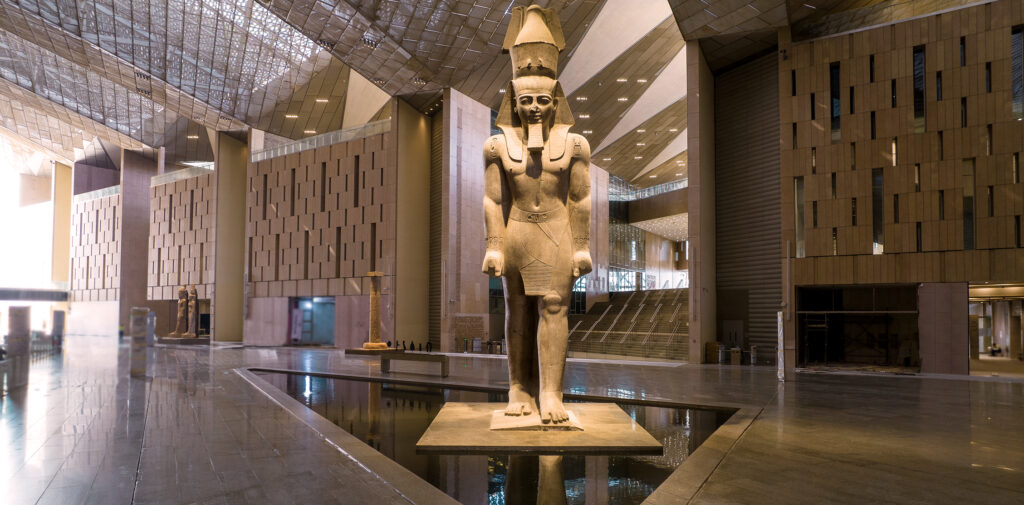
After more than two decades of construction, the Grand Egyptian Museum has officially opened near the Giza pyramids, positioning itself as one of the world’s largest and most technologically advanced archaeological museums. Egyptian officials say the museum’s state-of-the-art conservation facilities undermine earlier Western claims that Egypt lacked the capacity to safely preserve and display priceless antiquities.
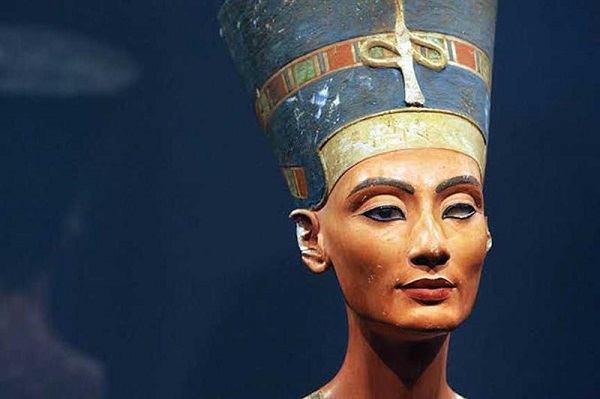
At the center of the dispute is the painted limestone bust of Queen Nefertiti, dating to around 1345 BCE. Nefertiti was the wife of Pharaoh Akhenaten of the 18th Dynasty and a central figure in one of ancient Egypt’s most transformative periods. Revered for her political influence and enduring symbolism, she is believed by some historians to have ruled as pharaoh in her own right after Akhenaten’s death. Her name, meaning “a beautiful woman has come,” became synonymous with royal elegance, a legacy cemented by the exquisitely crafted bust.
The sculpture was discovered in 1912 by German archaeologist Ludwig Borchardt during excavations at Amarna, in the workshop of the sculptor Thutmose. It was subsequently transported to Germany and has been displayed at Berlin’s New Museum since 2009, where it remains the institution’s most recognizable artifact and a major draw for visitors.
German authorities maintain that the bust was acquired legally under the excavation rules in force at the time. However, Egypt disputes this account. According to The Washington Post, evidence suggests Borchardt deliberately misled officials overseeing the division of finds, a system imposed by colonial-era authorities that required artifacts to be split evenly between Egypt and foreign excavators. The report notes that Borchardt allegedly downplayed the bust’s significance during the inspection process and later kept it out of public view for nearly a decade after bringing it to Germany, fueling claims that its export was unauthorized.
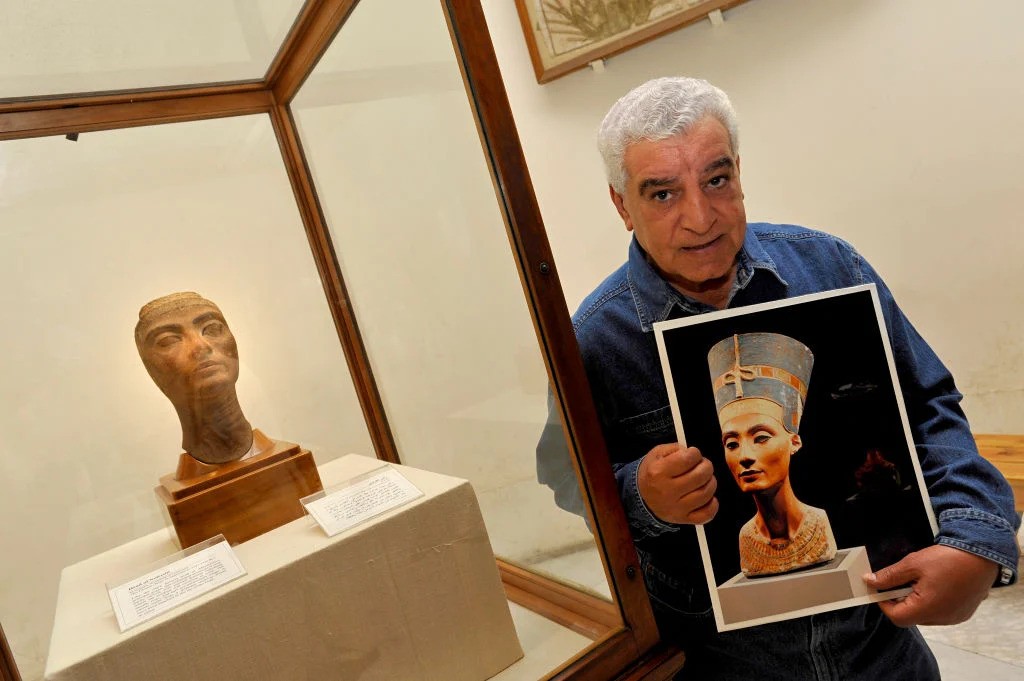
Zahi Hawass, former Egyptian minister of antiquities and a leading figure in Egypt’s repatriation campaign, has been vocal in recent weeks. Speaking to The Washington Post, Hawass said the time had come for the bust to return to its country of origin, arguing that Egypt’s modern museum infrastructure now meets or exceeds international standards. He has also pointed to recent theft incidents at major European museums, including the Louvre, to challenge the notion that Western institutions are inherently safer custodians of global heritage.
“The Grand Egyptian Museum is the best place to appreciate the Nefertiti bust,” Hawass said, adding that the artifact’s historical, cultural and symbolic meaning is inseparable from Egypt itself.
Germany, however, has firmly rejected the request. Museum officials argue that the bust is too fragile to withstand transportation, regardless of the destination. Friederike Seyfried, director of the New Museum, has said the issue is not the quality of Egypt’s facilities but the physical condition of the object itself, describing any transfer as an unacceptable risk.
Beyond conservation concerns, the bust’s importance to Germany’s cultural landscape is widely acknowledged. The Washington Post described it as the “face of the museum,” attracting hundreds of thousands of visitors each year. Observers note that relinquishing such a centerpiece would be politically and culturally difficult for Berlin, even amid growing global debates over the legacy of colonial-era collecting.
The renewed dispute over Nefertiti reflects a broader reckoning within the museum world, as former colonial powers face increasing demands to return artifacts acquired under questionable circumstances. For Egypt, the opening of the Grand Egyptian Museum is not only a cultural milestone but also a strategic moment to press its case, framing repatriation as both a matter of historical justice and a return of identity.
