

Ahmed Kamel – Egypt Daily News
Egypt has reaffirmed its full support for regional allies while intensifying diplomatic efforts to contain escalating conflict in the Middle East, senior officials said during a high-level media briefing in Cairo.
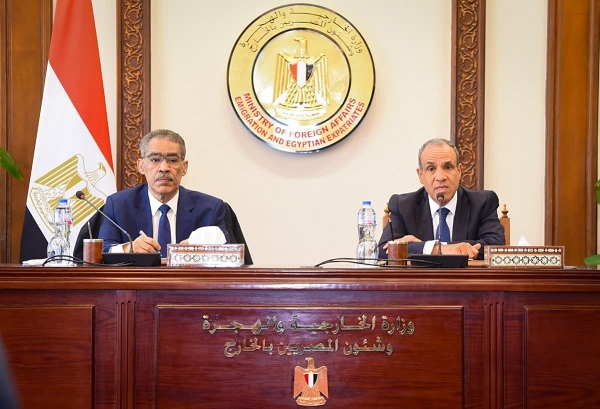
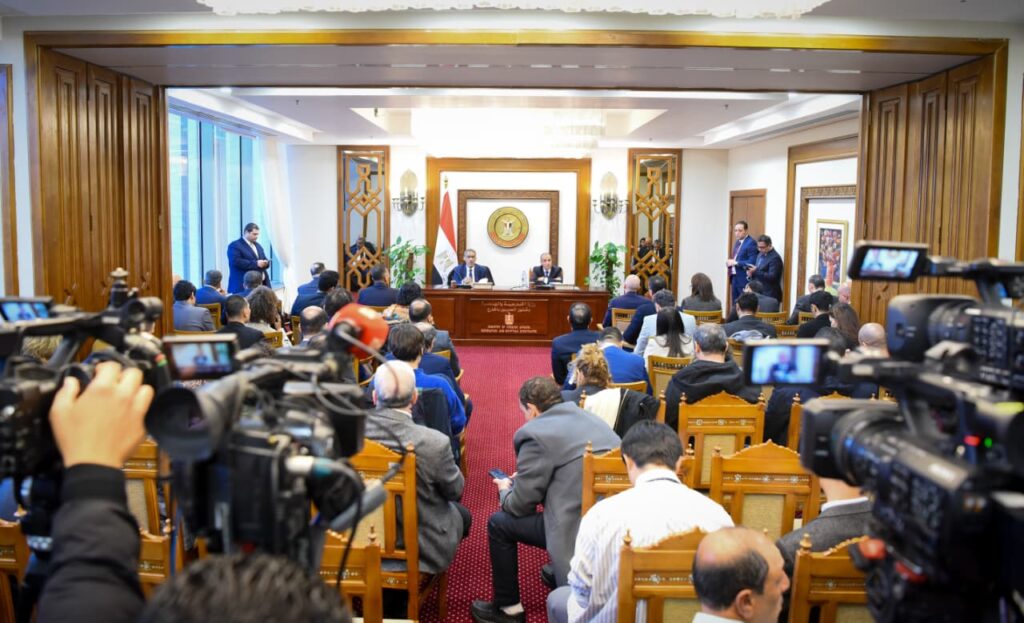
Badr Abdelatty, Egypt’s Minister of Foreign Affairs, Immigration and Egyptian Expatriates, and Diaa Rashwan addressed representatives of regional and international media in a joint session held at the Foreign Ministry headquarters. The briefing, coordinated with the State Information Service, aimed to clarify Egypt’s position amid rapidly evolving regional developments and ongoing military escalation.
Abdelatty outlined Egypt’s intensified diplomatic engagement, undertaken under directives from Abdel Fattah el-Sisi, emphasizing Cairo’s commitment to prioritizing dialogue and political solutions over military confrontation. He stressed that Egypt stands in full solidarity with Gulf states, as well as Jordan and Iraq, in the face of what he described as unjustified Iranian attacks.
He added that Egypt has provided all forms of support to its regional partners and is leveraging its diplomatic channels to push for an immediate end to the war. “The security of the Gulf is an integral part of Egypt’s national security,” Abdelatty said, reiterating Cairo’s firm rejection of any actions that undermine the sovereignty or stability of Arab states.
The foreign minister also highlighted Egypt’s role as a mediator between the United States and Iran, noting ongoing coordination with regional and international partners including Egypt, Turkey, and Pakistan to encourage a return to negotiations and prevent further escalation that could destabilize the region and trigger global economic disruption.
Despite the current crisis, Abdelatty stressed that other regional issues must not be overlooked. On the Palestinian issue, he strongly criticized Israeli settlement expansion and annexation policies in the West Bank, while pointing to ongoing diplomatic efforts to advance the next phase of a U.S.-backed plan aimed at de-escalation. This includes calls for a structured withdrawal of Israeli forces from Gaza under a defined timeline.
He also revealed that Egypt has been training Palestinian police forces as part of preparations to enable a national administrative committee to operate effectively in Gaza, paving the way for the Palestinian Authority to resume full governance responsibilities in both Gaza and the West Bank.
Turning to Lebanon, Abdelatty condemned Israeli incursions into southern Lebanon and called for the full and non-selective implementation of United Nations Security Council Resolution 1701. He reiterated Egypt’s support for strengthening Lebanese state authority, including limiting arms to state institutions and ensuring sovereignty over all national territory. He added that Egypt has delivered more than 1,000 tons of humanitarian aid to help address displacement resulting from the ongoing conflict.
On Sudan, Abdelatty detailed Egypt’s diplomatic efforts within a multilateral framework involving Saudi Arabia, the United Arab Emirates, and the United States to secure an urgent humanitarian ceasefire. He said the goal is to create conditions for a comprehensive political settlement.
The minister underscored what he described as Egypt’s “red lines,” including the absolute rejection of any threat to Sudan’s territorial integrity or attempts to place state institutions on equal footing with armed militias. He reaffirmed Cairo’s full support for Sudanese national institutions and its commitment to preserving the country’s stability and sovereignty.
For his part, Rashwan emphasized the critical role of the media in conveying accurate and balanced information during times of crisis. He noted a high level of alignment and coordination between Egypt and Gulf countries, pointing out the absence of negative coverage between official and semi-official media outlets.
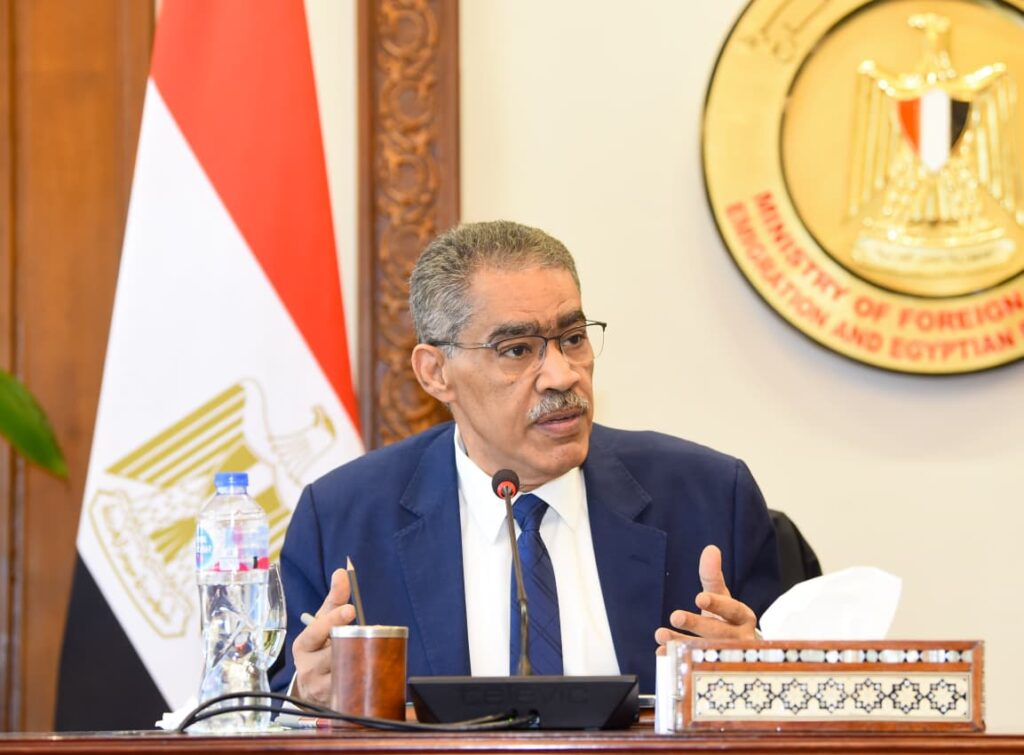
He warned against misinformation and attempts to sow division عبر social media platforms, stressing that such narratives do not reflect official state policies. Rashwan also reaffirmed the government’s commitment to transparency in order to ensure accurate and comprehensive media reporting.
The briefing concluded with an extended question-and-answer session covering a wide range of topics, including regional military developments, the situations in Lebanon and Sudan, Egypt’s water security, and its relations with international partners.
Egypt’s message, officials said, remains focused on de-escalation, regional stability, and the pursuit of political solutions to avoid a broader conflict with far-reaching global consequences.
