

Ahmed Kamel – Egypt Daily News
Three senior officials familiar with the matter said the head of Israel’s Mossad held a telephone conversation with Syria’s foreign minister last week, focusing on Turkey’s expanding military presence in Syria according to the officials, just days before Israel struck a Syrian air base.
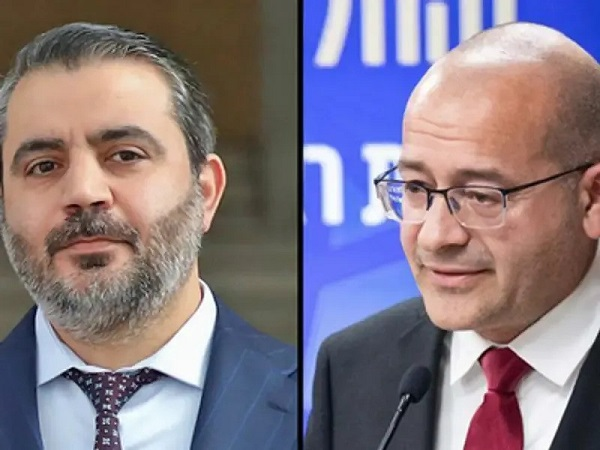
The call took place on August 14 between Roman Gofman, director of Mossad, and Asaad al-Shibani, Syria’s foreign minister, the sources said. They described it as among the highest-level contacts yet between Israel and the administration in Damascus led by President Ahmed al-Sharaa.
Israel’s prime minister’s office responsible for responses related to Mossad did not immediately reply to a request for comment. A spokesperson for al-Shibani also did not respond to an inquiry.
The reported exchange drew particular attention because it came only days before Israel carried out what it described as a strike on the Abu al-Zuhur air base on Tuesday. Following the attack, Prime Minister Benjamin Netanyahu said Damascus was close to allowing Turkish forces to be deployed there and accused Syria of ignoring repeated Israeli warnings that such an expansion would pose a threat to Israel’s security.
According to the officials, the discussion centered heavily on Turkey’s military support for Syria. One source said the conversation included Israeli inquiries about what Turkey was doing to increase its military presence, including issues related to arms sales, the provision of drones, and other security matters. A second source, a senior official, said Gofman used the call to ask about Turkey’s supply of arms to the Syrian military. A third source confirmed that the two sides discussed Turkey’s military presence in Syria.
Turkey’s Ministry of Defense declined to comment. Turkey’s Ministry of Foreign Affairs had not responded to a request for comment at the time of the reporting.
Meanwhile, Netanyahu’s warnings about Turkey’s role have intensified as relations between Ankara and the Damascus administration appear to have strengthened since the fall of former President Bashar al-Assad in 2024. Israel has expressed concern that Turkey’s growing influence along its northern border could alter the security equation for the region.
Al-Sharaa has sought to position Syria for new security arrangements with outside involvement. In July, he said Syria was working toward an agreement on security with Israel and aimed to bring in a wide range of countries, in part to increase pressure for what he characterized as a more balanced approach toward Syria.
Netanyahu, for his part, has framed the issue in blunt terms. In a video posted on X on Wednesday, he said Israel would not tolerate a Turkish military presence in Syria if it threatens Israel. He added that Israel had told Turkey not to proceed, suggesting that Israel believed its message had not been fully understood. The remarks appeared to refer to air operations Israel has carried out in recent days.
Turkey’s presidency rejected the Israeli claims on Wednesday, calling them weak and unsubstantiated. Ankara said Israel was attempting to provide legitimacy to what it described as illegal Israeli airstrikes targeting Syria’s sovereignty and territorial integrity.
Turkey said it would continue cooperation with the Syrian government under a plan it described as aimed at establishing peace, stability, and prosperity. Turkish officials did not mention any specific plans for additional deployments. Instead, they emphasized ongoing cooperation with Damascus while portraying Israel’s accusations as politically motivated.
The issue has also reached Washington. Tom Brake, the U.S. ambassador to Turkey and the special envoy for Syria and Iraq, said on Tuesday that the Israeli strikes amounted to an unnecessary escalation that does not strengthen regional stability. In separate remarks reported by Reuters on Tuesday, Brake said the United States is working to build an arrangement designed to prevent escalation between Israel, Turkey, and Syria. He said Washington is already facilitating information-sharing and creating channels for dialogue between the parties.
For the Syrian administration led by al-Sharaa, the reported focus on Turkey underscores the strategic stakes involved in balancing foreign military relationships with domestic sovereignty concerns. For Israel, the question of whether Turkey increases military access, capabilities, or deployments in Syria remains a central security concern, particularly as Israel continues to conduct air operations and warns that it will respond to threats near its borders.
The reported Mossad call also suggests Israel may be trying to communicate its concerns at senior levels to Damascus while maintaining pressure on the ground. The coming period could be shaped by whether diplomacy and de-escalation mechanisms proposed by the United States are able to reduce tensions, or whether military activity and competing alliances continue to drive the region toward a sharper confrontation.
