

Ahmed Kamel – Egypt Daily News
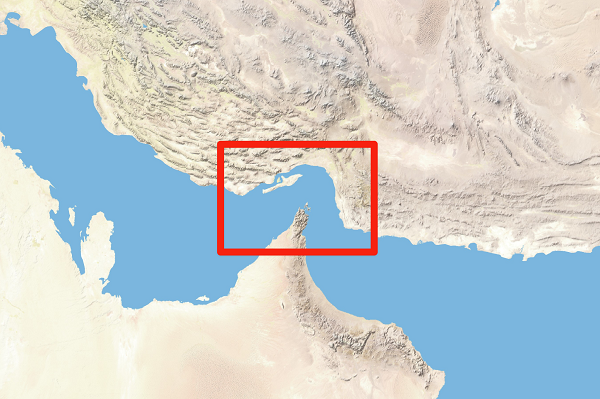
Nearly 40 countries have called for the immediate and unconditional reopening of the Strait of Hormuz, warning that Iran is putting the global economy at risk by restricting access to one of the world’s most critical energy routes.
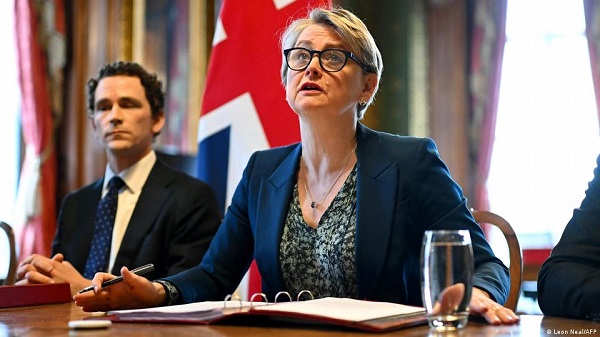
The appeal was made during a virtual international meeting led by Yvette Cooper, with participation from major economies including France, Germany, Canada, the United Arab Emirates, and India.
In a statement following the talks, Cooper said Iran’s actions amounted to an attempt to “hold the global economy hostage,” stressing that such a move must not be allowed to succeed. She called for full respect for international law, particularly the principle of freedom of navigation.
The Strait of Hormuz handles around 20 percent of global oil shipments, making it one of the most strategically important waterways in the world. Its disruption has already driven up oil prices and raised concerns over the broader economic impact on global markets, including rising costs for energy, food, and transportation.
The meeting took place amid heightened tensions following warnings from Donald Trump, who threatened to escalate military action against Iran within weeks. However, the United States did not participate in the talks, with Trump indicating that responsibility for securing the waterway should fall primarily on countries that depend most on it.
Participants focused on diplomatic and economic measures to pressure Iran into reopening the strait, rather than pursuing military options. Officials described the discussions as an initial step toward forming a coordinated international response, although no formal agreements were announced.
There was broad consensus among participating countries that Iran should not be permitted to restrict access or impose transit conditions on vessels passing through the strait, and that global shipping must continue without interference.
At the same time, leaders cautioned against military escalation. Emmanuel Macron warned that any attempt to reopen the strait by force would be unrealistic and could significantly increase risks in the region.
Speaking during a visit to Seoul, Macron said a military operation would be complex, prolonged, and expose vessels to serious threats from coastal defenses and missile systems. He emphasized that diplomatic solutions remain the most viable path forward.
Several countries have indicated they would be willing to contribute to securing the waterway, but only in the context of a ceasefire or de-escalation. France noted that any coordinated effort would likely be implemented in stages and would depend on a reduction in hostilities.
As the situation continues to evolve, the Strait of Hormuz is emerging as a central flashpoint in the broader conflict, with significant implications for global energy supplies, international trade, and economic stability.
