

Ahmed Kamel – Egypt Daily News
QatarEnergy, ExxonMobil and Egypt sign agreement to channel Cypriot gas through Egyptian LNG facilities for export to Europe, reinforcing Cairo’s strategic position in regional energy markets.
Egypt has taken another major step toward cementing its position as the Eastern Mediterranean’s leading energy hub after signing a new agreement with QatarEnergy and ExxonMobil to evaluate the transportation and export of natural gas from offshore Cypriot fields through Egyptian infrastructure to European markets.
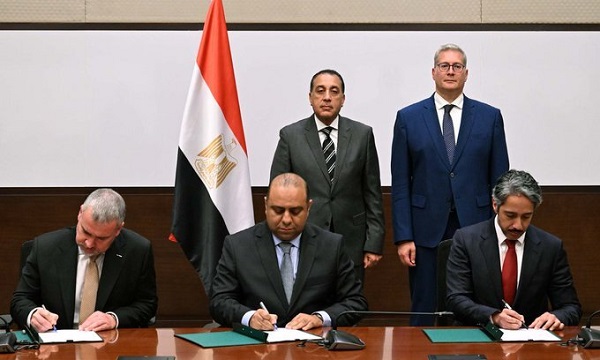
The memorandum of understanding, signed by Petroleum and Mineral Resources Minister Karim Badawi, brings together Egypt, QatarEnergy, and ExxonMobil in a project that could reshape regional gas flows and strengthen Egypt’s role as the primary gateway for Eastern Mediterranean energy exports.
The agreement focuses on studying commercial and technical arrangements for transporting natural gas discovered offshore Cyprus to Egypt’s liquefaction facilities, where it can be processed into liquefied natural gas (LNG) and shipped to international buyers, particularly in Europe.
Egypt Emerges as Regional Export Gateway
The deal highlights Egypt’s growing importance in a region rich in natural gas discoveries but lacking sufficient export infrastructure.
Unlike Egypt, Cyprus does not possess LNG export terminals. As a result, gas extracted from Cypriot offshore fields must be transported via subsea pipelines to Egypt, home to the Eastern Mediterranean’s only large-scale LNG liquefaction facilities currently capable of serving regional producers.
This infrastructure advantage has increasingly positioned Egypt as the natural export route for neighboring gas producers seeking access to global markets.
The latest agreement follows a series of energy partnerships that have steadily expanded Egypt’s influence over regional gas trade and strengthened its ambition to become a central energy hub connecting producers in the Eastern Mediterranean with consumers in Europe and beyond.
Cyprus Moves Closer to Commercial Production
For Cyprus, the agreement represents another milestone in a journey that began more than a decade ago with the discovery of significant offshore gas reserves. Cypriot authorities have long sought a viable path to commercialize those resources, and recent developments suggest that effort is finally gaining momentum.
Earlier this year, partners in the Aphrodite field signed a 15-year agreement to sell all recoverable natural gas from the reservoir to the Egyptian Natural Gas Holding Company, with an option to extend the arrangement for an additional five years.
That agreement effectively established Egypt as the primary destination for one of Cyprus’s largest gas developments and laid the groundwork for broader cooperation between the two countries.
Massive Offshore Reserves at the Center of the Plan
The new memorandum also builds on the existing partnership between QatarEnergy and ExxonMobil in Cyprus’s offshore Block 10.
The block contains the Glaucus gas discovery, announced in 2019 and estimated to hold approximately 3.7 trillion cubic feet of natural gas. In 2025, the consortium reported a second discovery, known as Pegasus, in the same area. In March, the partners formally declared both discoveries commercially viable, with combined reserves estimated at around 7 trillion cubic feet of gas.
Those volumes are considered significant enough to support long-term export projects and could provide a substantial new source of supply for regional and international markets.
Europe Seeks New Sources of Energy
The project also aligns with Europe’s ongoing efforts to diversify its energy supplies following disruptions caused by Russia’s invasion of Ukraine. European governments have spent the past several years seeking alternative gas sources to reduce dependence on Russian energy, creating new opportunities for producers across the Eastern Mediterranean.
While Cypriot gas alone is unlikely to dramatically alter Europe’s energy landscape, analysts say it could become an important supplementary supply source, particularly as European buyers continue to expand procurement options.
Long Road Ahead
Despite the strategic significance of the agreement, the project remains in its early stages.
Key issues including pipeline infrastructure, financing arrangements, commercial frameworks, and final investment decisions have yet to be finalized.
However, if development proceeds on schedule and production targets are achieved, Cyprus could begin its first-ever natural gas exports by 2028, with Egypt serving as the critical processing and export hub.
For Cairo, the agreement represents another validation of a strategy pursued over the past decade: leveraging its geographic position and energy infrastructure to become the central node in the Eastern Mediterranean gas network, linking offshore discoveries from neighboring countries to global energy markets.
