

Ahmed Kamel – Egypt Daily News
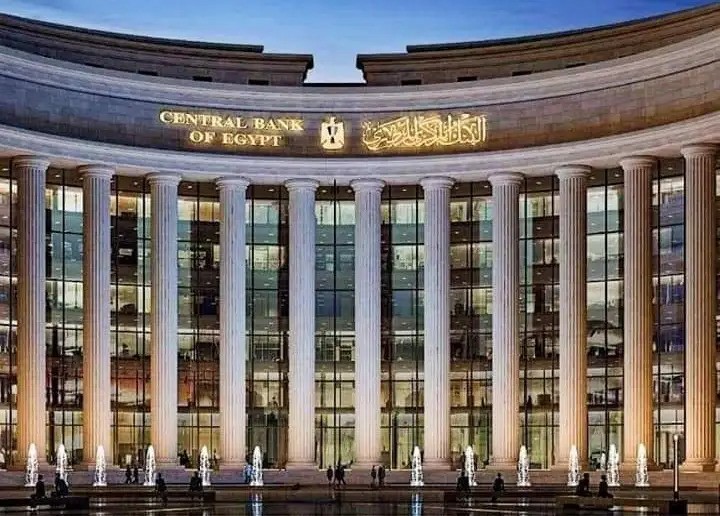
The Central Bank of Egypt kept interest rates unchanged on Thursday, signaling growing concern inside Egypt’s monetary authorities over mounting regional instability, volatile energy markets and the risk of renewed inflationary pressure in the months ahead.
The decision by the bank’s Monetary Policy Committee came as policymakers attempt to balance slowing inflation against the economic uncertainty triggered by escalating geopolitical tensions across the region. Under the decision, the overnight deposit rate remains at 19 percent, the overnight lending rate at 20 percent, while the main operation and discount rates were both left unchanged at 19.50 percent.
While inflation has continued easing gradually from last year’s highs, the central bank made clear that the path forward is becoming increasingly uncertain.
In unusually cautious language, the committee warned that the external environment has become “unfavorable,” citing renewed turmoil in global energy markets, fragile trade conditions and the growing impact of regional conflict on supply chains and investor sentiment.
Oil and gas prices have climbed sharply in recent weeks amid fears over disruptions to strategic shipping and energy routes, adding fresh pressure to import-dependent economies such as Egypt. The bank also pointed to rising fertilizer and agricultural costs internationally, warning that food inflation could again accelerate if external shocks persist.
The decision reflects a broader shift among central banks globally, many of which have delayed easing monetary policy despite slowing economic growth, fearing that inflation could rebound if geopolitical tensions intensify further.
Domestically, Egypt’s economy is still expanding, though at a slower pace.
The central bank said annual GDP growth slowed to 5 percent during the first quarter of 2026, compared with 5.3 percent in the previous quarter, with expectations of additional moderation during the current quarter as regional instability affects tourism, trade flows and investor activity.
Despite the slowdown, officials still expect the economy to post around 5 percent growth for the full 2025/2026 fiscal year.
The committee suggested that economic activity remains below full productive capacity, a factor that should help contain demand-driven inflation in the near term. At the same time, labor market conditions showed slight improvement, with unemployment falling to 6 percent from 6.2 percent in the previous quarter.
Inflation data released last month provided some relief for policymakers.
Annual urban headline inflation eased to 14.9 percent in April from 15.2 percent in March, while core inflation which excludes volatile items edged down to 13.8 percent.
The bank said the decline was driven mainly by falling food prices after seasonal spikes earlier in the year, along with signs that March’s fuel price increases did not produce broader inflation spillovers across the economy.
Still, the MPC cautioned against assuming the slowdown will continue uninterrupted.
Officials now expect inflation to accelerate again through the third quarter of 2026 due to base effects, exchange-rate pressures and the economic fallout from ongoing regional conflict. Fiscal reforms and subsidy adjustments are also expected to keep upward pressure on prices.
According to the bank’s projections, inflation will likely remain above the central bank’s official target range through late 2026 before gradually easing in early 2027 and eventually returning to target levels during the second half of that year.
The committee stressed that maintaining tight monetary conditions remains necessary to anchor inflation expectations and protect macroeconomic stability, particularly as uncertainty surrounding the regional situation continues to grow.
The statement also reaffirmed Egypt’s commitment to exchange-rate flexibility, a key pillar of the country’s economic reform program that has been closely monitored by international lenders and investors.
For now, policymakers appear unwilling to begin cutting rates despite easing inflation, preferring instead to wait for clearer signals on whether current price pressures prove temporary or evolve into a more prolonged inflation cycle fueled by regional instability and global commodity shocks.
