

Ahmed Kamel – Egypt Daily News
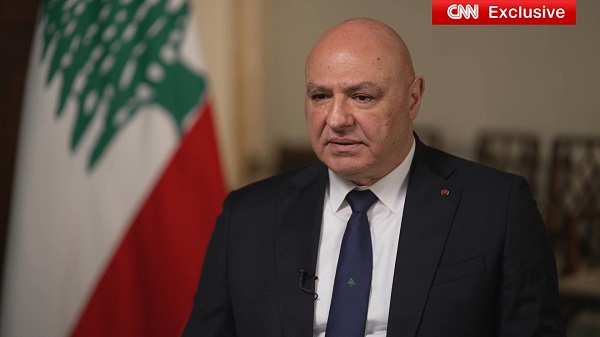
Lebanese President Joseph Aoun delivered one of his strongest public criticisms yet of Iran and Hezbollah on Friday, accusing Tehran of interfering in Lebanon’s affairs and using the country as leverage in its broader confrontation with the United States.
Speaking during an interview at the presidential palace, Aoun rejected what he described as external attempts to influence Lebanon’s future, insisting that decisions regarding the country’s security and sovereignty belong exclusively to the Lebanese state.
“It’s not your country, it’s our country,” Aoun said in remarks directed at Iran. “It’s not your job to interfere in our country.”
The comments marked a significant escalation in rhetoric from Lebanon’s head of state at a time when the country remains caught between a devastating conflict on its southern border and mounting regional tensions involving Iran, Israel, and the United States.
Aoun went further by accusing Tehran of treating Lebanon as a negotiating tool in its diplomatic dealings with Washington. Such an approach, he said, was unacceptable for a country struggling to recover from years of economic collapse, political paralysis, and repeated security crises.
The Lebanese president also addressed Hezbollah directly, calling on the Iran-backed movement to recognize the gravity of the situation facing the country. Referring to Hezbollah’s leadership, Aoun argued that continued confrontation would only deepen Lebanon’s suffering and urged dialogue as the only realistic path forward.
“The Lebanese people are not your people,” he said, adding that the country’s competing factions must engage in discussions aimed at “saving what is left” of Lebanon after years of turmoil.
Since assuming office, Aoun has repeatedly emphasized that decisions related to war and peace should rest solely with state institutions. His administration has sought to project an image of national sovereignty amid growing concerns that Lebanon is increasingly being drawn into wider regional conflicts beyond its control.
The president’s remarks were echoed hours later by Prime Minister Nawaf Salam, who also delivered an unusually direct message to Tehran during a press conference held in support of a United Nations aid appeal for Lebanon.
“If I may address a word to Iran, it is this: have mercy on our south,” Salam said. “Stop treating it and its people as merely a bargaining chip to improve the terms of your negotiations.”
The prime minister’s comments reflected growing frustration within sections of Lebanon’s political establishment over the country’s role in regional power struggles. Southern Lebanon has endured repeated military confrontations and cross-border attacks as fighting between Israel and Hezbollah continues despite international efforts to contain the conflict.
The coordinated criticism from Lebanon’s president and prime minister is likely to attract attention across the region, particularly because senior Lebanese officials have often avoided direct public confrontations with Iran and Hezbollah due to the movement’s significant political and military influence inside the country.
Their remarks come as international mediators continue efforts to prevent the conflict from expanding further, while humanitarian agencies warn that prolonged instability risks worsening conditions for communities already affected by months of violence and displacement.
Whether the unusually blunt statements signal a broader shift in Lebanon’s political posture remains unclear. However, they underscore growing concern among state leaders that the country’s future should not be determined by external powers or regional rivalries, but by decisions made within Lebanon itself.
